
结肠癌中三m5C特征的预后价值及免疫浸润的综合分析
Comprehensive Analysis of the Prognostic Value and Immune Infiltrates of the Three-m5C Signature in Colon Carcinoma.
作者信息
Geng Qishun, Wei Qian, Shen Zhibo, Zheng Yuanyuan, Wang Longhao, Xue Wenhua, Li Lifeng, Zhao Jie
机构信息
Department of Pharmacy, The First Affiliated Hospital of Zhengzhou University, Zhengzhou, People's Republic of China.
Engineering Laboratory for Digital Telemedicine Service, The First Affiliated Hospital of Zhengzhou University, Zhengzhou, People's Republic of China.
出版信息
Cancer Manag Res. 2021 Oct 20;13:7989-8002. doi: 10.2147/CMAR.S331549. eCollection 2021.
BACKGROUND
The 5-methylcytosine (m5C) is one of the important forms of RNA post modification, and its regulatory mechanism in tumors has received increasing attention. However, its potential role in colorectal cancer remains unclear.
MATERIALS AND METHODS
Here, we systematically investigated the genetic variation and prognostic value of the 14 m5c RNA methylation regulators in colon cancer. The prognostic risk score was constructed using three m5C regulators, which was verified in the GSE17536 (N=177), GSE41258 (N=248) and GSE38832 (N=122) datasets.
RESULTS
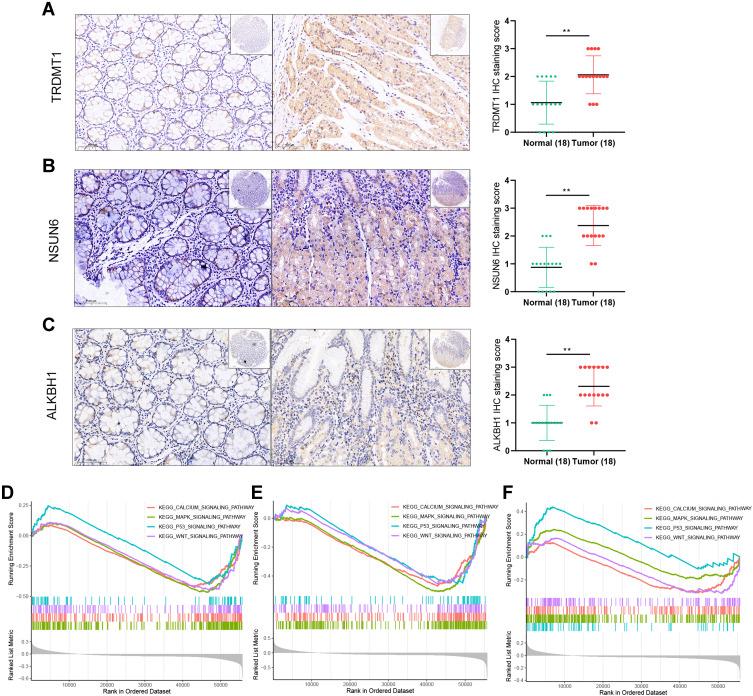
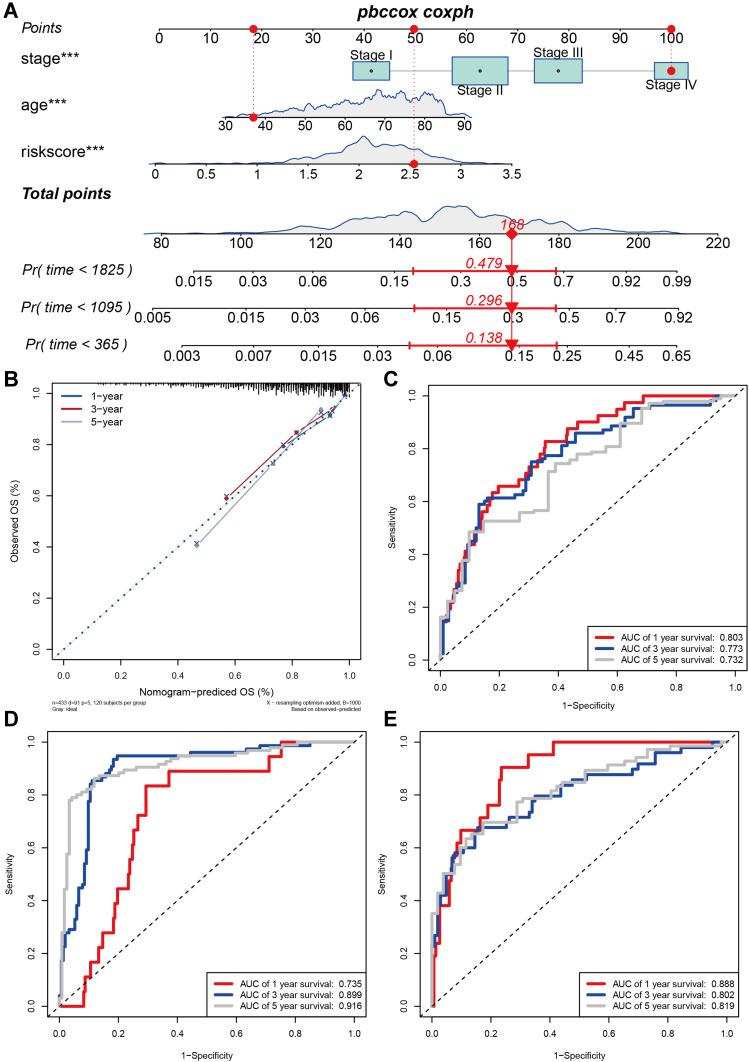
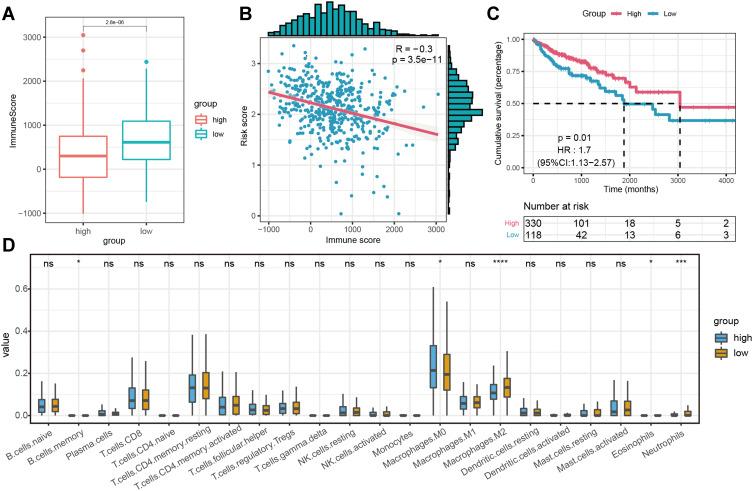
The risk score developed from the three-m5C signature represents an independent prognostic factor, which can accurately predict the prognosis of patients with colon cancer in multiple datasets. The cytokine-cytokine receptor interaction and chemokine signaling pathway were significantly enriched in the low-risk score group. Further analysis showed that the three-m5C signature was related to tumor immune microenvironment (TIME), affecting the abundance of tumor-infiltrating immune cells. Especially, patients with low risk score had higher immune score than those with high risk score. In addition, gene set enrichment analysis (GSEA) confirmed that all three regulatory factors are associated with the MAPK/p38 signaling pathway.
CONCLUSION
In conclusion, our study illustrates that the three-m5C signature may be involved in the regulation of colon cancer immune microenvironment in synergy with the MAPK signaling pathway. Therefore, further studying the three-m5C signature regulatory mechanisms might provide promising targets for improving the responsiveness of colon cancer to immunotherapy.
背景
5-甲基胞嘧啶(m5C)是RNA后修饰的重要形式之一,其在肿瘤中的调控机制受到越来越多的关注。然而,其在结直肠癌中的潜在作用仍不清楚。
材料与方法
在此,我们系统地研究了14种m5c RNA甲基化调节因子在结肠癌中的遗传变异和预后价值。使用三种m5C调节因子构建预后风险评分,并在GSE17536(N = 177)、GSE41258(N = 248)和GSE38832(N = 122)数据集中进行验证。
结果
由三种m5C特征构建的风险评分代表一个独立的预后因素,可在多个数据集中准确预测结肠癌患者的预后。细胞因子-细胞因子受体相互作用和趋化因子信号通路在低风险评分组中显著富集。进一步分析表明,三种m5C特征与肿瘤免疫微环境(TIME)相关,影响肿瘤浸润免疫细胞的丰度。特别是,低风险评分患者的免疫评分高于高风险评分患者。此外,基因集富集分析(GSEA)证实所有三种调节因子均与MAPK/p38信号通路相关。
结论
总之,我们的研究表明,三种m5C特征可能与MAPK信号通路协同参与结肠癌免疫微环境的调节。因此,进一步研究三种m5C特征的调控机制可能为提高结肠癌对免疫治疗的反应性提供有前景的靶点。



 Zotero 插件