
接种 BNT162b2、ChAdOx1 nCoV-19 和 Ad26.COV2.S 疫苗后的心血管、神经和肺部事件:欧洲数据分析。
Cardiovascular, neurological, and pulmonary events following vaccination with the BNT162b2, ChAdOx1 nCoV-19, and Ad26.COV2.S vaccines: An analysis of European data.
机构信息
University of Perugia, Department of Medicine and Surgery, Section of Pharmacology, 06129, Perugia, Italy.
University of Bari, Department of Pharmacy-Drug Sciences, Section of Pharmacology, 70125, Bari, Italy.
出版信息
J Autoimmun. 2021 Dec;125:102742. doi: 10.1016/j.jaut.2021.102742. Epub 2021 Oct 26.
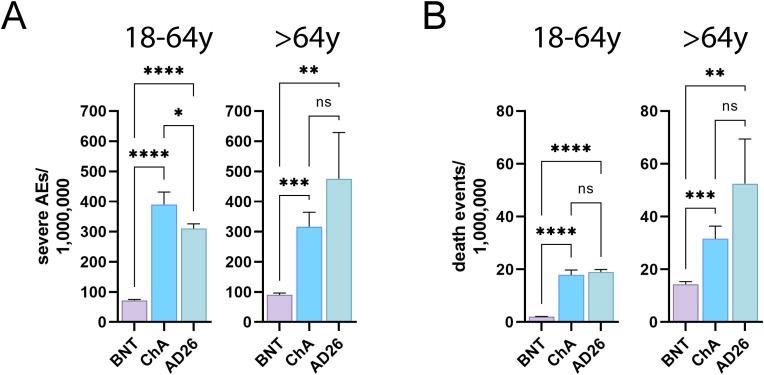
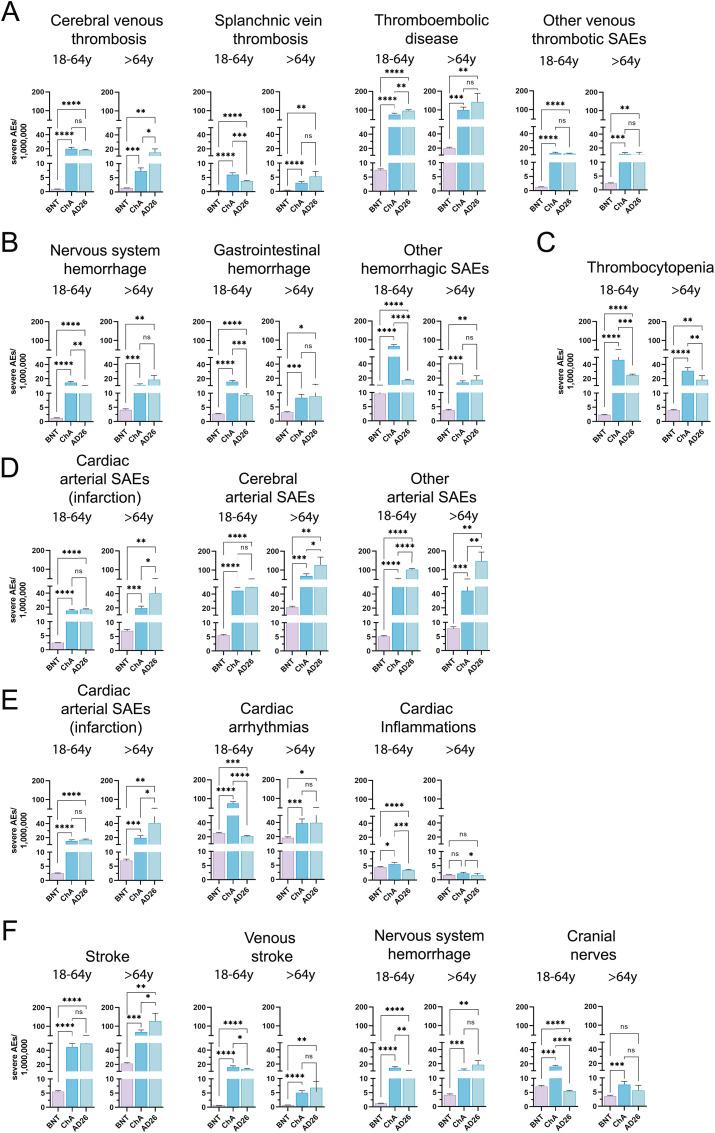
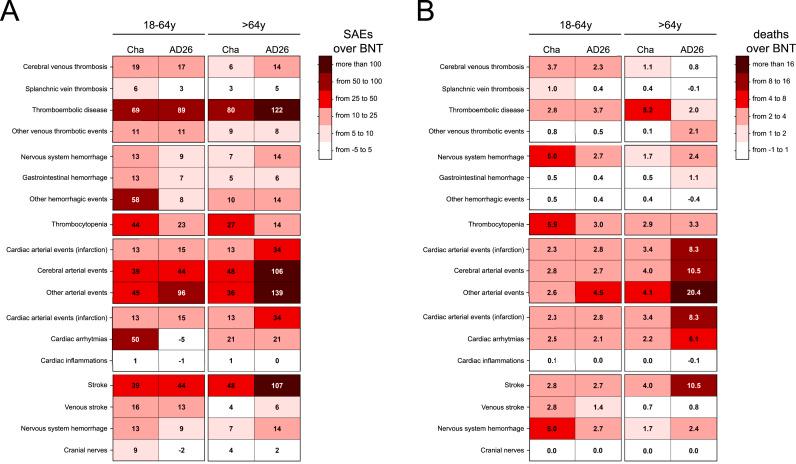
The ChAdOx1 nCoV-19 (ChA) (AstraZeneca) and Ad26.COV2.S (AD26) (Janssen) vaccines are virus-based coronavirus disease 2019 (COVID-19) vaccines used worldwide. In spring 2021, venous blood clots and thrombocytopenia were described in some vaccine recipients. We evaluated the frequency of severe adverse events (SAEs) documented in the EudraVigilance European database in young adult (18-64 years old) and older (≥65 years old) vaccine recipients up to 23 June 2021 and related them to coagulation disorders and arterial, cardiac, and nervous system events. Comparison between the frequency of SAEs and SAE-related deaths in ChA and AD26 vs. BNT162b2 COVID-19 (BNT) (Pfizer/BioNTech) vaccine recipients demonstrated: 1) ChA and AD26 recipients than BNT recipients had higher frequencies of not only SAEs caused by venous blood clots and hemorrhage, but also thromboembolic disease and arterial events, including myocardial infarction and stroke; 2) a corresponding higher frequency of SAE-related deaths. The frequency was higher in both young adults and older adults. Comparison between the frequency of SAEs and SAE-related deaths in AD26 vs. ChA recipients demonstrated in AD26 recipients: 1) lower frequency of thrombocytopenia; 2) lower frequency of SAEs in young adult recipients; 3) higher frequency of SAEs in older recipients. Interestingly, most of the venous thrombotic SAEs associated with ChA and AD26 vaccines were not associated with thrombocytopenia, suggesting that TTS (thrombosis with thrombocytopenia syndrome) is not the only type of thrombosis observed following virus-based vaccines. In conclusion, both virus-based COVID-19 vaccines show more SAEs than BNT, but the frequency of the SAE type in the different age groups differs, suggesting that the mechanisms responsible of SAEs overlap only partly.
腺病毒载体新冠病毒 2019 疫苗(ChAdOx1 nCoV-19,ChA)(阿斯利康)和 26 型腺病毒载体新冠病毒 2019 疫苗(Ad26.COV2.S,AD26)(杨森)是两种在全球范围内使用的基于病毒的新型冠状病毒病 2019(COVID-19)疫苗。2021 年春季,一些疫苗接种者出现了静脉血栓和血小板减少症。我们评估了截至 2021 年 6 月 23 日,在年轻成年人(18-64 岁)和老年人(≥65 岁)疫苗接种者中,在欧洲 EudraVigilance 数据库中记录的严重不良事件(SAE)的频率,并将其与凝血障碍以及动脉、心脏和神经系统事件相关联。ChA 和 AD26 与 BNT162b2 COVID-19(BNT)(辉瑞/生物技术)疫苗接种者的 SAE 频率和 SAE 相关死亡比较显示:1)ChA 和 AD26 接种者比 BNT 接种者不仅出现静脉血栓和出血引起的 SAE 频率更高,而且血栓栓塞性疾病和动脉事件(包括心肌梗死和中风)的频率也更高;2)SAE 相关死亡的相应频率更高。这种情况在年轻成年人和老年人中都更为常见。AD26 与 ChA 接种者的 SAE 频率和 SAE 相关死亡比较显示,在 AD26 接种者中:1)血小板减少症的频率更低;2)年轻成年接种者中 SAE 的频率更低;3)老年接种者中 SAE 的频率更高。有趣的是,与 ChA 和 AD26 疫苗相关的大多数静脉血栓性 SAE 与血小板减少症无关,这表明 TTS(血栓伴血小板减少综合征)不是仅在基于病毒的疫苗接种后观察到的血栓类型。总之,两种基于病毒的 COVID-19 疫苗的 SAE 发生率均高于 BNT,但不同年龄组 SAE 类型的频率不同,这表明导致 SAE 的机制仅部分重叠。




 Zotero 插件