
社会经济地位低下人群对健康、医疗保健和电子健康的态度:基于社区的参与式方法。
Attitudes Toward Health, Healthcare, and eHealth of People With a Low Socioeconomic Status: A Community-Based Participatory Approach.
作者信息
Faber Jasper S, Al-Dhahir Isra, Reijnders Thomas, Chavannes Niels H, Evers Andrea W M, Kraal Jos J, van den Berg-Emons H J G, Visch Valentijn T
机构信息
Faculty of Industrial Design Engineering, Delft University of Technology, Delft, Netherlands.
Faculty of Social and Behavioral Sciences, Leiden University, Leiden, Netherlands.
出版信息
Front Digit Health. 2021 Jul 8;3:690182. doi: 10.3389/fdgth.2021.690182. eCollection 2021.
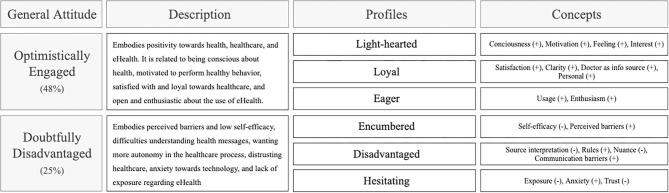
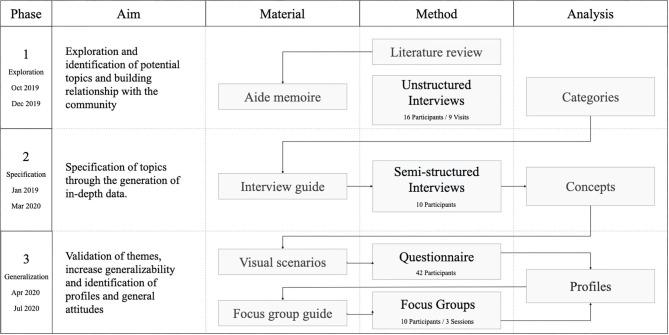
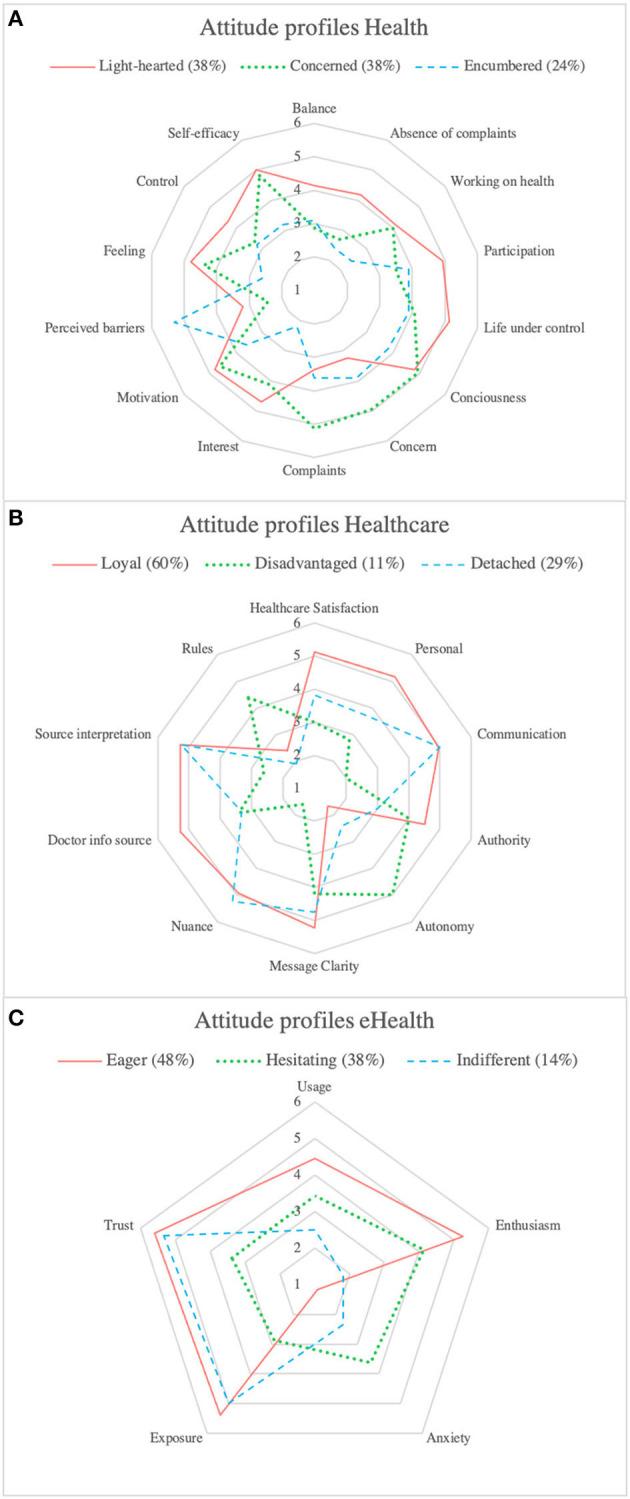
Low socioeconomic status (SES) is associated with a higher prevalence of unhealthy lifestyles compared to a high SES. Health interventions that promote a healthy lifestyle, like eHealth solutions, face limited adoption in low SES groups. To improve the adoption of eHealth interventions, their alignment with the target group's attitudes is crucial. This study investigated the attitudes of people with a low SES toward health, healthcare, and eHealth. We adopted a mixed-method community-based participatory research approach with 23 members of a community center in a low SES neighborhood in the city of Rotterdam, the Netherlands. We conducted a first set of interviews and analyzed these using a grounded theory approach resulting in a group of themes. These basic themes' representative value was validated and refined by an online questionnaire involving a different sample of 43 participants from multiple community centers in the same neighborhood. We executed three focus groups to validate and contextualize the results. We identified two general attitudes based on nine profiles toward health, healthcare, and eHealth. The first general attitude, , embodied approximately half our sample and involved toward health, toward healthcare, and to adopt eHealth. The second general attitude, , represented roughly a quarter of our sample and was related to feeling toward health, feeling within healthcare, and toward eHealth adoption. The resulting attitudes strengthen the knowledge of the motivation and behavior of people with low SES regarding their health. Our results indicate that negative health attitudes are not as evident as often claimed. Nevertheless, intervention developers should still be mindful of differentiating life situations, motivations, healthcare needs, and eHealth expectations. Based on our findings, we recommend eHealth should fit into the person's daily life, ensure personal communication, be perceived usable and useful, adapt its communication to literacy level and life situation, allow for meaningful self-monitoring and embody self-efficacy enhancing strategies.
与高社会经济地位(SES)相比,低SES与不健康生活方式的更高患病率相关。促进健康生活方式的健康干预措施,如电子健康解决方案,在低SES群体中的采用率有限。为了提高电子健康干预措施的采用率,使其与目标群体的态度保持一致至关重要。本研究调查了低SES人群对健康、医疗保健和电子健康的态度。我们采用了基于社区的混合方法参与式研究方法,研究对象为荷兰鹿特丹市一个低SES社区中心的23名成员。我们进行了第一组访谈,并采用扎根理论方法对其进行分析,得出了一组主题。这些基本主题的代表性价值通过一份在线问卷得到了验证和完善,该问卷涉及来自同一社区多个社区中心的43名不同参与者的样本。我们开展了三个焦点小组来验证结果并将其置于具体情境中。基于对健康、医疗保健和电子健康的九种态度特征,我们确定了两种总体态度。第一种总体态度,约占我们样本的一半,涉及对健康的 态度、对医疗保健的 态度以及对采用电子健康的 态度。第二种总体态度,约占我们样本的四分之一,与对健康的 感觉、在医疗保健中的 感觉以及对采用电子健康的 态度有关。由此产生的态度增强了对低SES人群健康动机和行为的认识。我们的结果表明,负面健康态度并不像通常声称的那样明显。然而,干预措施开发者仍应注意区分生活状况、动机、医疗保健需求和电子健康期望。基于我们的研究结果,我们建议电子健康应融入个人日常生活,确保人际沟通,被视为可用且有用,使其沟通适应文化水平和生活状况,允许进行有意义的自我监测,并体现增强自我效能的策略。 (原文部分内容缺失,用 表示)

 Zotero 插件