
肝细胞癌一线联合免疫治疗在基因组、转录组和免疫组库水平的反应分层
Response Stratification in the First-Line Combined Immunotherapy of Hepatocellular Carcinoma at Genomic, Transcriptional and Immune Repertoire Levels.
作者信息
Cheng Jiamin, Li Yinyin, Wang Xiaohui, Dong Zheng, Chen Yan, Zhang Rui, Huang Jiagan, Jin Xueyuan, Yao Jianfei, Ge Aifang, Song Lele, Lu Yinying, Zeng Zhen
机构信息
Comprehensive Liver Cancer Department, The Fifth Medical Center of the Chinese PLA General Hospital, Beijing, 100039, People's Republic of China.
HaploX Biotechnology, Shenzhen, Guangdong Province, People's Republic of China.
出版信息
J Hepatocell Carcinoma. 2021 Oct 27;8:1281-1295. doi: 10.2147/JHC.S326356. eCollection 2021.
BACKGROUND
Immunotherapy combined with VEGF inhibitor has become the new first-line therapy for advanced or metastatic hepatocellular carcinoma (HCC). However, the biomarkers for response and prognosis stratification of HCC first-line combined immunotherapy have not been clarified.
METHODS
Here, we obtained the genomic alteration data from pre-therapeutic samples of 103 HCC patients using a 605-gene NGS test, and obtained the transcriptional and T cell receptor (TCR) diversity data from 18 patients who underwent the first-line combined immunotherapy using RNAseq and TCR sequencing, respectively. Patients received sorafenib/sintilimab or lenvatinib/sintilimab combined first-line therapy and the response was assessed at 3-6 cycles of therapy.
RESULTS
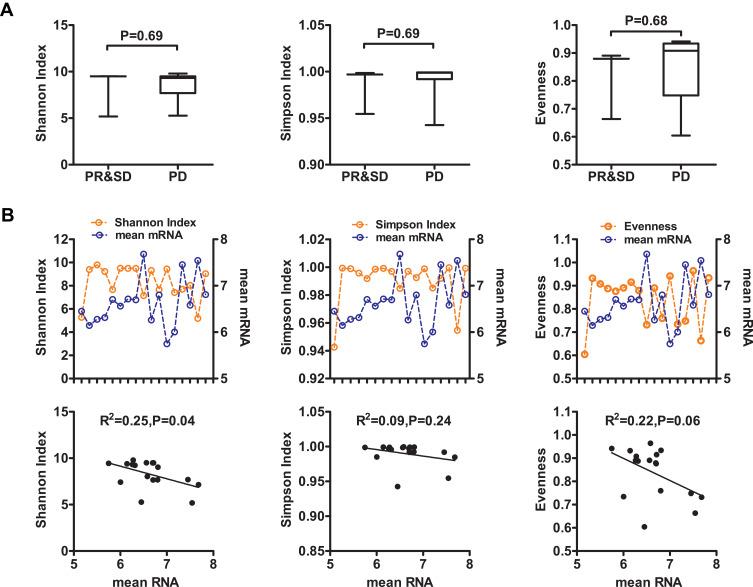
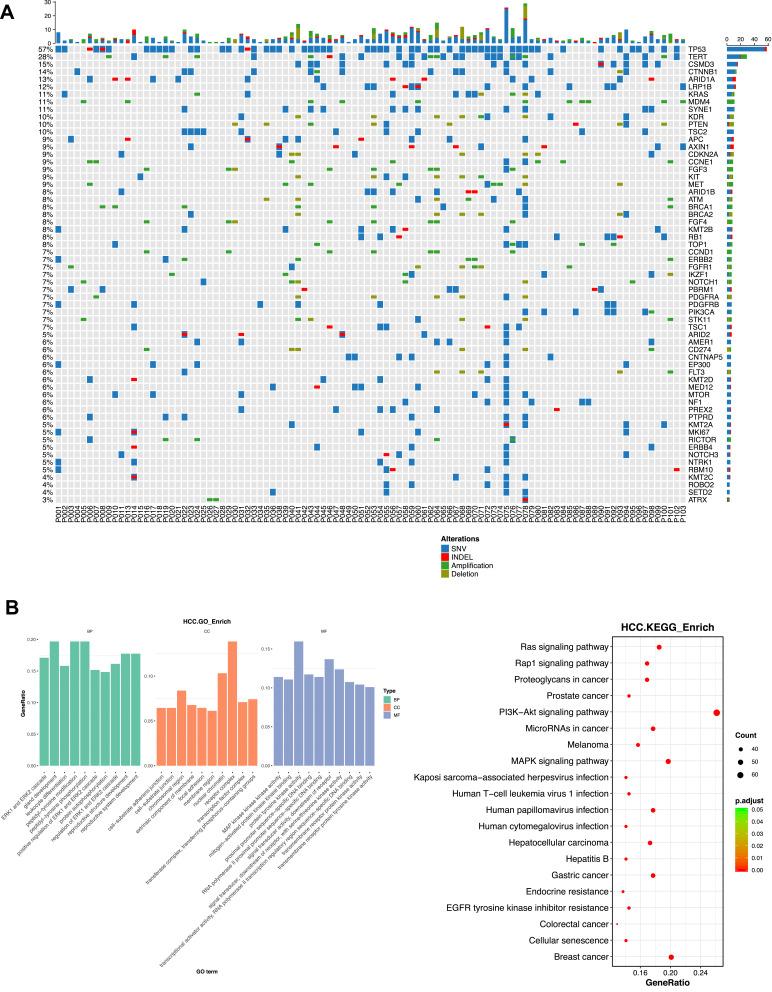
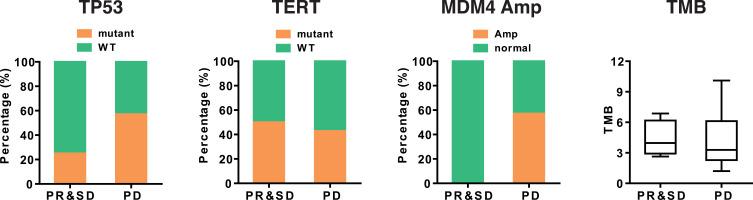
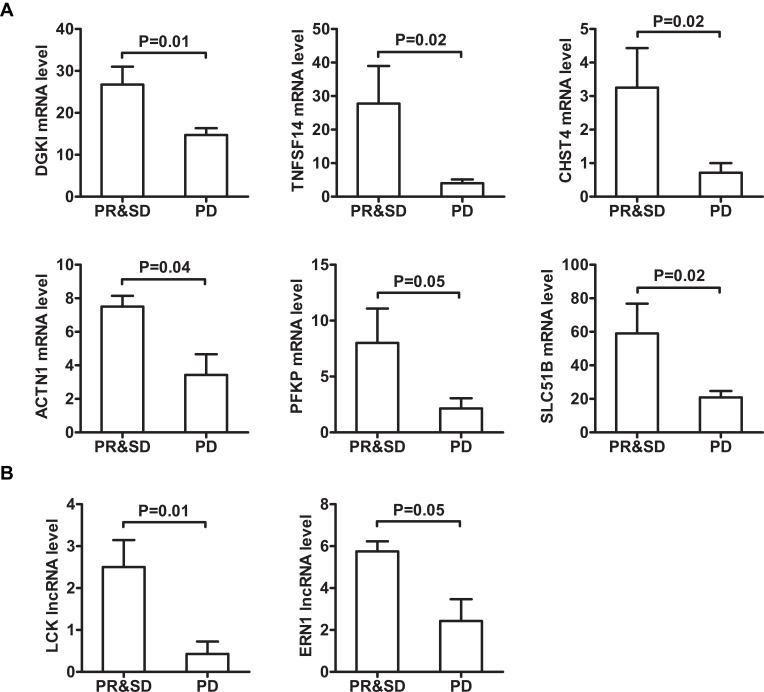
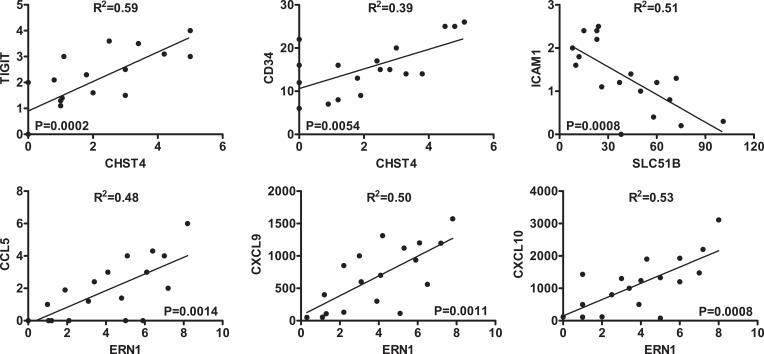
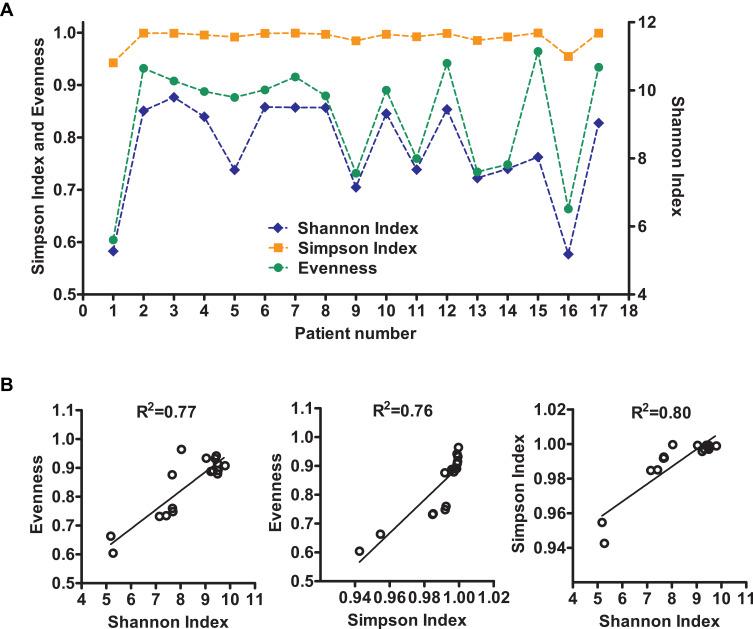
No stratification of response was found in high-frequency key driver gene mutations, including TP53 and TERT. However, significantly higher ratio of progression (PD) was found in patients carrying MDM4 amplification. Similarly, FGF/3/4/19 amplifications could also result in high ratio of PD. The mRNA and lncRNA levels of eight genes related to hepatic metabolism and immune microenvironment exhibited significant differences between PR/SD and PD group, including DGKI, TNFSF14, CHST4, ACTIN1, PFKP, SLC51B, LCK and ERN1, suggesting stratification of response. Furthermore, moderate correlation was identified between the stratification genes (CHST4, SLC51B and ERN1) and immune factors (TIGIT, CD34, ICAM1, CCL5, CXCL9 and CXCL10), suggesting potential roles of these factors in immunoregulation. Strong linear correlation was found between any two of the three indexes for TCR CDR3 diversity, including Shannon-Wiener Index, Simpson index and evenness. However, no significant difference was found in the three indexes between the PR/SD and PD group, suggesting no stratification of response by these indexes.
CONCLUSION
We identified several potential biomarkers for response stratification in the first-line combined immunotherapy. MDM4 was capable of predicting disease progression, and a panel mRNA and lncRNA of eight genes may also predict the response. Further validation is needed to verify these biomarkers.
背景
免疫疗法联合血管内皮生长因子(VEGF)抑制剂已成为晚期或转移性肝细胞癌(HCC)的新一线治疗方案。然而,HCC一线联合免疫疗法的疗效及预后分层生物标志物尚未明确。
方法
在此,我们使用605基因二代测序(NGS)检测,从103例HCC患者的治疗前样本中获取基因组改变数据,并分别通过RNA测序和T细胞受体(TCR)测序,从18例接受一线联合免疫疗法的患者中获取转录组和TCR多样性数据。患者接受索拉非尼/信迪利单抗或仑伐替尼/信迪利单抗联合一线治疗,并在治疗3 - 6个周期时评估疗效。
结果
在包括TP53和端粒酶逆转录酶(TERT)在内的高频关键驱动基因突变中,未发现疗效分层情况。然而,携带MDM4扩增的患者中疾病进展(PD)比例显著更高。同样,成纤维细胞生长因子(FGF)/3/4/19扩增也可导致高PD比例。与肝脏代谢和免疫微环境相关的8个基因的信使核糖核酸(mRNA)和长链非编码核糖核酸(lncRNA)水平在部分缓解(PR)/疾病稳定(SD)组和PD组之间存在显著差异,包括二酰甘油激酶ι(DGKI)、肿瘤坏死因子配体超家族成员14(TNFSF14)、碳水化合物硫酸转移酶4(CHST4)、肌动蛋白1(ACTIN1)、磷酸果糖激酶(PFKP)、溶质载体家族51成员B(SLC51B)、淋巴细胞特异性蛋白酪氨酸激酶(LCK)和内质网应激反应1(ERN1),提示存在疗效分层。此外,分层基因(CHST4、SLC51B和ERN1)与免疫因子(T细胞免疫球蛋白和粘蛋白结构域分子3(TIGIT)、CD34、细胞间粘附分子1(ICAM1)、趋化因子配体5(CCL5)、趋化因子CXCL9和趋化因子CXCL10)之间存在中度相关性,提示这些因子在免疫调节中可能发挥作用。TCR互补决定区3(CDR3)多样性的三个指标(香农 - 维纳指数、辛普森指数和均匀度)中的任意两个之间存在强线性相关性。然而,PR/SD组和PD组之间这三个指标无显著差异,提示这些指标不存在疗效分层。
结论
我们鉴定出了几种一线联合免疫疗法中疗效分层的潜在生物标志物。MDM4能够预测疾病进展,一组8个基因的mRNA和lncRNA也可能预测疗效。需要进一步验证以证实这些生物标志物。

 Zotero 插件