
乌干达一家三级教学医院成人外科病房收治的继发性腹膜炎患者,应用 QSOFA 和 SIRS 评分预测不良预后的比较:一项前瞻性队列研究。
Comparison of QSOFA and sirs scores for the prediction of adverse outcomes of secondary peritonitis among patients admitted on the adult surgical ward in a tertiary teaching hospital in Uganda: a prospective cohort study.
机构信息
Department of Surgery, Villa Maria Hospital, P.O Box 32, Masaka, Uganda.
Department of Surgery, Makerere University, College of Health Sciences, P. O. Box 7072, Kampala, Uganda.
出版信息
BMC Emerg Med. 2021 Nov 6;21(1):128. doi: 10.1186/s12873-021-00528-x.
BACKGROUND
SIRS and qSOFA are two ancillary scoring tools that have been used globally, inside and outside of ICU to predict adverse outcomes of infections such as secondary peritonitis. A tertiary teaching hospital in Uganda uses SIRS outside the ICU to identify patients with secondary peritonitis, who are at risk of adverse outcomes. However, there are associated delays in decision making given SIRS partial reliance on laboratory parameters which are often not quickly available in a resource limited emergency setting. In response to the practical limitations of SIRS, the sepsis-3 task force recommends qSOFA as a better tool. However, its performance in patients with secondary peritonitis in comparison to that of SIRS has not been evaluated in a resource limited setting of a tertiary teaching hospital in a low and middle income country like Uganda.
OBJECTIVE
To compare the performance of qSOFA and SIRS scores in predicting adverse outcomes of secondary peritonitis among patients on the adult surgical wards in a tertiary teaching hospital in Uganda.
METHODS
This was a prospective cohort study of patients with clinically confirmed secondary peritonitis, from March 2018 to January 2019 at the Accident and Emergency unit and the adult surgical wards of a tertiary teaching hospital in Uganda. QSOFA and SIRS scores were generated for each patient, with a score of ≥2 recorded as high risk, while a score of < 2 recorded as low risk for the adverse outcome respectively. After surgery, patients were followed up until discharge or death. In-hospital mortality and prolonged hospital stay were the primary and secondary adverse outcomes, respectively. Sensitivity, specificity, PPV, NPV and accuracy at 95% confidence interval were calculated for each of the scores using STATA v.13.
RESULTS
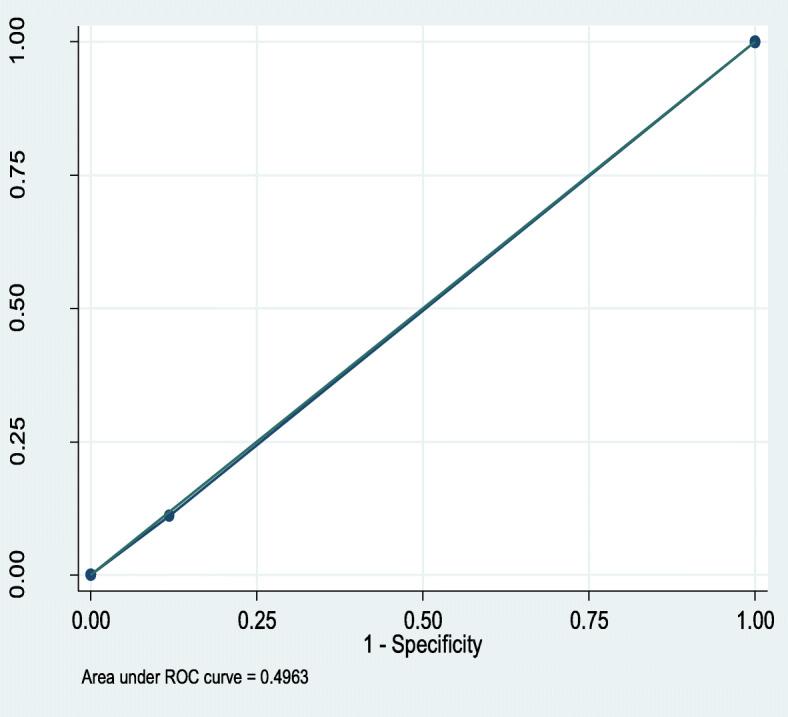
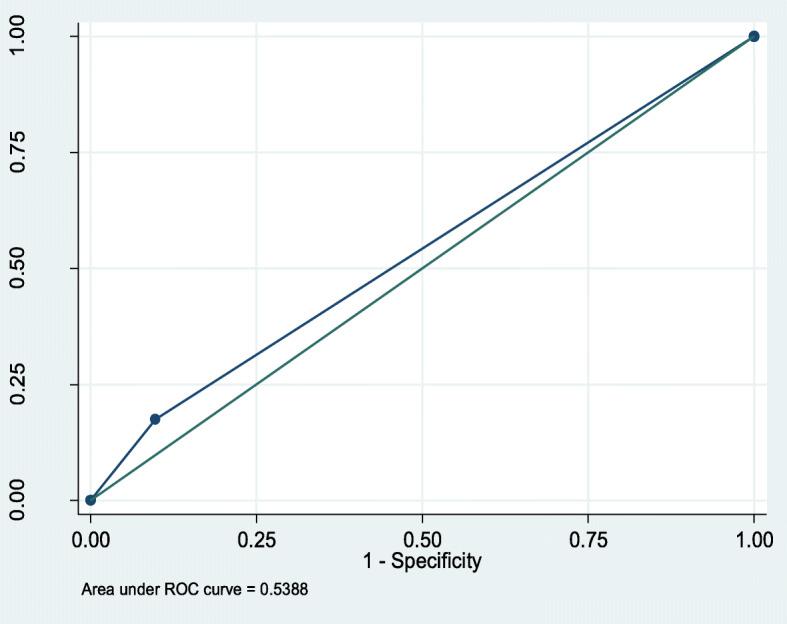
A total of 153 patients were enrolled. Of these, 151(M: F, 2.4:1) completed follow up and were analysed, 2 were excluded. Mortality rate was 11.9%. Fourty (26.5%) patients had a prolonged hospital stay. QSOFA predicted in-hospital mortality with AUROC of 0.52 versus 0.62, for SIRS. Similarly, qSOFA predicted prolonged hospital stay with AUROC of 0.54 versus 0.57, for SIRS.
CONCLUSION
SIRS is superior to qSOFA in predicting both mortality and prolonged hospital stay among patients with secondary peritonitis. However, overall, both scores showed a poor discrimination for both adverse outcomes and therefore not ideal tools.
背景
全身炎症反应综合征(SIRS)和快速序贯器官衰竭评估(qSOFA)是两种辅助评分工具,已在全球 ICU 内外用于预测继发性腹膜炎等感染的不良结局。乌干达的一家三级教学医院在外科 ICU 外使用 SIRS 来识别继发性腹膜炎患者,这些患者有发生不良结局的风险。然而,由于 SIRS 部分依赖于实验室参数,而在资源有限的紧急情况下这些参数往往无法迅速获得,这导致决策存在延迟。为了解决 SIRS 的实际局限性,脓毒症-3 工作组建议使用 qSOFA 作为更好的工具。然而,在资源有限的乌干达三级教学医院的情况下,尚未评估 qSOFA 在继发性腹膜炎患者中的表现与 SIRS 的表现相比。
目的
比较 qSOFA 和 SIRS 评分在预测乌干达一家三级教学医院成人外科病房继发性腹膜炎不良结局中的表现。
方法
这是一项前瞻性队列研究,纳入 2018 年 3 月至 2019 年 1 月在乌干达一家三级教学医院急症室和成人外科病房确诊为继发性腹膜炎的患者。为每位患者生成 qSOFA 和 SIRS 评分,评分≥2 记录为高风险,评分<2 记录为低风险。手术后,对患者进行随访,直至出院或死亡。住院死亡率和住院时间延长分别为主要和次要不良结局。使用 STATA v.13 在 95%置信区间计算每个评分的灵敏度、特异性、PPV、NPV 和准确度。
结果
共纳入 153 例患者,其中 151 例(男:女,2.4:1)完成了随访分析,2 例被排除。死亡率为 11.9%。40 例(26.5%)患者住院时间延长。qSOFA 预测住院死亡率的 AUROC 为 0.52,SIRS 为 0.62。同样,qSOFA 预测住院时间延长的 AUROC 为 0.54,SIRS 为 0.57。
结论
SIRS 在预测继发性腹膜炎患者的死亡率和住院时间延长方面优于 qSOFA。然而,总的来说,这两种评分对两种不良结局的预测都有较差的区分能力,因此不是理想的工具。


 Zotero 插件