
2020年澳大利亚三级儿科医院就诊儿童中新型冠状病毒感染的前瞻性特征分析:一项全国队列研究
Prospective characterisation of SARS-CoV-2 infections among children presenting to tertiary paediatric hospitals across Australia in 2020: a national cohort study.
作者信息
Wurzel Danielle, McMinn Alissa, Hoq Monsurul, Blyth Christopher C, Burgner David, Tosif Shidan, Buttery Jim, Carr Jeremy, Clark Julia E, Cheng Allen C, Dinsmore Nicole, Francis Joshua Reginald, Kynaston Anne, Lucas Ryan, Marshall Helen, McMullan Brendan, Singh-Grewal Davinder, Wood Nicholas, Macartney Kristine, Britton Phil N, Crawford Nigel W
机构信息
Infection and Immunity Theme, Murdoch Childrens Research Institute, Parkville, Victoria, Australia
Respiratory and Sleep Medicine, The Royal Children's Hospital Melbourne, Parkville, Victoria, Australia.
出版信息
BMJ Open. 2021 Nov 8;11(11):e054510. doi: 10.1136/bmjopen-2021-054510.
OBJECTIVE
To present Australia-wide data on paediatric COVID-19 and multisystem inflammatory syndromes to inform health service provision and vaccination prioritisation.
DESIGN
Prospective, multicentre cohort study.
SETTING
Eight tertiary paediatric hospitals across six Australian states and territories in an established research surveillance network-Paediatric Active Enhanced Disease (PAEDS).
PARTICIPANTS
All children aged <19 years with SARS-CoV-2 infection including COVID-19, Paediatric Inflammatory Multisystem Syndrome Temporally Associated with SARS-CoV-2 (PIMS-TS) and Kawasaki-like disease TS infection (KD-TS) treated at a PAEDS site from 24 March 2020 to 31 December 2020.
INTERVENTION
Laboratory-confirmed SARS-CoV-2 infection.
MAIN OUTCOME
Incidence of severe disease among children with COVID-19, PIMS-TS and KD-TS. We also compared KD epidemiology before and during the COVID-19 pandemic.
RESULTS
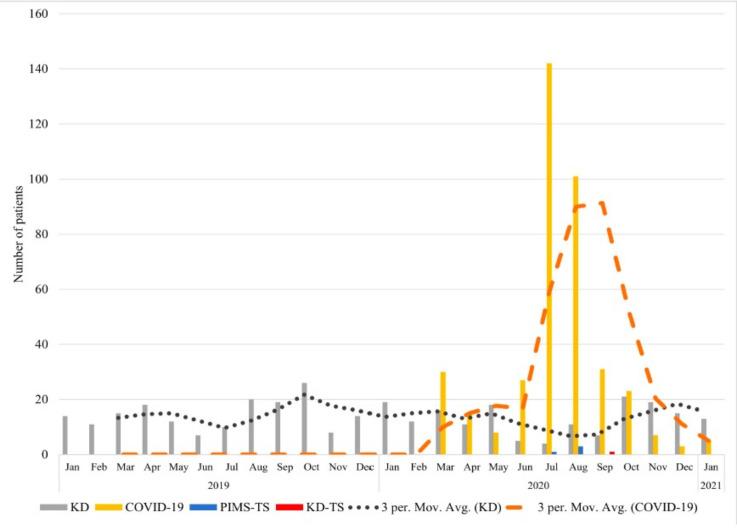
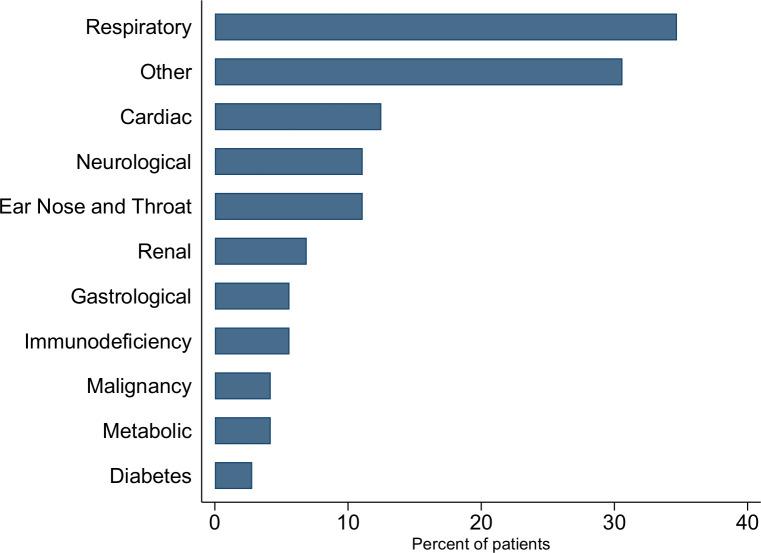
Among 386 children with SARS-CoV-2 infection, 381 (98.7%) had COVID-19 (median 6.3 years (IQR 2.1-12.8),53.3% male) and 5 (1.3%) had multisystem inflammatory syndromes (PIMS-TS, n=4; KD-TS, n=1) (median 7.9 years (IQR 7.8-9.8)). Most children with COVID-19 (n=278; 73%) were Australian-born from jurisdictions with highest community transmission. Comorbidities were present in 72 (18.9%); cardiac and respiratory comorbidities were most common (n=32/72;44%). 37 (9.7%) children with COVID-19 were hospitalised, and two (0.5%) required intensive care. Postinfective inflammatory syndromes (PIMS-TS/KD-TS) were uncommon (n=5; 1.3%), all were hospitalised and three (3/5; 60%) required intensive care management. All children recovered and there were no deaths. KD incidence remained stable during the pandemic compared with prepandemic.
CONCLUSIONS
Most children with COVID-19 had mild disease. Severe disease was less frequent than reported in high prevalence settings. Preventative strategies, such as vaccination, including children and adolescents, could reduce both the acute and postinfective manifestations of the disease.
目的
提供全澳大利亚范围内关于儿童新冠病毒病和多系统炎症综合征的数据,为卫生服务提供和疫苗接种优先级提供信息。
设计
前瞻性多中心队列研究。
地点
在一个既定的研究监测网络——儿童主动强化疾病(PAEDS)中,澳大利亚六个州和领地的八家三级儿童医院。
参与者
2020年3月24日至2020年12月31日期间在PAEDS机构接受治疗的所有年龄小于19岁的感染严重急性呼吸综合征冠状病毒2(SARS-CoV-2)的儿童,包括新冠病毒病、与SARS-CoV-2暂时相关的儿童炎症性多系统综合征(PIMS-TS)和川崎样疾病TS感染(KD-TS)。
干预措施
实验室确诊的SARS-CoV-2感染。
主要结局
新冠病毒病、PIMS-TS和KD-TS患儿中重症的发生率。我们还比较了新冠疫情之前和期间KD的流行病学情况。
结果
在386例感染SARS-CoV-2的儿童中,381例(98.7%)患有新冠病毒病(中位年龄6.3岁(四分位间距2.1 - 12.8),53.3%为男性),5例(1.3%)患有多系统炎症综合征(PIMS-TS,4例;KD-TS,1例)(中位年龄7.9岁(四分位间距7.8 - 9.8))。大多数新冠病毒病患儿(278例;73%)出生于澳大利亚社区传播率最高的辖区。72例(18.9%)有合并症;心脏和呼吸系统合并症最为常见(32/72例;44%)。37例(9.7%)新冠病毒病患儿住院治疗,2例(0.5%)需要重症监护。感染后炎症综合征(PIMS-TS/KD-TS)不常见(5例;1.3%),均住院治疗,3例(3/5;60%)需要重症监护管理。所有儿童均康复,无死亡病例。与疫情前相比,疫情期间KD的发病率保持稳定。
结论
大多数新冠病毒病患儿病情较轻。重症的发生率低于高流行地区报告的情况。包括儿童和青少年在内的疫苗接种等预防策略可减少该病的急性和感染后表现。

 Zotero 插件