
异常的 TP53 预测了 Barrett 食管患者发生进展的风险,无论是否存在异型增生的诊断。
Abnormal TP53 Predicts Risk of Progression in Patients With Barrett's Esophagus Regardless of a Diagnosis of Dysplasia.
机构信息
Department of Pathology, Brigham and Women's Hospital and Harvard Medical School, Boston, Massachusetts.
Inform Diagnostics, Irving, Texas.
出版信息
Gastroenterology. 2022 Feb;162(2):468-481. doi: 10.1053/j.gastro.2021.10.038. Epub 2021 Oct 29.
BACKGROUND AND AIMS
Barrett's esophagus (BE) is the precursor to esophageal adenocarcinoma. A major challenge is identifying the small group with BE who will progress to advanced disease from the many who will not. Assessment of p53 status has promise as a predictive biomarker, but analytic limitations and lack of validation have precluded its use. The aim of this study was to develop a robust criteria for grading abnormal immunohistochemical (IHC) expression of p53 and to test its utility as a biomarker for progression in BE.
METHODS
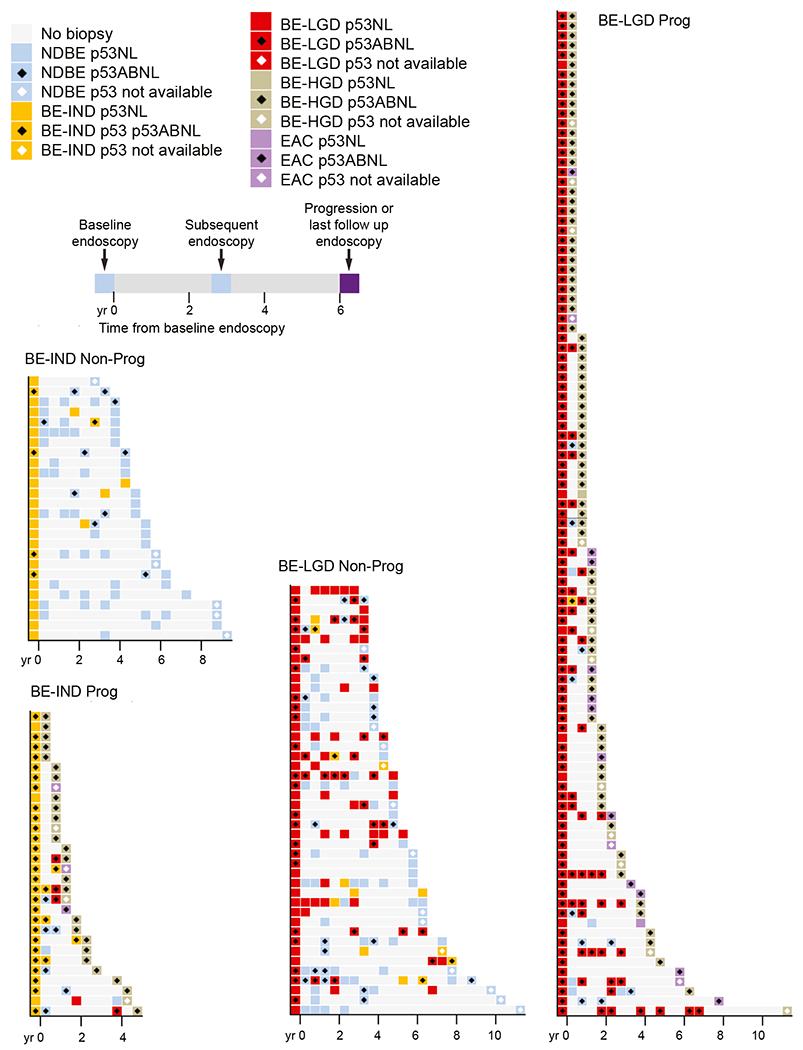
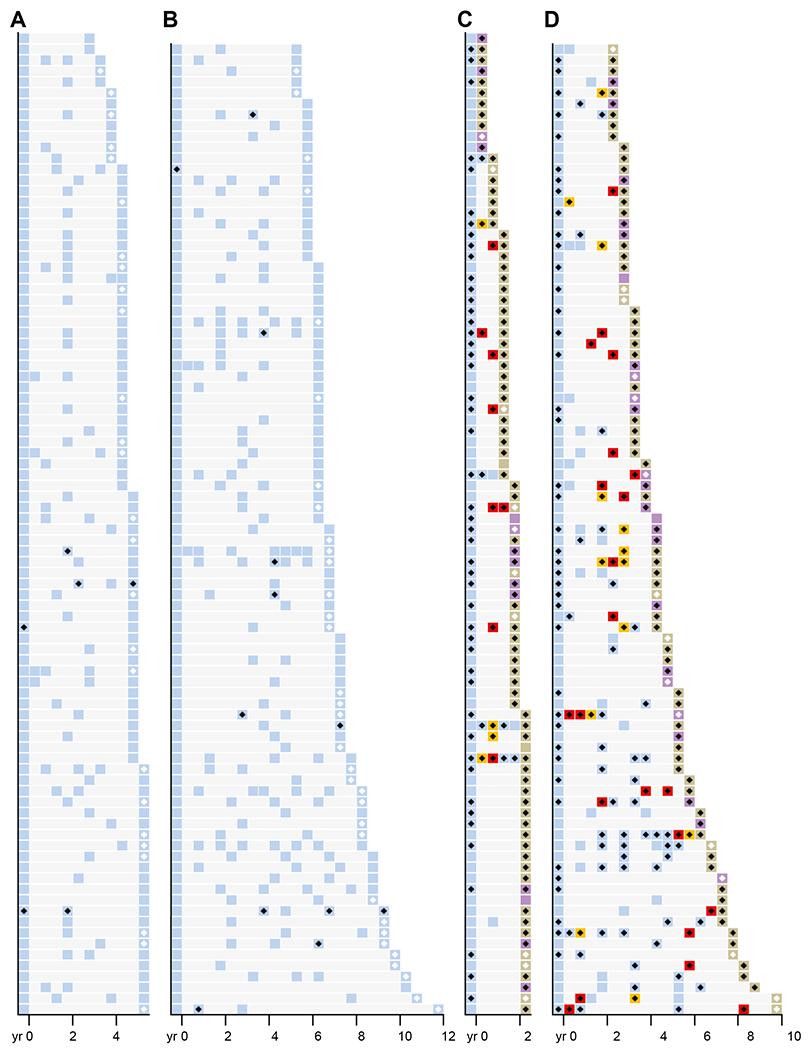
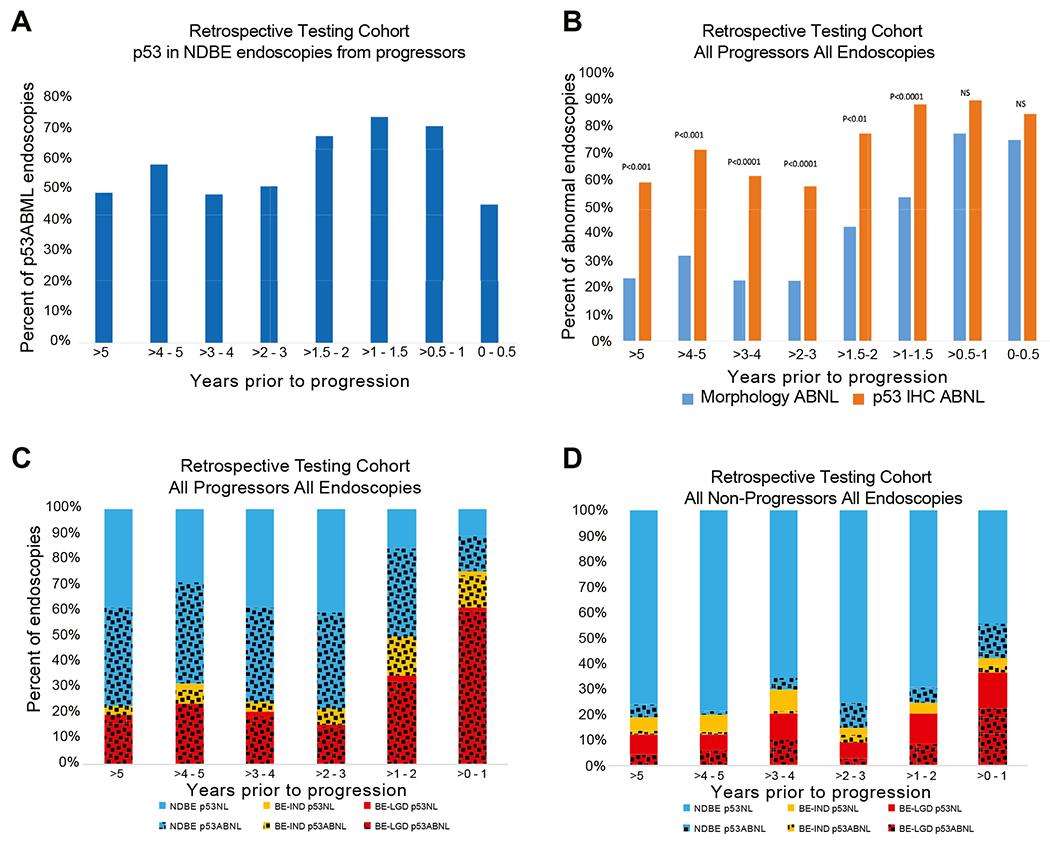
Criteria for abnormal IHC of p53 were developed in BE biopsies and validated with sequencing to assess TP53 mutations. The utility of p53 IHC as a biomarker for progression of BE was tested retrospectively in 561 patients with BE with or without known progression. The findings were prospectively validated in a clinical practice setting in 1487 patients with BE.
RESULTS
Abnormal p53 IHC highly correlated with TP53 mutation status (90.6% agreement) and was strongly associated with neoplastic progression in the retrospective cohorts, regardless of histologic diagnosis (P < .001). In the retrospective cohort, abnormal p53 was associated with a hazard ratio of 5.03 (95% confidence interval, 3.88-6.5) and a hazard ratio of 5.27 (95% confidence interval, 3.93-7.07) for patients with exclusively nondysplastic disease before progression. In the prospective validation cohort, p53 IHC predicted progression among nondysplastic BE, indefinite for dysplasia, and low-grade dysplasia (P < .001).
CONCLUSIONS
p53 IHC identifies patients with BE at higher risk of progression, including in patients without evidence of dysplasia. p53 IHC is inexpensive, easily integrated into routine practice, and should be considered in biopsies from all BE patients without high-grade dysplasia or cancer.
背景与目的
巴雷特食管(BE)是食管腺癌的前身。主要的挑战是识别出一小部分 BE 患者会从许多不会进展的患者中进展为晚期疾病。p53 状态的评估作为一种预测生物标志物具有很大的潜力,但分析限制和缺乏验证使其无法使用。本研究的目的是开发一种稳健的标准来对 p53 的异常免疫组化(IHC)表达进行分级,并测试其作为 BE 进展的生物标志物的效用。
方法
在 BE 活检中制定了异常 p53 IHC 的标准,并通过测序进行验证,以评估 TP53 突变。在有或没有已知进展的 561 例 BE 患者中,对 p53 IHC 作为 BE 进展的生物标志物进行了回顾性测试。在 1487 例 BE 患者的临床实践环境中前瞻性验证了这些发现。
结果
异常 p53 IHC 与 TP53 突变状态高度相关(一致性为 90.6%),并且与回顾性队列中的肿瘤进展密切相关,无论组织学诊断如何(P<.001)。在回顾性队列中,异常 p53 与 5.03 倍的风险比(95%置信区间,3.88-6.5)相关,与进展前仅为非发育不良性疾病的患者的 5.27 倍的风险比(95%置信区间,3.93-7.07)相关。在前瞻性验证队列中,p53 IHC 预测了非发育不良性 BE、不明确发育不良和低级别发育不良患者的进展(P<.001)。
结论
p53 IHC 可识别出具有更高进展风险的 BE 患者,包括没有发育不良证据的患者。p53 IHC 价格低廉,易于纳入常规实践,应考虑在没有高级别发育不良或癌症的所有 BE 患者的活检中使用。



 Zotero 插件