
乙醇和/或咖啡因暴露的神经化学和行为后果:斑马鱼和啮齿动物的影响。
Neurochemical and Behavioral Consequences of Ethanol and/or Caffeine Exposure: Effects in Zebrafish and Rodents.
机构信息
Department of Biology and Center for Neuroscience and Behavior, American University, Washington, DC 20016, USA.
出版信息
Curr Neuropharmacol. 2022 Mar 4;20(3):560-578. doi: 10.2174/1570159X19666211111142027.
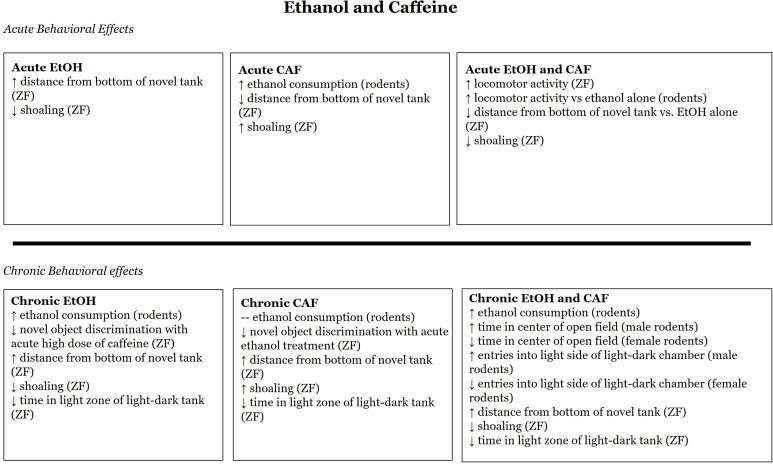
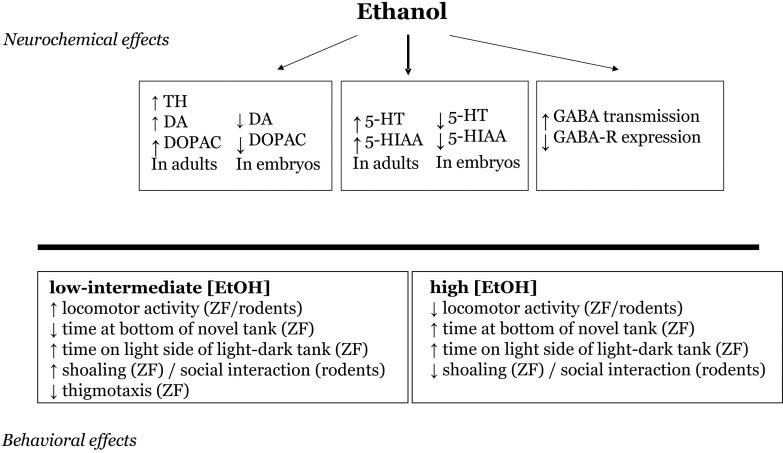
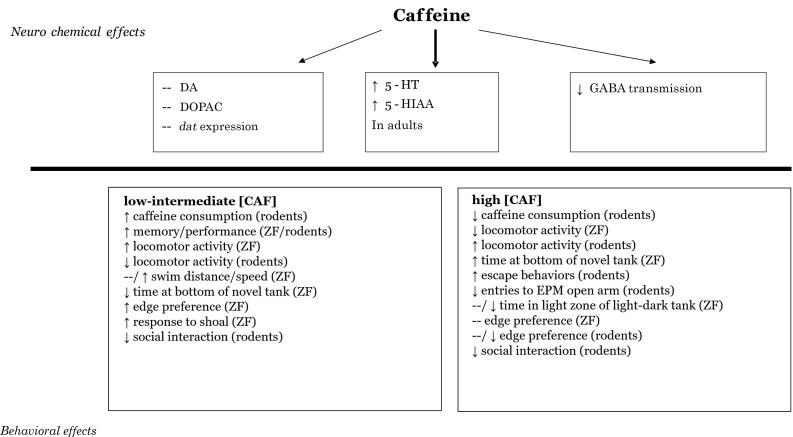
Zebrafish are increasingly being utilized to model the behavioral and neurochemical effects of pharmaceuticals and, more recently, pharmaceutical interactions. Zebrafish models of stress establish that both caffeine and ethanol influence anxiety, though few studies have implemented coadministration to assess the interaction of anxiety and reward-seeking. Caffeine exposure in zebrafish is teratogenic, causing developmental abnormalities in the cardiovascular, neuromuscular, and nervous systems of embryos and larvae. Ethanol is also a teratogen and, as an anxiolytic substance, may be able to offset the anxiogenic effects of caffeine. Co-exposure to caffeine and alcohol impacts neuroanatomy and behavior in adolescent animal models, suggesting stimulant substances may moderate the impact of alcohol on neural circuit development. Here, we review the literature describing neuropharmacological and behavioral consequences of caffeine and/or alcohol exposure in the zebrafish model, focusing on neurochemistry, locomotor effects, and behavioral assessments of stress/anxiety as reported in adolescent/juvenile and adult animals. The purpose of this review is twofold: (1) describe the work in zebrafish documenting the effects of ethanol and/or caffeine exposure and (2) compare these zebrafish studies with comparable experiments in rodents. We focus on specific neurochemical pathways (dopamine, serotonin, adenosine, GABA), anxiety-type behaviors (assessed with a novel tank, thigmotaxis, shoaling), and locomotor changes resulting from both individual and co-exposure. We compare findings in zebrafish with those in rodent models, revealing similarities across species and identifying conservation of mechanisms that potentially reinforce coaddiction.
斑马鱼越来越多地被用于模拟药物的行为和神经化学效应,最近还用于模拟药物相互作用。应激斑马鱼模型表明,咖啡因和乙醇都会影响焦虑,但很少有研究实施共同给药来评估焦虑和寻求奖励之间的相互作用。咖啡因暴露在斑马鱼中是致畸的,会导致胚胎和幼虫的心血管、神经肌肉和神经系统发育异常。乙醇也是一种致畸物,作为一种抗焦虑物质,可能能够抵消咖啡因的焦虑作用。咖啡因和酒精共同暴露会影响青少年动物模型的神经解剖结构和行为,这表明兴奋剂物质可能会减轻酒精对神经回路发育的影响。在这里,我们回顾了描述咖啡因和/或酒精暴露在斑马鱼模型中的神经药理学和行为后果的文献,重点介绍了在青少年/青少年和成年动物中报道的神经化学、运动效应和应激/焦虑行为评估。本综述的目的有两个:(1)描述描述乙醇和/或咖啡因暴露影响的斑马鱼研究工作,(2)将这些斑马鱼研究与啮齿动物的类似实验进行比较。我们专注于特定的神经化学途径(多巴胺、血清素、腺苷、GABA)、焦虑型行为(用新型坦克、触须癖、聚集行为评估)以及个体和共同暴露导致的运动变化。我们将斑马鱼的发现与啮齿动物模型的发现进行比较,揭示了物种之间的相似性,并确定了潜在的共同成瘾机制的保守性。
 Zotero 插件