
微量营养素和有毒金属在柬埔寨流行病管理中的作用。
The Role of Micronutrients and Toxic Metals in the Management of Epidemics in Cambodia.
机构信息
Faculty of Science and Technology, International University, Phnom Penh 12000, Cambodia.
Faculty of Architecture & Planning, Rangsit Campus, Thammasat University, Khlong Nueng 12121, Thailand.
出版信息
Int J Environ Res Public Health. 2021 Oct 30;18(21):11446. doi: 10.3390/ijerph182111446.
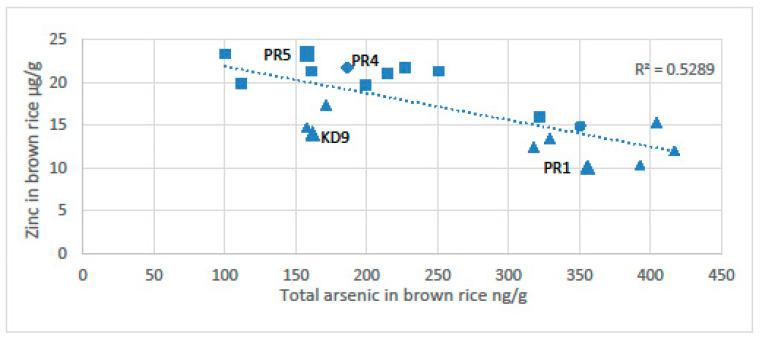
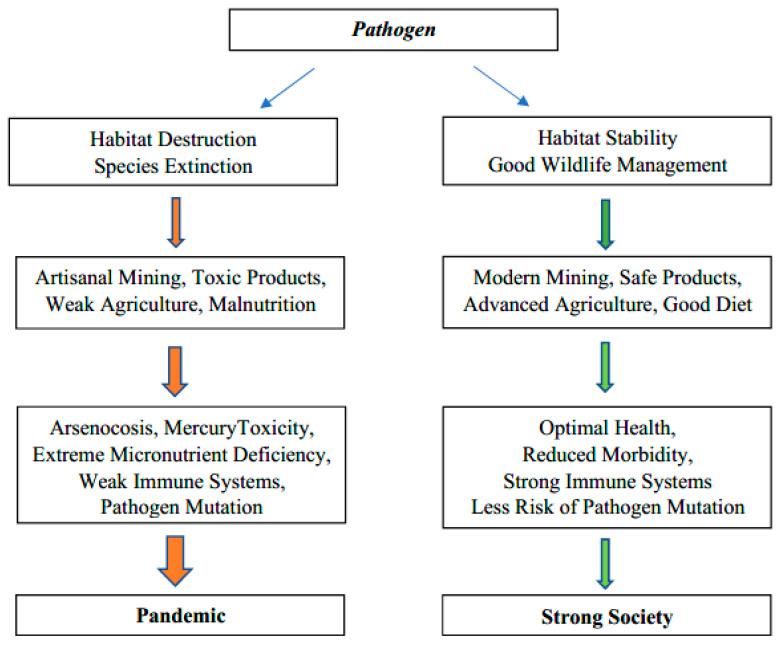
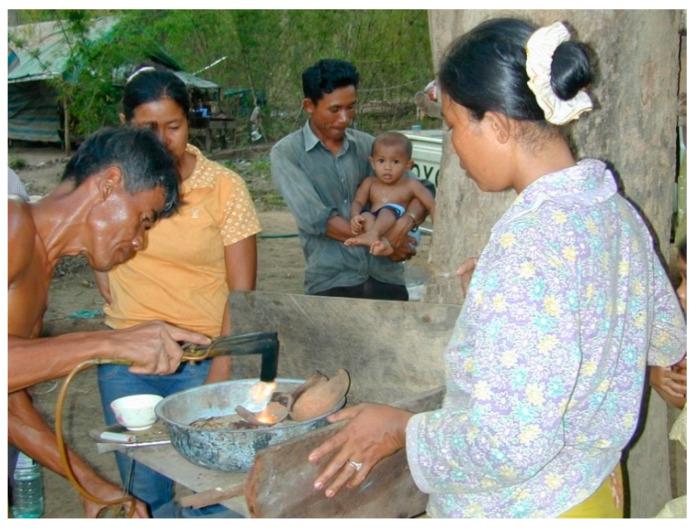
The illegal trade of wildlife in SE Asia has been identified as the likely cause of the COVID-19 pandemic. We reviewed 198 papers on the current COVID pandemic in Cambodia, diseases such as avian influenza and Nipah virus, most likely to develop into a new pandemic in Cambodia, and common features of disease that require mitigation. Artisanal goldmining uses pure mercury in the areas where wildlife is smuggled to China. Moreover, 30-40% of Cambodians are zinc deficient. High levels of arsenic in irrigation water (>1000 µg/L) are associated with very low levels of zinc in rice (5 µg/g) and rice is the primary staple food for the region. Brown rice from nine of 15 paddy fields in the arsenic zone of Cambodia had double the new guidelines of 100 µg/kg inorganic arsenic for children's food in the EU and USA. The combination of deficiencies of essential micronutrients like zinc and pervasive presence of arsenic and mercury has the potential to compromise the immunity of many Cambodians. Innovative solutions are suggested to improve micronutrient nutrition. Toxins that suppress the immune system must be better managed to reduce the virulence of pathogens. Cambodia was not likely the source of the COVID-19 but does have problems that could result in a new pandemic.
东南亚的野生动物非法交易被认为是 COVID-19 大流行的可能原因。我们回顾了柬埔寨目前关于 COVID 大流行、禽流感和尼帕病毒等疾病的 198 篇论文,这些疾病最有可能在柬埔寨引发新的大流行,以及需要缓解的疾病的共同特征。在野生动物走私到中国的地区,手工金矿使用纯汞。此外,30-40%的柬埔寨人缺锌。灌溉水中砷含量高(>1000μg/L)与水稻中锌含量极低(5μg/g)有关,而水稻是该地区的主要主食。柬埔寨砷区 15 个稻田中的 9 个糙米中的无机砷含量是欧盟和美国儿童食品新 100μg/kg 无机砷限量标准的两倍。锌等必需微量营养素的缺乏和砷、汞的普遍存在,有可能损害许多柬埔寨人的免疫力。建议采取创新措施来改善微量营养素营养。必须更好地管理抑制免疫系统的毒素,以降低病原体的毒力。柬埔寨不太可能是 COVID-19 的源头,但确实存在可能导致新大流行的问题。


 Zotero 插件