
印度2030年议程可持续发展目标的数学建模:一种中智学规划方法。
Mathematical modeling of sustainable development goals of India agenda 2030: a Neutrosophic programming approach.
作者信息
Haq Ahteshamul, Modibbo Umar Muhammad, Ahmed Aquil, Ali Irfan
机构信息
Department of Statistics and Operations Research, Aligarh Muslim University, Aligarh, 202 002 India.
Department of Statistics and Operations Research, Modibbo Adama University, Yola, PMB 2076 Nigeria.
出版信息
Environ Dev Sustain. 2022;24(10):11991-12018. doi: 10.1007/s10668-021-01928-6. Epub 2021 Nov 11.
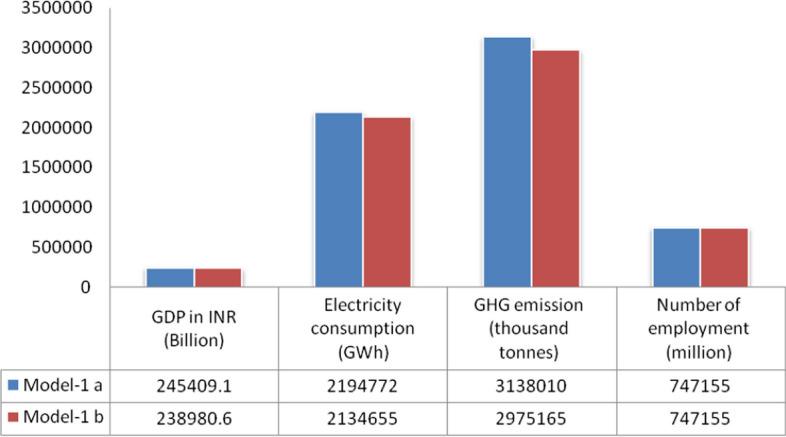
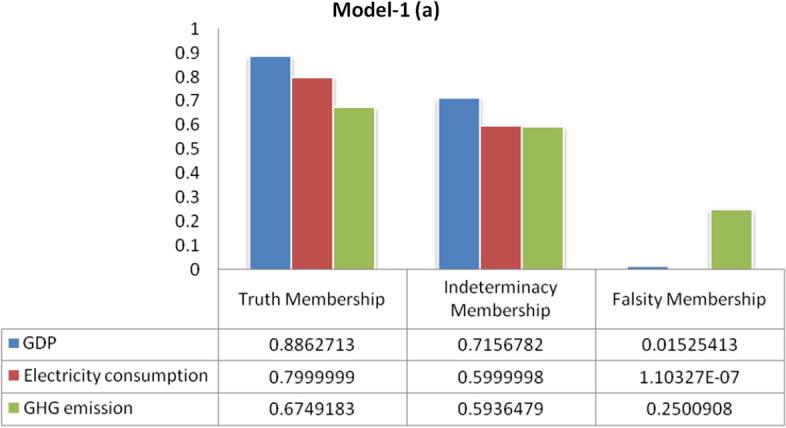
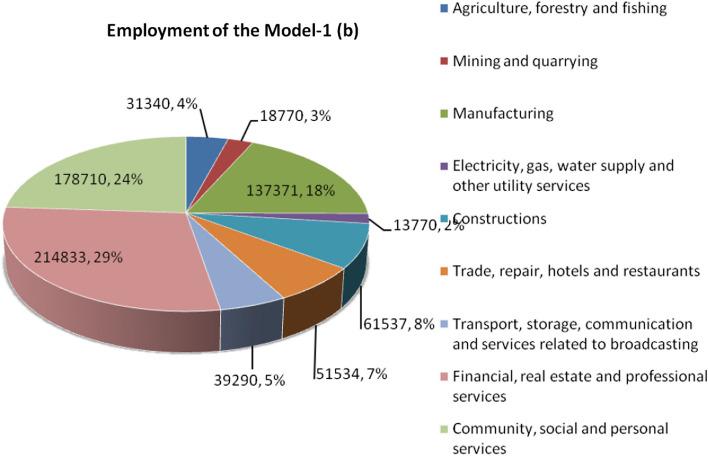
Since 2015, the United Nations sustainable development goals (SDGs) agenda 2030 has been designed with 17 goals, 169 targets, and 232 unique indicators to help address environmental, development, and sustainability issues globally. India, like other developing nations, desired to achieve its vision 2030 targets. Several authors studied India's SDGs with different approaches. However, none of the studies explores the concept of neutrosophic programming (NP). It is against this drawback; this study presents an optimization model for India's socio-economic and environmental goals based on the NP concept. The NP model is capable of handling indeterminacy in optimization-related problems for which other techniques do not. The formulated models simultaneously optimized the gross domestic product (GDP) growth, electricity consumption, and greenhouse gas (GHG) emissions. The solutions revealed that the degree of satisfaction for the goals related to GDP, electricity consumption, and GHG emissions could be achieved partially. Also, it suggested the required optimal number of employment for each economic sector to achieve India's vision 2030. The SDGs model was further solved with the goal programming (GP) technique and compared with the NP results to validate the proposed concept. It has been found that the proposed model gives a better compromise solution than the GP model. The study can help and guide policymakers in working toward vision 2030 attaintment. Other interested researchers can use the concept in other countries to help decision-makers understand managerial policy implications.
自2015年以来,联合国2030年可持续发展目标(SDGs)议程设定了17个目标、169个具体目标和232个独特指标,以帮助解决全球环境、发展和可持续性问题。印度与其他发展中国家一样,希望实现其2030年愿景目标。几位作者采用不同方法研究了印度的可持续发展目标。然而,没有一项研究探讨过中智规划(NP)的概念。针对这一缺陷,本研究提出了一个基于中智规划概念的印度社会经济和环境目标优化模型。中智规划模型能够处理其他技术无法处理的优化相关问题中的不确定性。所制定的模型同时优化了国内生产总值(GDP)增长、电力消耗和温室气体(GHG)排放。结果表明,与GDP、电力消耗和温室气体排放相关目标的满意度只能部分实现。此外,该模型还给出了每个经济部门为实现印度2030年愿景所需的最优就业人数。利用目标规划(GP)技术进一步求解了可持续发展目标模型,并将其与中智规划结果进行比较,以验证所提出的概念。研究发现,所提出的模型比目标规划模型给出了更好的折衷解决方案。该研究有助于并指导政策制定者朝着实现2030年愿景努力。其他感兴趣的研究人员可以在其他国家使用这一概念,以帮助决策者理解管理政策的影响。



 Zotero 插件