
螯合剂通过选择性剥夺铁、锰和锌来发挥其抗菌作用机制的研究进展。
Insights into the Antibacterial Mechanism of Action of Chelating Agents by Selective Deprivation of Iron, Manganese, and Zinc.
机构信息
Department of Biosciences, Durham Universitygrid.8250.f, Durham, United Kingdom.
Department of Chemistry, Durham Universitygrid.8250.f, Durham, United Kingdom.
出版信息
Appl Environ Microbiol. 2022 Jan 25;88(2):e0164121. doi: 10.1128/AEM.01641-21. Epub 2021 Nov 17.
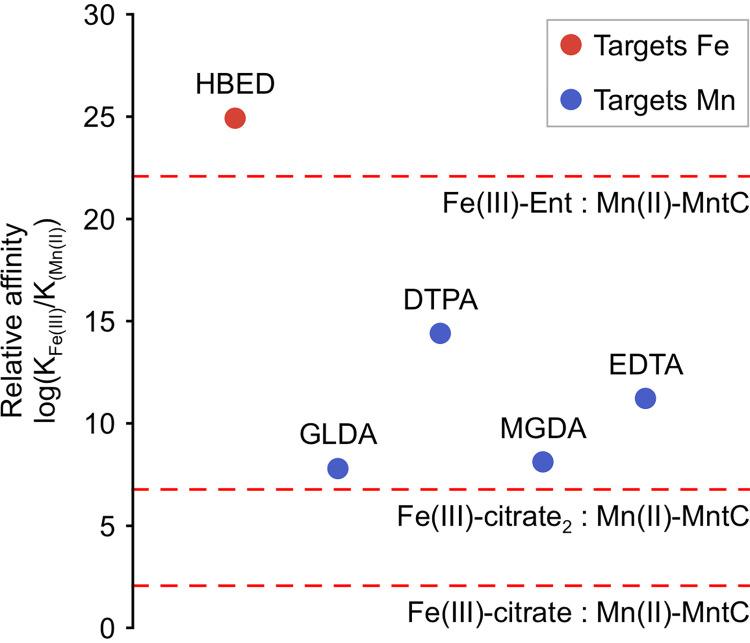
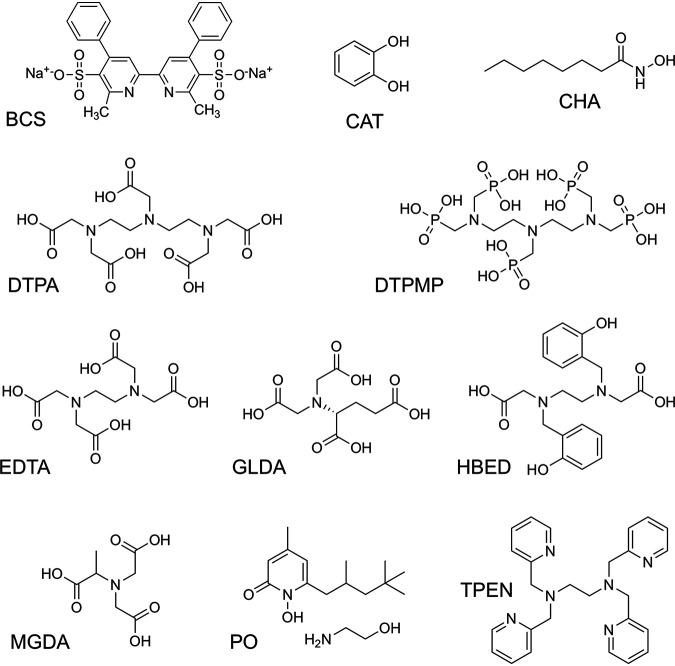
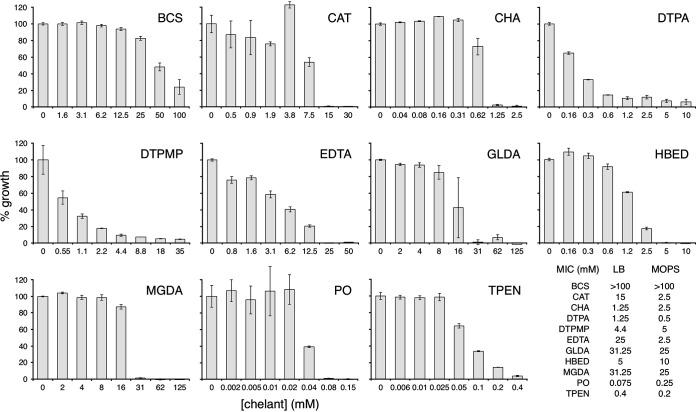
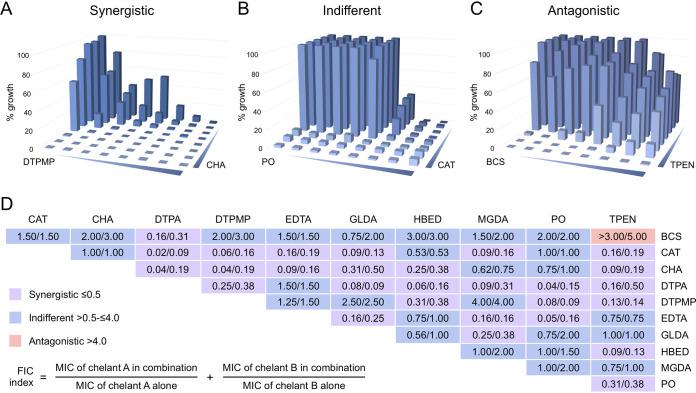
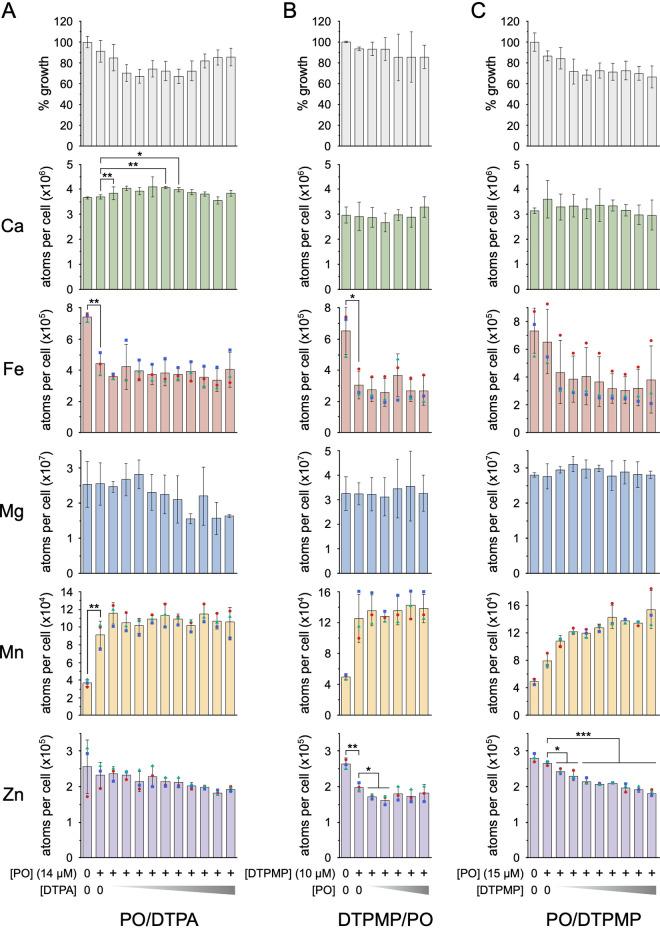
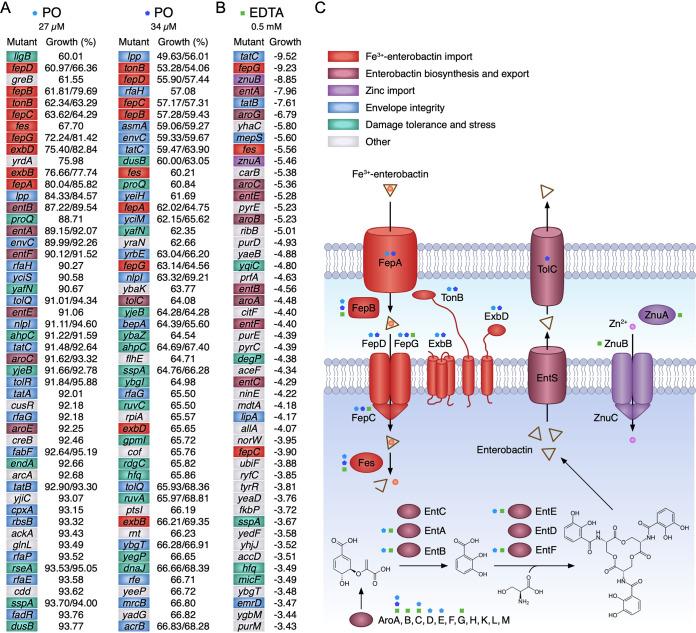
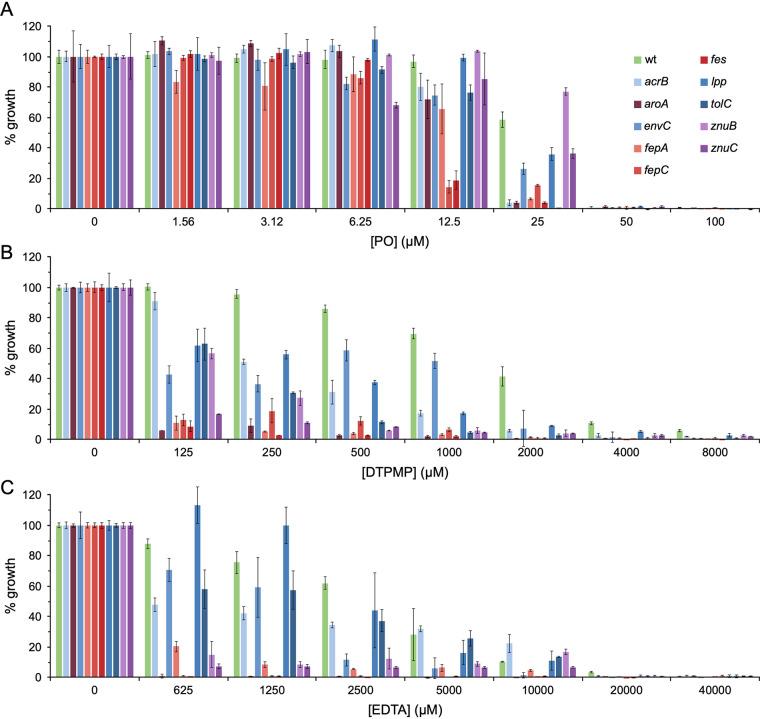
Bacterial growth and proliferation can be restricted by limiting the availability of metal ions in their environment. Humans sequester iron, manganese, and zinc to help prevent infection by pathogens, a system termed nutritional immunity. Commercially used chelants have high binding affinities with a variety of metal ions, which may lead to antibacterial properties that mimic these innate immune processes. However, the modes of action of many of these chelating agents in bacterial growth inhibition and their selectivity in metal deprivation remain ill-defined. We address this shortcoming by examining the effect of 11 chelators on Escherichia coli growth and their impact on the cellular concentration of five metals. The following four distinct effects were uncovered: (i) no apparent alteration in metal composition, (ii) depletion of manganese alongside reductions in iron and zinc levels, (iii) reduced zinc levels with a modest reduction in manganese, and (iv) reduced iron levels coupled with elevated manganese. These effects do not correlate with the absolute known chelant metal ion affinities in solution; however, for at least five chelators for which key data are available, they can be explained by differences in the relative affinity of chelants for each metal ion. The results reveal significant insights into the mechanism of growth inhibition by chelants, highlighting their potential as antibacterials and as tools to probe how bacteria tolerate selective metal deprivation. Chelating agents are widely used in industry and consumer goods to control metal availability, with bacterial growth restriction as a secondary benefit for preservation. However, the antibacterial mechanism of action of chelants is largely unknown, particularly with respect to the impact on cellular metal concentrations. The work presented here uncovers distinct metal starvation effects imposed by different chelants on the model Gram-negative bacterium Escherichia coli. The chelators were studied both individually and in pairs, with the majority producing synergistic effects in combinations that maximize antibacterial hostility. The judicious selection of chelants based on contrasting cellular effects should enable reductions in the quantities of chelant required in numerous commercial products and presents opportunities to replace problematic chemistries with biodegradable alternatives.
细菌的生长和增殖可以通过限制其环境中金属离子的可用性来抑制。人类通过螯合铁、锰和锌来帮助防止病原体感染,这一系统被称为营养免疫。商业上使用的螯合剂与多种金属离子具有高的结合亲和力,这可能导致具有模仿这些先天免疫过程的抗菌特性。然而,许多这些螯合剂在细菌生长抑制中的作用模式及其在剥夺金属方面的选择性仍然定义不明确。我们通过检查 11 种螯合剂对大肠杆菌生长的影响及其对五种金属的细胞浓度的影响来解决这一缺点。发现了以下四种不同的影响:(i)金属成分没有明显改变,(ii)锰耗竭伴随着铁和锌水平的降低,(iii)锌水平降低,锰水平适度降低,以及(iv)铁水平降低,同时锰水平升高。这些影响与溶液中已知螯合剂金属离子亲和力的绝对值无关;然而,对于至少五种具有可用关键数据的螯合剂,它们可以用螯合剂对每种金属离子的相对亲和力的差异来解释。结果揭示了螯合剂抑制生长的机制的重要见解,强调了它们作为抗菌剂的潜力以及作为研究细菌如何耐受选择性金属剥夺的工具。螯合剂在工业和消费品中广泛用于控制金属的可用性,细菌生长限制是保存的次要好处。然而,螯合剂的抗菌作用机制在很大程度上是未知的,特别是对细胞金属浓度的影响。这里介绍的工作揭示了不同的螯合剂对模式革兰氏阴性菌大肠杆菌施加的不同的金属饥饿效应。单独和组合研究了螯合剂,大多数组合在最大限度地提高抗菌敌意的组合中产生协同作用。基于对比细胞效应的螯合剂的明智选择应该能够减少许多商业产品中所需的螯合剂的数量,并为用可生物降解的替代品取代有问题的化学物质提供机会。

 Zotero 插件