
三代外显子组测序在神经遗传病近亲家系中的高诊断率。
High diagnostic rate of trio exome sequencing in consanguineous families with neurogenetic diseases.
机构信息
Izmir Biomedicine and Genome Center, Dokuz Eylul University Health Campus, Izmir 35340, Turkey.
Izmir International Biomedicine and Genome Institute, Dokuz Eylul University, Izmir 35340, Turkey.
出版信息
Brain. 2022 May 24;145(4):1507-1518. doi: 10.1093/brain/awab395.
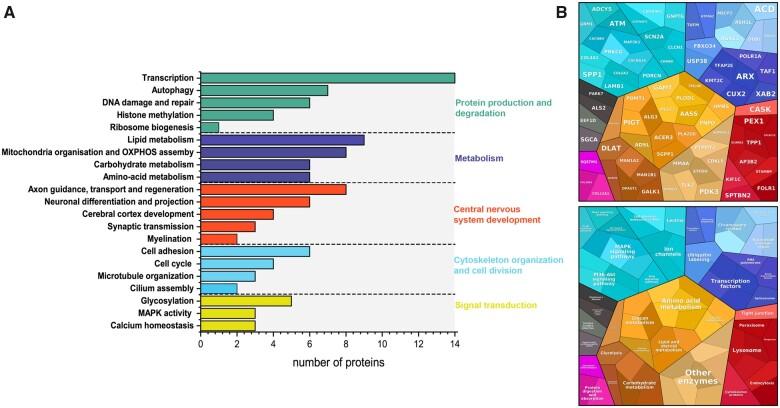
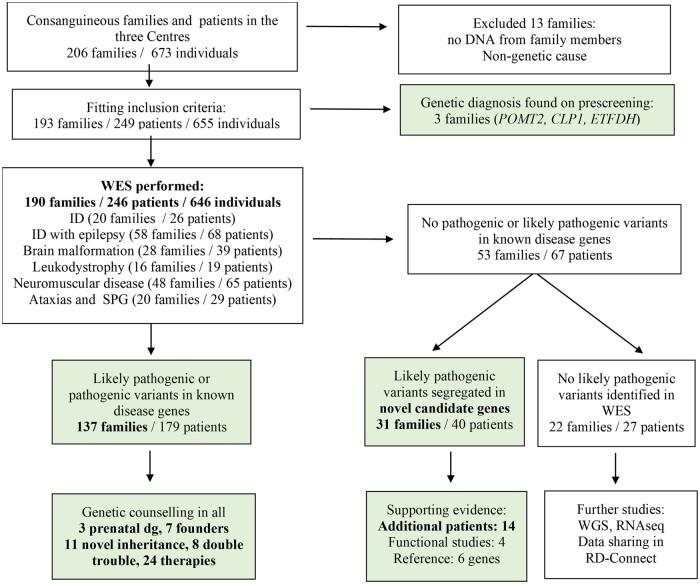
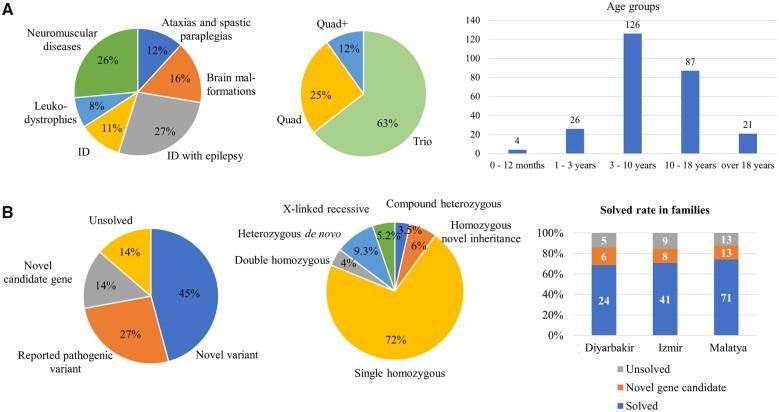
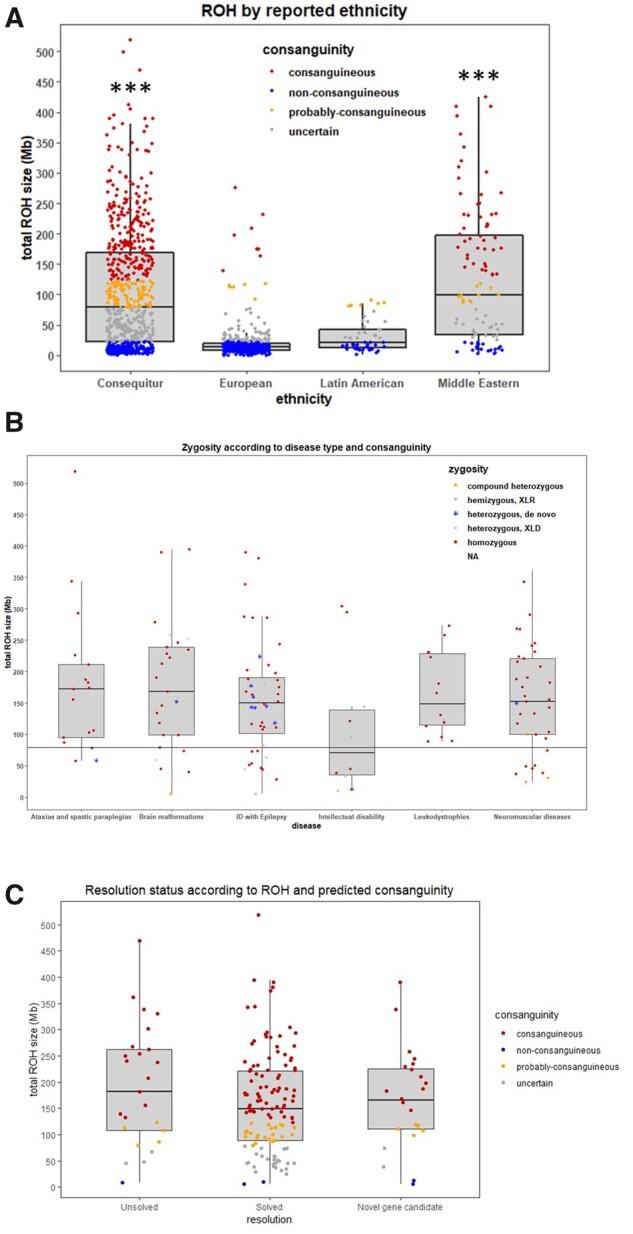
Consanguineous marriages have a prevalence rate of 24% in Turkey. These carry an increased risk of autosomal recessive genetic conditions, leading to severe disability or premature death, with a significant health and economic burden. A definitive molecular diagnosis could not be achieved in these children previously, as infrastructures and access to sophisticated diagnostic options were limited. We studied the cause of neurogenetic disease in 246 children from 190 consanguineous families recruited in three Turkish hospitals between 2016 and 2020. All patients underwent deep phenotyping and trio whole exome sequencing, and data were integrated in advanced international bioinformatics platforms. We detected causative variants in 119 known disease genes in 72% of families. Due to overlapping phenotypes 52% of the confirmed genetic diagnoses would have been missed on targeted diagnostic gene panels. Likely pathogenic variants in 27 novel genes in 14% of the families increased the diagnostic yield to 86%. Eighty-two per cent of causative variants (141/172) were homozygous, 11 of which were detected in genes previously only associated with autosomal dominant inheritance. Eight families carried two pathogenic variants in different disease genes. De novo (9.3%), X-linked recessive (5.2%) and compound heterozygous (3.5%) variants were less frequent compared to non-consanguineous populations. This cohort provided a unique opportunity to better understand the genetic characteristics of neurogenetic diseases in a consanguineous population. Contrary to what may be expected, causative variants were often not on the longest run of homozygosity and the diagnostic yield was lower in families with the highest degree of consanguinity, due to the high number of homozygous variants in these patients. Pathway analysis highlighted that protein synthesis/degradation defects and metabolic diseases are the most common pathways underlying paediatric neurogenetic disease. In our cohort 164 families (86%) received a diagnosis, enabling prevention of transmission and targeted treatments in 24 patients (10%). We generated an important body of genomic data with lasting impacts on the health and wellbeing of consanguineous families and economic benefit for the healthcare system in Turkey and elsewhere. We demonstrate that an untargeted next generation sequencing approach is far superior to a more targeted gene panel approach, and can be performed without specialized bioinformatics knowledge by clinicians using established pipelines in populations with high rates of consanguinity.
在土耳其,血缘婚姻的流行率为 24%。这些婚姻会增加常染色体隐性遗传疾病的风险,导致严重残疾或早逝,给健康和经济带来重大负担。以前,由于基础设施和获得复杂诊断选择的机会有限,这些儿童无法进行明确的分子诊断。我们研究了 2016 年至 2020 年间在土耳其三家医院招募的 190 个血缘家庭的 246 名神经遗传疾病儿童的病因。所有患者均进行了深度表型分析和三人体外显子组测序,并将数据整合到先进的国际生物信息学平台中。我们在 72%的家庭中发现了 119 个已知疾病基因中的致病变异。由于表型重叠,52%的经证实的遗传诊断如果使用靶向诊断基因面板则会被遗漏。14%的家庭中有 27 个新基因的可能致病性变异,将诊断率提高到 86%。82%的致病变异(141/172)为纯合子,其中 11 个变异发生在以前仅与常染色体显性遗传相关的基因中。8 个家庭携带不同疾病基因中的两个致病变异。与非血缘关系人群相比,新生突变(9.3%)、X 连锁隐性遗传(5.2%)和复合杂合性(3.5%)变异较少。该队列为更好地了解血缘人群中神经遗传疾病的遗传特征提供了独特的机会。与预期相反,致病变异通常不在最长的纯合子区域,而且在血缘关系程度最高的家庭中,诊断率较低,因为这些患者的纯合变异数量较多。途径分析强调,蛋白质合成/降解缺陷和代谢疾病是导致儿科神经遗传疾病的最常见途径。在我们的队列中,164 个家庭(86%)得到了诊断,从而使 24 名患者(10%)能够预防疾病的传播和靶向治疗。我们生成了大量具有持久影响的基因组数据,这不仅改善了血缘家庭的健康和福利,而且还为土耳其和其他地方的医疗保健系统带来了经济效益。我们证明,与更有针对性的基因面板方法相比,无靶向的下一代测序方法具有明显优势,并且在具有高血缘关系的人群中,临床医生可以使用既定的管道,而无需专门的生物信息学知识,就可以进行这种方法。

 Zotero 插件