
SLC7A5 与雌激素受体阳性乳腺癌中与增殖和缺氧相关的基因表达增加有关。
SLC7A5 is linked to increased expression of genes related to proliferation and hypoxia in estrogen‑receptor‑positive breast cancer.
机构信息
School of Medical Sciences, Faculty of Medicine and Health, Örebro University, SE-70185 Örebro, Sweden.
出版信息
Oncol Rep. 2022 Jan;47(1). doi: 10.3892/or.2021.8228. Epub 2021 Nov 18.
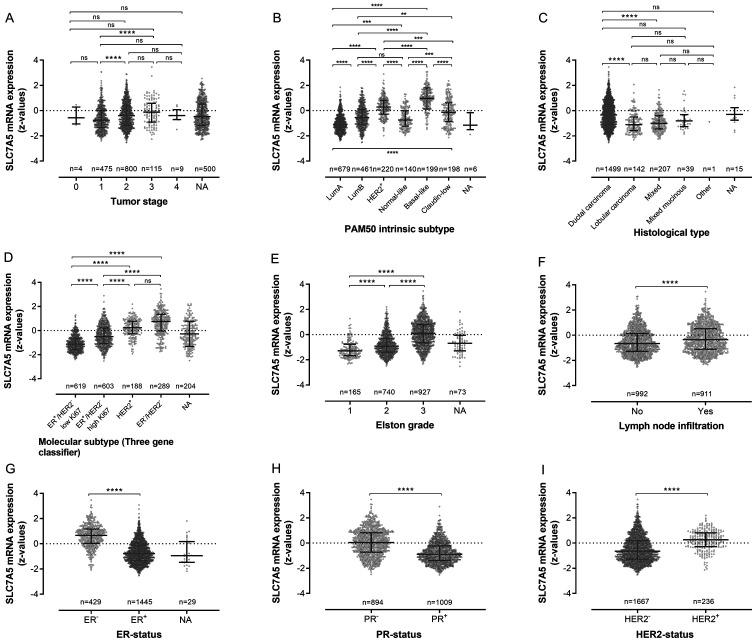
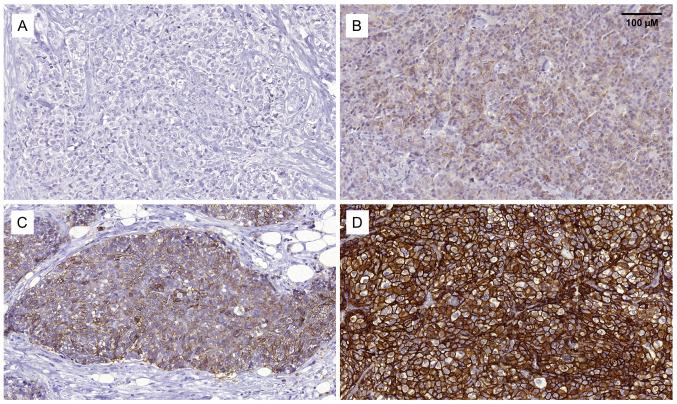
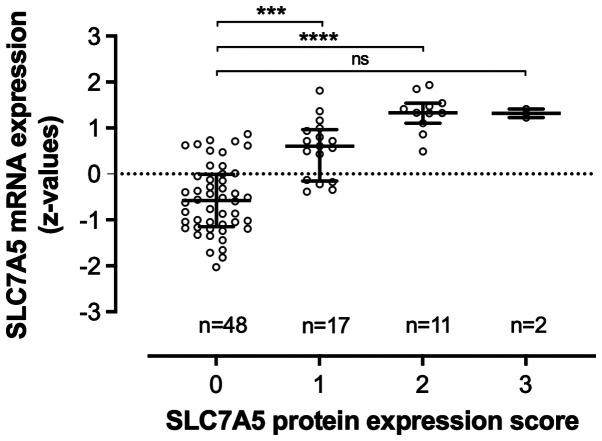
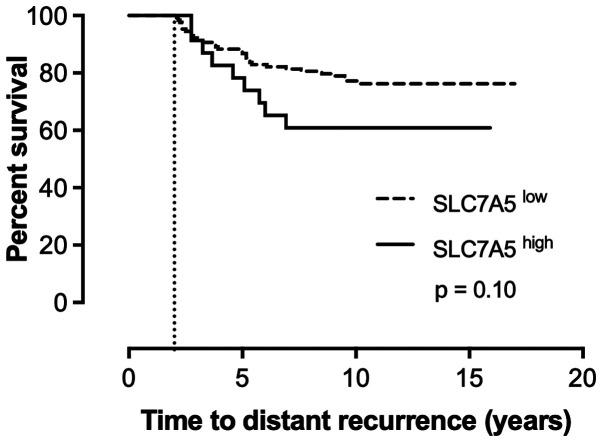
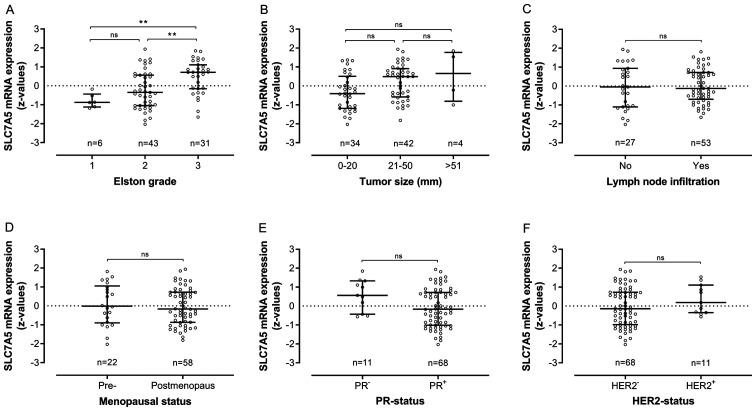
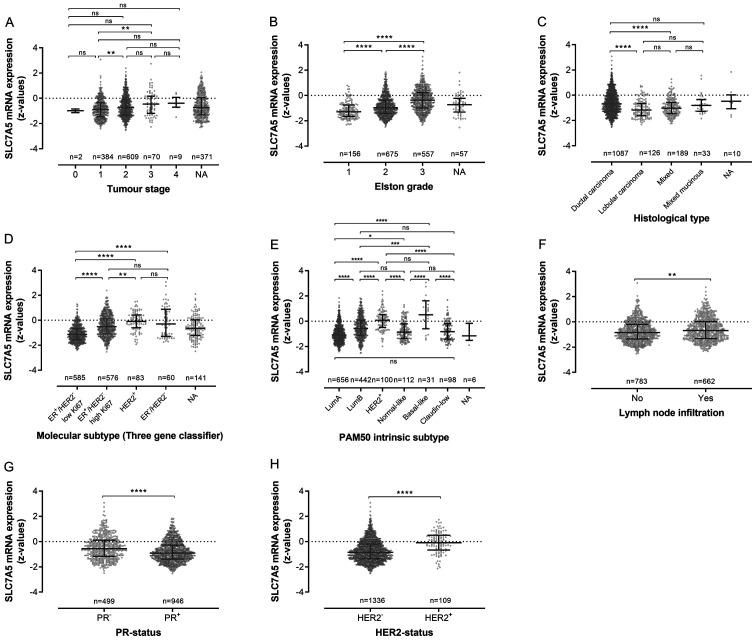
The amino acid transporter named solute carrier family 7 member 5 (SLC7A5) is suggested to play a part in altered cell metabolism and proliferative signaling and has been reported to be overexpressed in various types of cancer, including breast cancer. Estrogen‑receptor‑positive (ER) breast cancers constitute the most common type of breast malignancies and are often treated with anti‑estrogenic therapies. In this group of patients, endocrine resistance is a challenging problem that could lead to recurrent disease. To overcome this, additional prognostic biomarkers are needed. The present study aimed therefore to determine whether SLC7A5 may be considered as a possible prognostic marker in ER breast cancer and to investigate its relation with certain cancer‑related genes. We used a local breast cancer cohort (n=154) and immunohistochemistry to analyze the expression of SLC7A5 in association with clinicopathological characteristics and patient outcome. In addition, gene expression analysis was performed on 80 of these tumors. Furthermore, the METABRIC dataset was used for correlation analyses between expression of SLC7A5 and several genes related to breast cancer biology. The results demonstrated that overexpression of SLC7A5 was significantly associated with histopathological grade in patients with breast cancer, and that SLC7A5 mRNA expression was positively correlated with the expression of marker of proliferation Ki‑67 and hypoxia inducible factor 1 subunit alpha. Overexpression of SLC7A5 may therefore play a role in the biology of endocrinologically‑driven disease. However, when further assessing SLC7A5 using the METABRIC dataset, SLC7A5 mRNA expression level was more significantly increased in ER‑ subgroups compared with ER disease. All breast cancer subtypes included, SLC7A5 mRNA expression was correlated with a higher number of cancer‑related genes than in estrogen receptor positive tumors alone. The present study suggested that SLC7A5 expression may be of importance for breast cancer cell proliferation and survival. In order to further establish the biological and clinical role of SLC7A5 in breast cancer, further investigation using different breast cancer subgroups is required.
氨基酸转运蛋白家族 7 成员 5(SLC7A5)被认为在改变细胞代谢和增殖信号中发挥作用,并且已在包括乳腺癌在内的各种类型的癌症中被报道过度表达。雌激素受体阳性(ER)乳腺癌构成了最常见的乳腺癌类型,通常采用抗雌激素治疗。在这组患者中,内分泌抵抗是一个具有挑战性的问题,可能导致疾病复发。为此,需要额外的预后生物标志物。因此,本研究旨在确定 SLC7A5 是否可以被视为 ER 乳腺癌的一种可能的预后标志物,并研究其与某些癌症相关基因的关系。我们使用当地的乳腺癌队列(n=154)和免疫组织化学分析来分析 SLC7A5 的表达与临床病理特征和患者预后的关联。此外,对这些肿瘤中的 80 个进行了基因表达分析。此外,还使用 METABRIC 数据集进行了 SLC7A5 表达与乳腺癌生物学相关的几个基因之间的相关性分析。结果表明,SLC7A5 的过表达与乳腺癌患者的组织病理学分级显著相关,并且 SLC7A5 mRNA 表达与增殖标志物 Ki-67 和缺氧诱导因子 1 亚单位α的表达呈正相关。因此,SLC7A5 的过表达可能在激素驱动疾病的生物学中发挥作用。然而,当使用 METABRIC 数据集进一步评估 SLC7A5 时,与 ER 疾病相比,SLC7A5 mRNA 表达水平在 ER-亚组中显著增加。包括所有乳腺癌亚型在内,SLC7A5 mRNA 表达与更多的癌症相关基因相关,而不仅仅是雌激素受体阳性肿瘤。本研究表明,SLC7A5 的表达可能对乳腺癌细胞的增殖和存活很重要。为了进一步确定 SLC7A5 在乳腺癌中的生物学和临床作用,需要使用不同的乳腺癌亚组进行进一步研究。
 Zotero 插件