
新型循环超甲基化 RASSF1A ddPCR 在小儿实体瘤患者液体活检中的应用。
Novel Circulating Hypermethylated RASSF1A ddPCR for Liquid Biopsies in Patients With Pediatric Solid Tumors.
机构信息
Princess Máxima Center for Pediatric Oncology, Utrecht, the Netherlands.
Department of Experimental Immunohematology, Sanquin Research and Landsteiner Laboratory, Amsterdam University Medical Center, Amsterdam, the Netherlands.
出版信息
JCO Precis Oncol. 2021 Nov 17;5. doi: 10.1200/PO.21.00130. eCollection 2021.
UNLABELLED
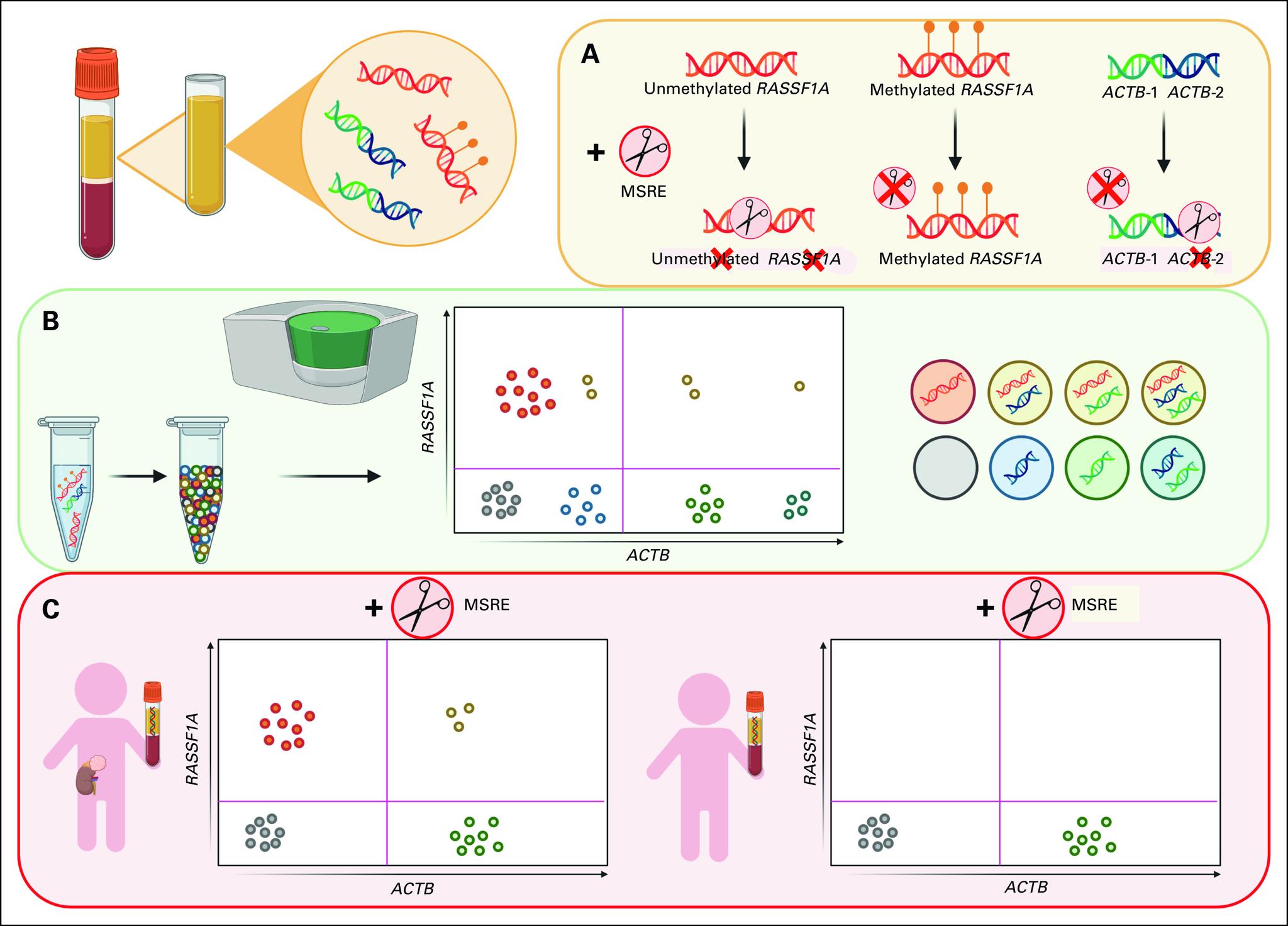
Liquid biopsies can be used to investigate tumor-derived DNA, circulating in the cell-free DNA (cfDNA) pool in blood. We aimed to develop a droplet digital polymerase chain reaction (ddPCR) assay detecting hypermethylation of tumor suppressor gene as a simple standard test to detect various pediatric tumor types in small volume blood samples and to evaluate this test for monitoring treatment response of patients with high-risk neuroblastoma.
METHODS
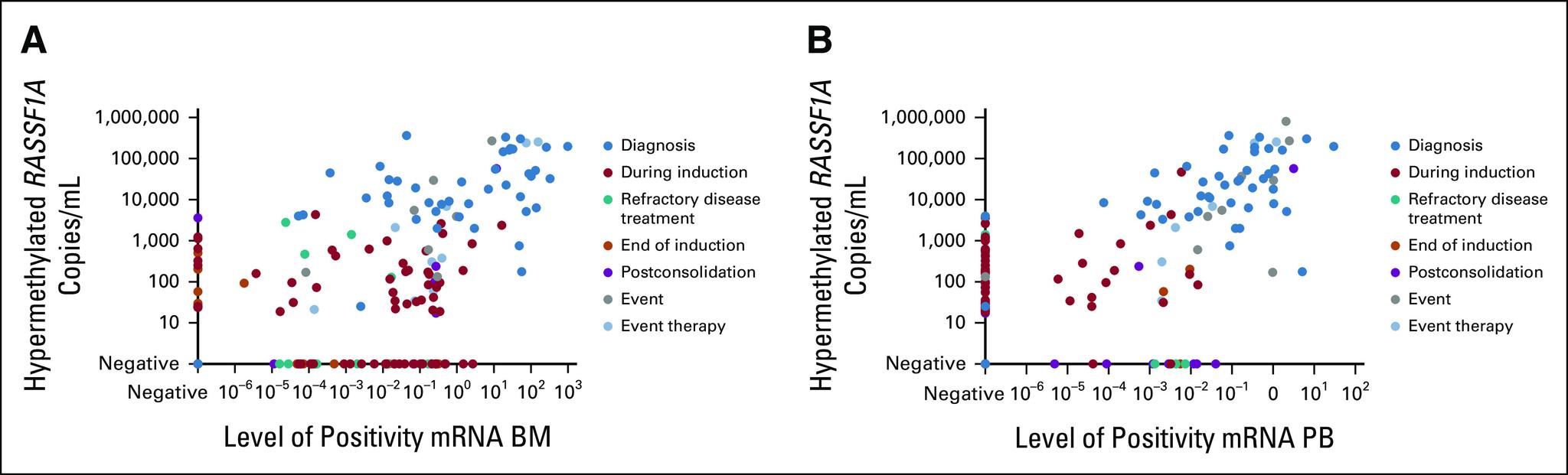
We developed a ddPCR assay to sensitively detect tumor-derived hypermethylated DNA in liquid biopsies. We tested this assay in plasma of 96 patients with neuroblastoma, renal tumors, rhabdomyosarcoma, or Hodgkin lymphoma at diagnosis and in cerebrospinal fluid of four patients with brain tumors. We evaluated the presence of hypermethylated in plasma samples during treatment and follow-up in 47 patients with neuroblastoma treated according to high-risk protocol and correlated results with blood mRNA-based and bone marrow mRNA-based minimal residual disease detection and clinical outcomes.
RESULTS
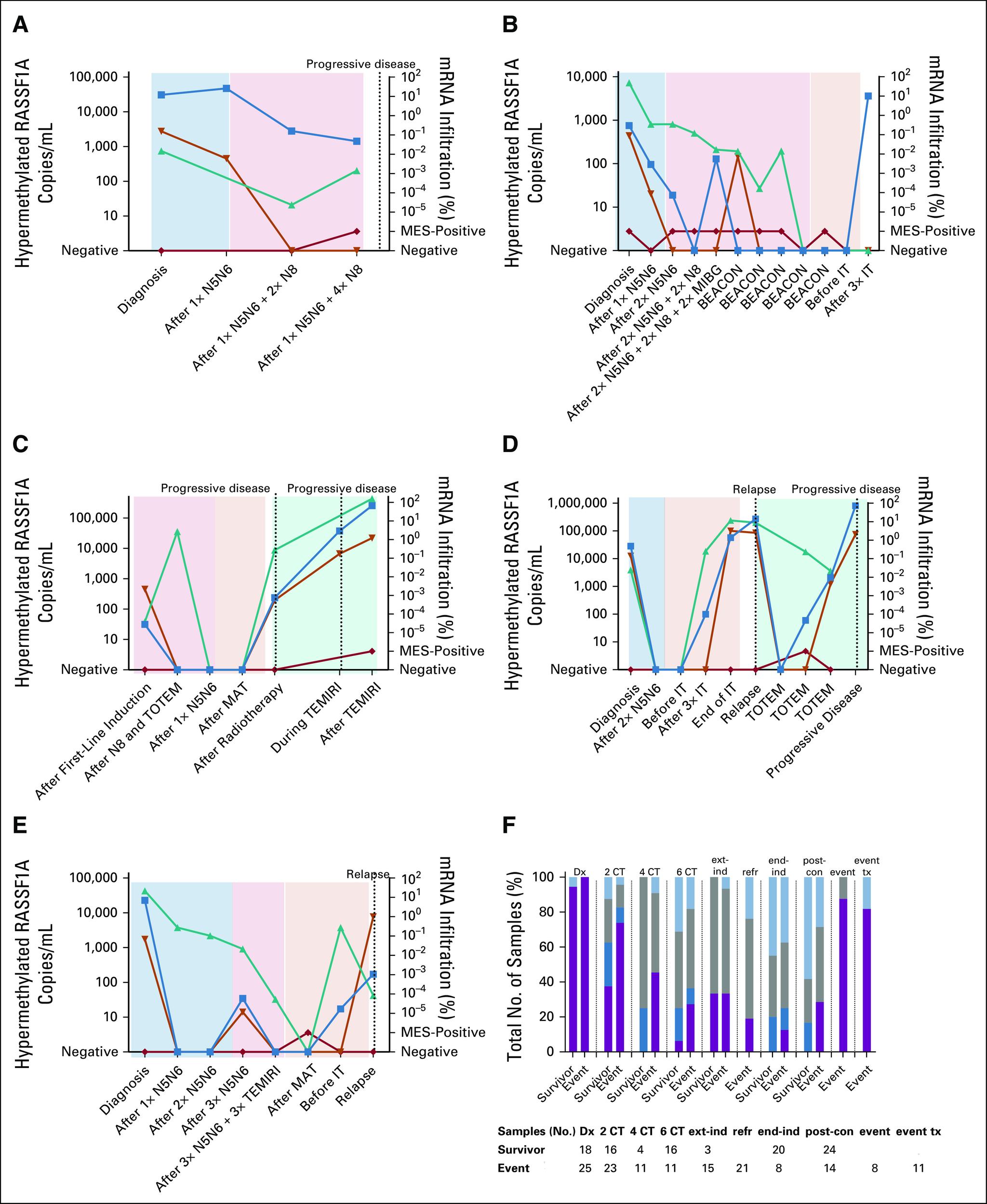
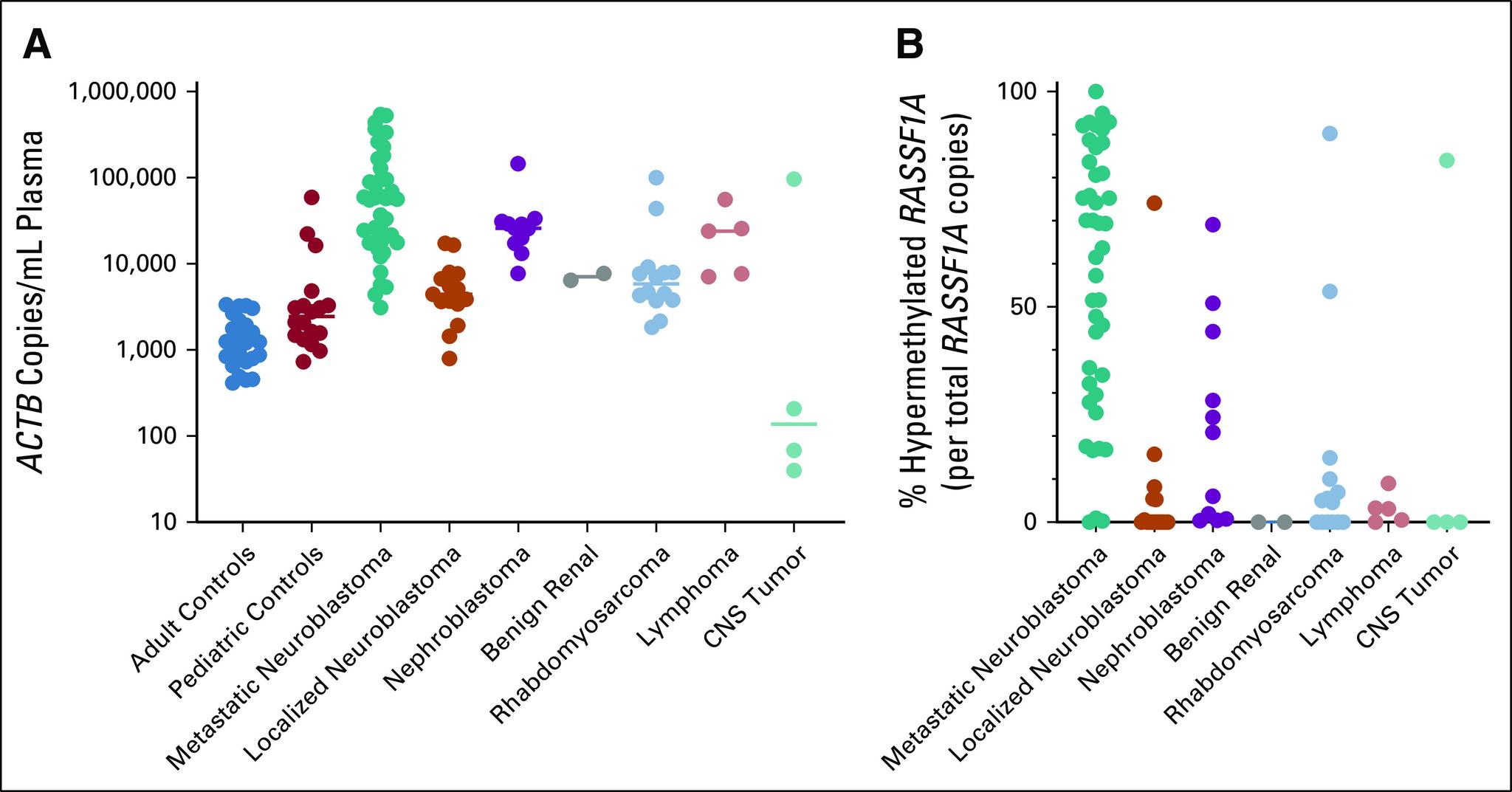
The total cfDNA level was significantly higher in patients with metastatic neuroblastoma and nephroblastoma compared with healthy adult and pediatric controls. Hypermethylated was present in 41 of 42 patients with metastatic neuroblastoma and in all patients with nephroblastoma, with the median percentage of 69% and 21% of total , respectively. Hypermethylated levels decreased during therapy and recurred at relapse.
CONCLUSION
Our findings demonstrate the value of ddPCR-based detection of hypermethylated as a circulating molecular tumor marker in neuroblastoma. Our preliminary investigation of hypermethylation detection in circulating cfDNA of other pediatric tumor entities demonstrates potential as a pan-tumor marker, but requires investigation in larger cohorts to evaluate its use and limitations.
未加标签
液体活检可用于研究肿瘤衍生的 DNA,这些 DNA 存在于血液中无细胞游离 DNA (cfDNA) 池中。本研究旨在开发一种液滴数字聚合酶链反应 (ddPCR) 检测方法,检测肿瘤抑制基因 的超甲基化,作为一种简单的标准检测方法,用于检测小体积血液样本中的各种儿科肿瘤类型,并评估该检测方法用于监测高危神经母细胞瘤患者的治疗反应。
方法
我们开发了一种 ddPCR 检测方法,以灵敏地检测液体活检中的肿瘤衍生的超甲基化 DNA。我们在 96 例神经母细胞瘤、肾肿瘤、横纹肌肉瘤或霍奇金淋巴瘤患者的血浆以及 4 例脑肿瘤患者的脑脊液中检测了该检测方法。我们评估了 47 例接受高危方案治疗的神经母细胞瘤患者治疗期间和随访期间血浆样本中 的超甲基化情况,并将结果与基于血液 mRNA 和骨髓 mRNA 的微小残留病检测以及临床结局进行了相关性分析。
结果
转移性神经母细胞瘤和肾母细胞瘤患者的总 cfDNA 水平明显高于健康成人和儿童对照组。42 例转移性神经母细胞瘤患者中有 41 例和所有肾母细胞瘤患者中均存在 超甲基化,分别为总 DNA 的中位数 69%和 21%。治疗过程中 超甲基化水平降低,复发时重现。
结论
我们的研究结果表明,ddPCR 检测 超甲基化为神经母细胞瘤的循环分子肿瘤标志物具有重要价值。我们对其他儿科肿瘤实体循环 cfDNA 中 超甲基化检测的初步研究表明其具有作为泛肿瘤标志物的潜力,但需要在更大的队列中进行研究,以评估其用途和局限性。

 Zotero 插件