
28089 名艾滋病毒感染者的合并症和合并用药情况:2009 年至 2019 年日本全国队列研究。
Comorbidities and co-medications among 28 089 people living with HIV: A nationwide cohort study from 2009 to 2019 in Japan.
机构信息
Department of General Medicine, Juntendo University Faculty of Medicine, Tokyo, Japan.
Center for Promotion of Data Science, Juntendo University Graduate School of Medicine, Tokyo, Japan.
出版信息
HIV Med. 2022 May;23(5):485-493. doi: 10.1111/hiv.13206. Epub 2021 Nov 25.
OBJECTIVES
Comorbidities are associated with a high burden of disease in people living with HIV (PLWH). The objective was to investigate the prevalence of chronic comorbidities and use of co-medications in PLWH in Japan.
METHODS
This study retrospectively analysed clinical information from PLWH receiving antiretroviral therapy (ART) between April 2009 and March 2019. Demographic characteristics, numbers and types of chronic comorbidities, and numbers and types of non-ART co-medications, were described by age groups. The source of data was the National Database of Health Insurance Claims and Specific Health Checkups of Japan (NDB).
RESULTS
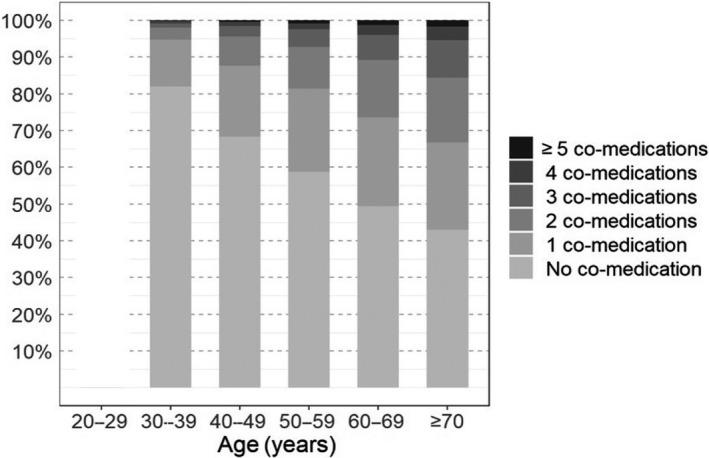
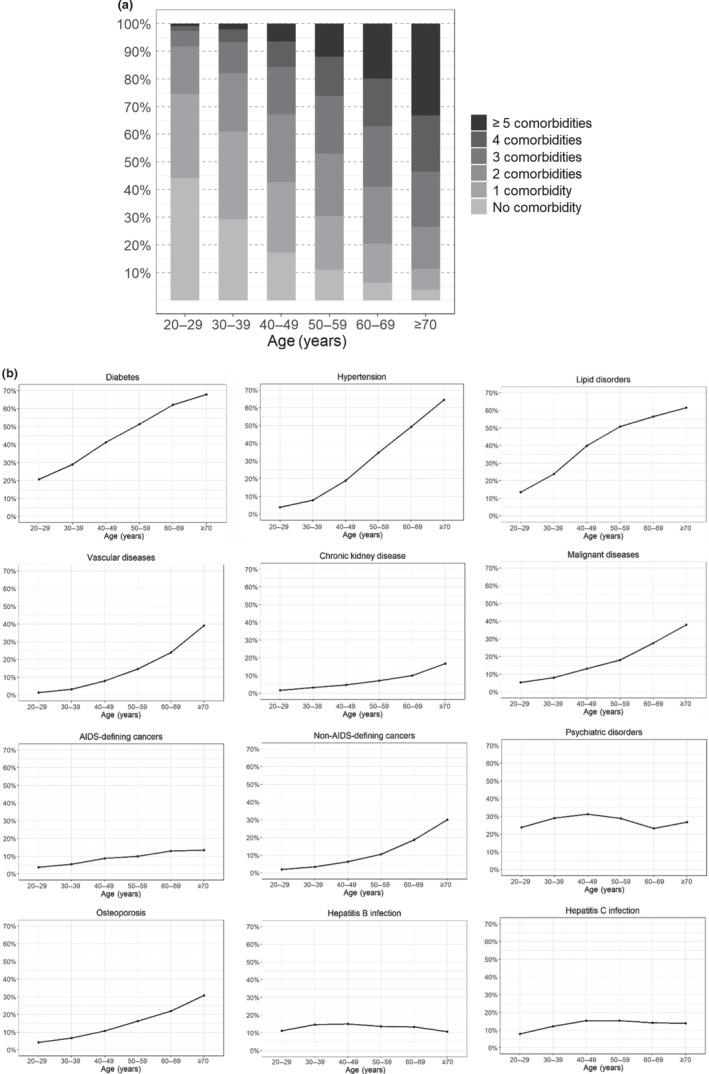
Overall, 28 089 PLWH (male 91.9%) who used ART were identified. Out of 28 089 PLWH, 81.5% had at least one chronic comorbidity. The numbers of AIDS-defining cancers and non-AIDS-defining cancers in this Japanese cohort were 2432 (8.7%) and 2485 (8.8%), respectively. The cumulative burden of comorbidities including non-AIDS-defining cancer increased with age. Changes in trend between 2009 and 2019 were observed, including a higher proportion of PLWH diagnosed at ≥ 70 years old [2019 (4.7%) vs. 2009 (2.4%)] and a decreasing percentage of patients with AIDS-defining cancers (down from 6.3% to 4.8% between 2009 and 2019). The most common co-medications during the most recent 3-month period were lipid-regulating/anti-atheroma preparations (11.3%), antacids, antiflatulents and anti-ulcerants (9.6%), and agents acting on the renin-angiotensin system (8.1%). The three most common therapeutic categories of co-medications during the study period were antacids, antiflatulents and anti-ulcerants (35.0%), systemic antihistamines (33.7%) and psycholeptics (27.1%). More than 30% of PLWH aged > 40 years used at least one co-medication in a 3-month period, while more than half of PLWH aged > 30 years had at least one co-medication prescribed concomitantly for a total of ≥ 90 days during the study period, and the numbers of co-medications used were greater in the older age groups.
CONCLUSIONS
The burden of chronic comorbidities and co-medication were found to be greater in older, as compared to younger patients, among 28 089 PLWH in a nationwide study in Japan. This finding suggests the need to identify elderly PLWH and to appropriately manage their HIV and comorbidities.
目的
合并症与艾滋病毒感染者(PLWH)的疾病负担高有关。本研究旨在调查日本 PLWH 慢性合并症的患病率和合并用药情况。
方法
本研究回顾性分析了 2009 年 4 月至 2019 年 3 月期间接受抗逆转录病毒治疗(ART)的 PLWH 的临床信息。按年龄组描述人口统计学特征、慢性合并症的数量和类型,以及非 ART 合并用药的数量和类型。数据来源是日本国民健康保险索赔和特定健康检查数据库(NDB)。
结果
本研究共纳入 28089 名使用 ART 的 PLWH(男性占 91.9%)。在 28089 名 PLWH 中,81.5%至少有一种慢性合并症。在日本队列中,艾滋病定义性癌症和非艾滋病定义性癌症的数量分别为 2432 例(8.7%)和 2485 例(8.8%)。包括非艾滋病定义性癌症在内的合并症的累积负担随年龄增长而增加。2009 年至 2019 年期间观察到趋势变化,包括≥70 岁的 PLWH 比例较高[2019 年(4.7%)比 2009 年(2.4%)]和艾滋病定义性癌症患者比例下降(从 2009 年的 6.3%降至 2019 年的 4.8%)。最近 3 个月最常用的合并药物是调节血脂/抗动脉粥样硬化制剂(11.3%)、抗酸剂、抗胃胀气剂和抗溃疡剂(9.6%)以及肾素-血管紧张素系统制剂(8.1%)。研究期间最常见的三种合并用药治疗类别是抗酸剂、抗胃胀气剂和抗溃疡剂(35.0%)、全身性抗组胺药(33.7%)和精神安定药(27.1%)。≥40 岁的 PLWH 中有 30%以上在最近 3 个月内至少使用了一种合并药物,而≥30 岁的 PLWH 中有一半以上在研究期间同时使用了至少一种合并药物,持续时间≥90 天,年龄较大的患者使用的合并药物数量更多。
结论
在日本的一项全国性研究中,与年轻患者相比,年龄较大的 28089 名 PLWH 的慢性合并症和合并用药负担更大。这一发现表明,需要识别老年 PLWH,并适当管理他们的 HIV 和合并症。
 Zotero 插件