
CRISPR-Cas技术:在临床微生物学和传染病中的新兴应用
CRISPR-Cas Technology: Emerging Applications in Clinical Microbiology and Infectious Diseases.
作者信息
Serajian Sahar, Ahmadpour Ehsan, Oliveira Sonia M Rodrigues, Pereira Maria de Lourdes, Heidarzadeh Siamak
机构信息
Cell Science Research Center, Department of Molecular Systems Biology, Royan Institute for Stem Cell Biology and Technology, ACECR, Tehran 16635-148, Iran.
Infectious and Tropical Diseases Research Center, Tabriz University of Medical Sciences, Tabriz 51666-14766, Iran.
出版信息
Pharmaceuticals (Basel). 2021 Nov 17;14(11):1171. doi: 10.3390/ph14111171.
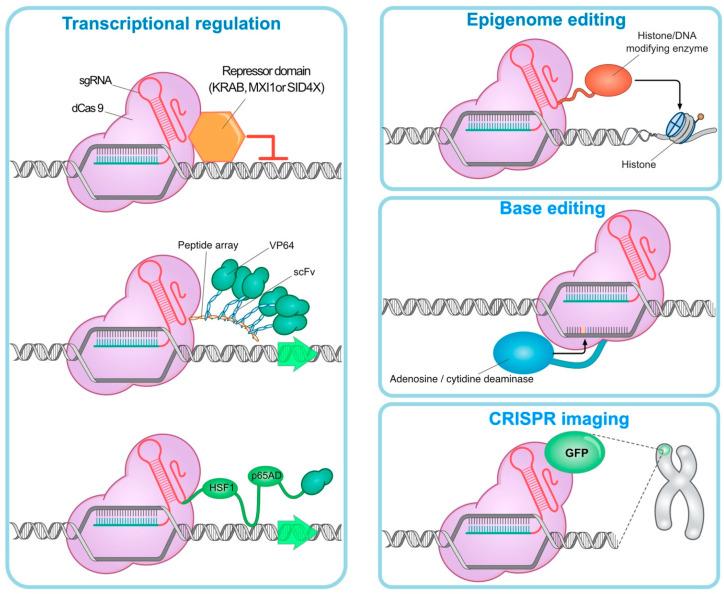
Through the years, many promising tools for gene editing have been developed including zinc-finger nucleases (ZFNs), transcription activator-like effector nucleases (TALENs), CRISPR-associated protein 9 (Cas9), and homing endonucleases (HEs). These novel technologies are now leading new scientific advancements and practical applications at an inimitable speed. While most work has been performed in eukaryotes, CRISPR systems also enable tools to understand and engineer bacteria. The increase in the number of multi-drug resistant strains highlights a necessity for more innovative approaches to the diagnosis and treatment of infections. CRISPR has given scientists a glimmer of hope in this area that can provide a novel tool to fight against antimicrobial resistance. This system can provide useful information about the functions of genes and aid us to find potential targets for antimicrobials. This paper discusses the emerging use of CRISPR-Cas systems in the fields of clinical microbiology and infectious diseases with a particular emphasis on future prospects.
多年来,已经开发出许多有前景的基因编辑工具,包括锌指核酸酶(ZFNs)、转录激活样效应因子核酸酶(TALENs)、CRISPR相关蛋白9(Cas9)和成簇规律间隔短回文重复序列核酸酶(HEs)。这些新技术正以无与伦比的速度引领着新的科学进步和实际应用。虽然大多数研究工作是在真核生物中进行的,但CRISPR系统也为了解和改造细菌提供了工具。多重耐药菌株数量的增加凸显了采用更具创新性的方法来诊断和治疗感染的必要性。CRISPR在这一领域给科学家带来了一线希望,它可以提供一种对抗抗菌药物耐药性的新工具。该系统可以提供有关基因功能的有用信息,并帮助我们找到抗菌药物的潜在靶点。本文讨论了CRISPR-Cas系统在临床微生物学和传染病领域的新用途,特别强调了未来前景。

 Zotero 插件