
基于结构的虚拟筛选抑制剂与多种毒力因子调节剂(MvfR)结合模式和相互作用的分子见解。
Molecular Insights into Binding Mode and Interactions of Structure-Based Virtually Screened Inhibitors for Multiple Virulence Factor Regulator (MvfR).
机构信息
College of Life Sciences, Jilin Agricultural University, Changchun 130118, China.
Department of Quality Control, Baghdad Water Authority, Baghdad 10011, Iraq.
出版信息
Molecules. 2021 Nov 11;26(22):6811. doi: 10.3390/molecules26226811.
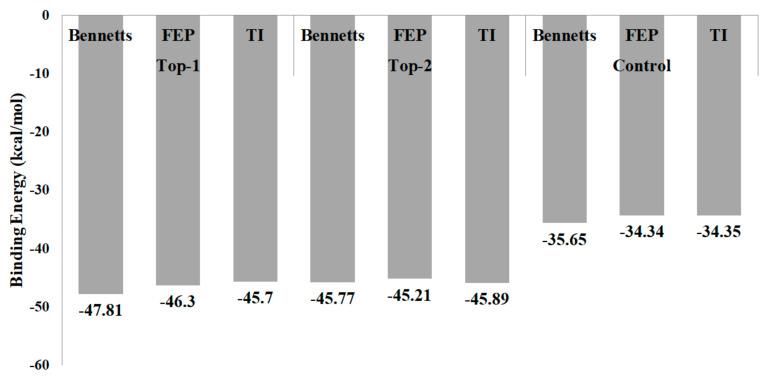
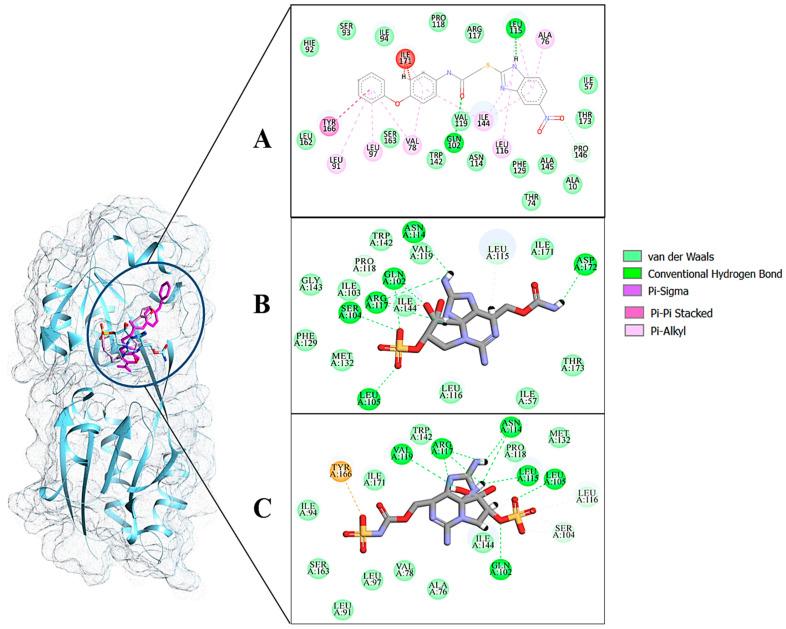
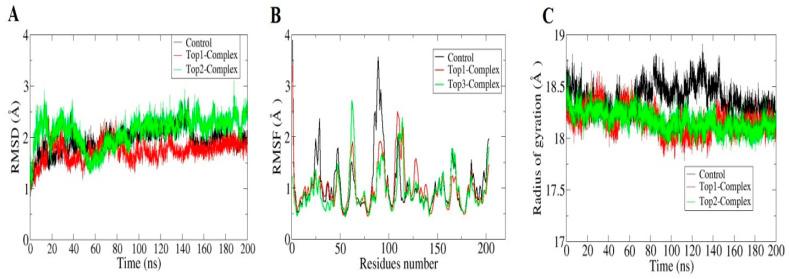
Multi-drug resistance (MDR) bacterial pathogens pose a threat to global health and warrant the discovery of new therapeutic molecules, particularly those that can neutralize their virulence and stop the evolution of new resistant mechanisms. The superbug nosocomial pathogen, , uses a multiple virulence factor regulator (MvfR) to regulate the expression of multiple virulence proteins during acute and persistent infections. The present study targeted MvfR with the intention of designing novel anti-virulent compounds, which will function in two ways: first, they will block the virulence and pathogenesis by disrupting the quorum-sensing network of the bacteria, and second, they will stop the evolution of new resistant mechanisms. A structure-based virtual screening (SBVS) method was used to screen druglike compounds from the Asinex antibacterial library (5968 molecules) and the comprehensive marine natural products database (CMNPD) (32 thousand compounds), against the ligand-binding domain (LBD) of MvfR, to identify molecules that show high binding potential for the relevant pocket. In this way, two compounds were identified: Top-1 (4-((carbamoyloxy)methyl)-10,10-dihydroxy-2,6-diiminiodecahydropyrrolo[1,2-c]purin-9-yl sulfate) and Top-2 (10,10-dihydroxy-2,6-diiminio-4-(((sulfonatocarbamoyl)oxy)methyl)decahydropyrrolo[1,2-c]purin-9-yl sulfate), in contrast to the co-crystallized M64 control. Both of the screened leads were found to show deep pocket binding and interactions with several key residues through a network of hydrophobic and hydrophilic interactions. The docking results were validated by a long run of 200 ns of molecular dynamics simulation and MM-PB/GBSA binding free energies. All of these analyses confirmed the presence of strong complex formation and rigorous intermolecular interactions. An additional analysis of normal mode entropy and a WaterSwap assay were also performed to complement the aforementioned studies. Lastly, the compounds were found to show an acceptable range of pharmacokinetic properties, making both compounds potential candidates for further experimental studies to decipher their real biological potency.
多药耐药(MDR)细菌病原体对全球健康构成威胁,因此需要发现新的治疗分子,特别是那些能够中和其毒力并阻止新耐药机制进化的分子。医院获得性超级细菌病原体 使用多种毒力因子调节剂(MvfR)在急性和持续性感染期间调节多种毒力蛋白的表达。本研究以 MvfR 为靶点,旨在设计新型抗毒力化合物,这些化合物将通过两种方式发挥作用:首先,它们将通过破坏细菌的群体感应网络来阻断毒力和发病机制;其次,它们将阻止新耐药机制的进化。本研究使用基于结构的虚拟筛选(SBVS)方法从 Asinex 抗菌库(5968 种化合物)和综合海洋天然产物数据库(CMNPD)(32000 种化合物)中筛选针对 MvfR 配体结合域(LBD)的药物样化合物,以鉴定对相关口袋具有高结合潜力的分子。通过这种方式,鉴定出两种化合物:Top-1(4-(氨甲酰氧基)甲基-10,10-二羟基-2,6-二亚氨基十氢吡咯并[1,2-c]嘌呤-9-基硫酸盐)和 Top-2(10,10-二羟基-2,6-二亚氨基-4-((磺酰胺基羰基)氧基)甲基)十氢吡咯并[1,2-c]嘌呤-9-基硫酸盐),与共结晶的 M64 对照物相比。通过网络的疏水性和亲水性相互作用,筛选出的两种先导化合物均被发现具有深口袋结合和与几个关键残基的相互作用。对接结果通过 200 ns 的分子动力学模拟和 MM-PB/GBSA 结合自由能的长时间运行得到验证。所有这些分析都证实了存在强复合物形成和严格的分子间相互作用。还进行了正常模式熵分析和水交换测定,以补充上述研究。最后,发现这些化合物具有可接受的药代动力学特性范围,这使得这两种化合物都有可能成为进一步实验研究的候选物,以阐明它们的真实生物学效力。
 Zotero 插件