
病毒感染中的疾病行为的免疫机制。
Immunological Mechanisms of Sickness Behavior in Viral Infection.
机构信息
Department of Histology and Embryology, Faculty of Medicine, University of Rijeka, 51000 Rijeka, Croatia.
出版信息
Viruses. 2021 Nov 8;13(11):2245. doi: 10.3390/v13112245.
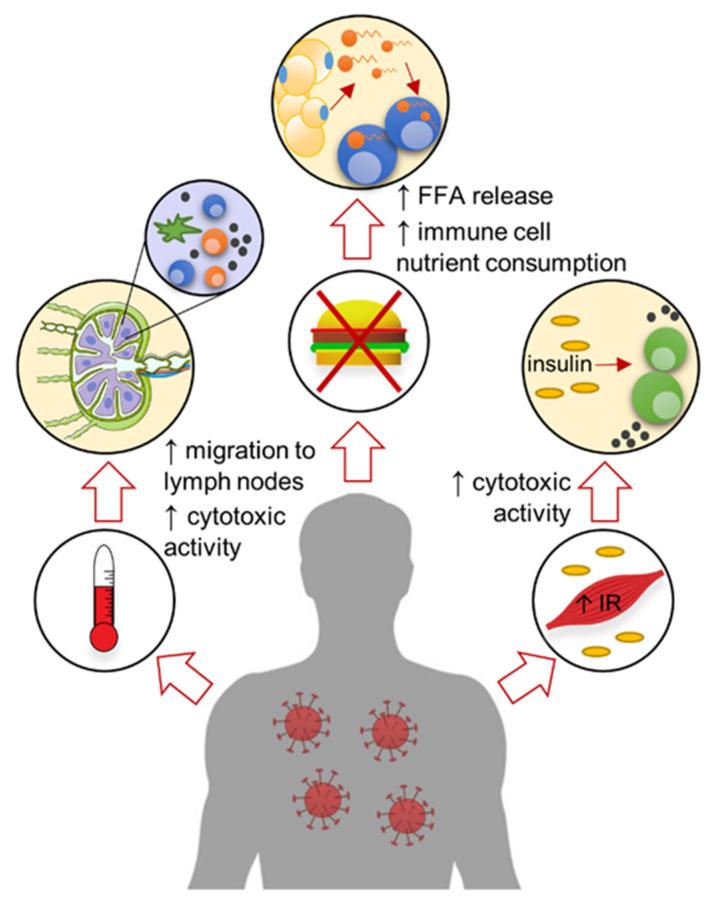
Sickness behavior is the common denominator for a plethora of changes in normal behavioral routines and systemic metabolism during an infection. Typical symptoms include temperature, muscle weakness, and loss of appetite. Whereas we experience these changes as a pathology, in fact they are a carefully orchestrated response mediated by the immune system. Its purpose is to optimize immune cell functionality against pathogens whilst minimizing viral replication in infected cells. Sickness behavior is controlled at several levels, most notably by the central nervous system, but also by other organs that mediate systemic homeostasis, such as the liver and adipose tissue. Nevertheless, the changes mediated by these organs are ultimately initiated by immune cells, usually through local or systemic secretion of cytokines. The nature of infection determines which cytokine profile is induced by immune cells and therefore which sickness behavior ensues. In context of infection, sickness behavior is typically beneficial. However, inappropriate activation of the immune system may induce adverse aspects of sickness behavior. For example, tissue stress caused by obesity may result in chronic activation of the immune system, leading to lasting changes in systemic metabolism. Concurrently, metabolic disease prevents induction of appropriate sickness behavior following viral infection, thus impairing the normal immune response. In this article, we will revisit recent literature that elucidates both the benefits and the negative aspects of sickness behavior in context of viral infection.
患病行为是指在感染过程中正常行为习惯和全身代谢发生的大量变化的共同特征。典型症状包括体温升高、肌肉无力和食欲不振。虽然我们将这些变化视为病理现象,但实际上它们是免疫系统精心协调的反应。其目的是优化免疫细胞对抗病原体的功能,同时最大限度地减少感染细胞中的病毒复制。患病行为在多个层面受到控制,其中最重要的是中枢神经系统,但也受到其他介导全身稳态的器官的控制,如肝脏和脂肪组织。然而,这些器官介导的变化最终是由免疫细胞引发的,通常是通过细胞因子的局部或全身分泌。感染的性质决定了免疫细胞诱导哪种细胞因子谱,从而导致哪种患病行为发生。在感染的情况下,患病行为通常是有益的。然而,免疫系统的不当激活可能会引发患病行为的不良方面。例如,肥胖引起的组织应激可能导致免疫系统持续激活,导致全身代谢发生持久变化。同时,代谢性疾病会阻止病毒感染后适当的患病行为的发生,从而损害正常的免疫反应。在本文中,我们将重新审视最近的文献,阐明在病毒感染背景下患病行为的益处和负面影响。

 Zotero 插件