
高湿度通过上调木糖醇和 L-焦谷氨酸加重胶原诱导性关节炎小鼠关节炎的严重程度。
High humidity aggravates the severity of arthritis in collagen-induced arthritis mice by upregulating xylitol and L-pyroglutamic acid.
机构信息
Institute of Basic Research in Clinical Medicine, School of Basic Medical Sciences, Zhejiang Chinese Medical University, Hangzhou, 310053, China.
出版信息
Arthritis Res Ther. 2021 Dec 1;23(1):292. doi: 10.1186/s13075-021-02681-x.
BACKGROUND
Humidity was an unfavorable factor for patients with rheumatoid arthritis (RA). RA disease activity was severe in high humidity conditions. However, there is no evidence to demonstrate the effects of humidity on arthritis in the animal experiments and explore its relevant mechanism.
METHODS
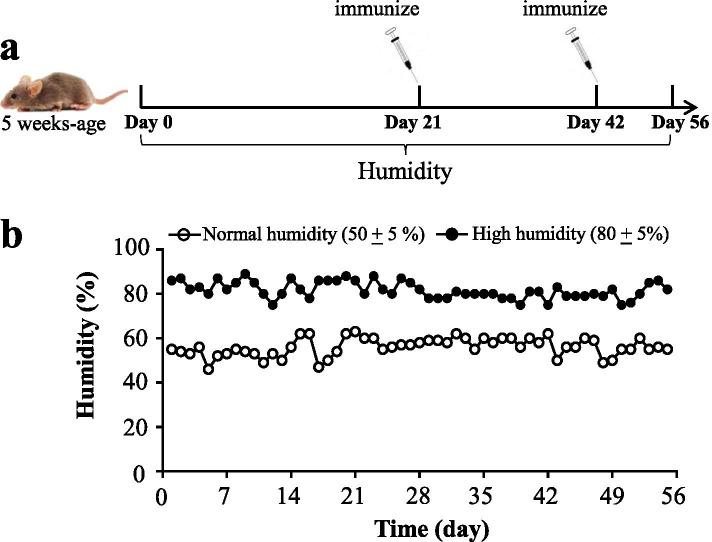
Using the DBA/1 mice, this study addressed the effects of a high humidity (80 ± 5%) on arthritis in collagen-induced arthritis (CIA) mice. Then, this study used the gas chromatography-mass spectrometer (GC-MS) to explore alterations in serum metabolome caused by the high humidity. Furthermore, xylitol and L-pyroglutamic acid, which were both significantly upregulated by the high humidity, were selected to further study their effects on arthritis in the CIA mice.
RESULTS
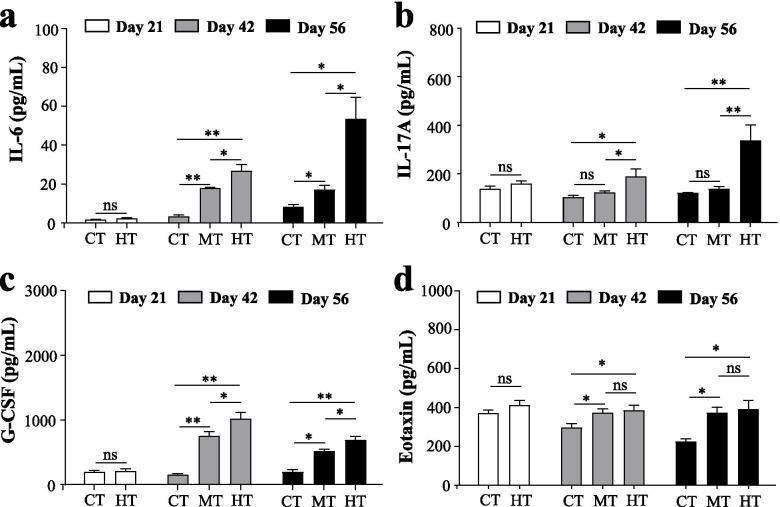
The high humidity (80 ± 5%) could aggravate arthritis variables including increasing arthritis score and swelling, serum autoantibodies (anti-COII and anti-CCP), and proinflammatory cytokines (IL-6, IL-17A, and G-CSF). In addition, the high humidity could cause significant alterations in serum metabolome in the CIA mice. Xylitol and L-pyroglutamic acid were the representative serum metabolites that were significantly upregulated by the high humidity. Further experiments demonstrated that the supplementation of 0.4 mg/mL xylitol in drinking water after inducing the CIA model and 2.0 mg/mL in drinking water before inducing the CIA model could both aggravate arthritis in the CIA mice.
CONCLUSIONS
These data demonstrated that high humidity was not beneficial for arthritis development and its mechanism might be associated with xylitol and L-pyroglutamic acid.
背景
湿度对类风湿关节炎(RA)患者是不利因素。高湿度条件下 RA 疾病活动度严重。然而,动物实验中尚无证据表明湿度对关节炎的影响,并探讨其相关机制。
方法
本研究采用 DBA/1 小鼠,研究高湿度(80±5%)对胶原诱导关节炎(CIA)小鼠关节炎的影响。然后,本研究使用气相色谱-质谱联用仪(GC-MS)探索高湿度引起的血清代谢组学变化。此外,选择高湿度明显上调的木糖醇和 L-焦谷氨酸,进一步研究它们对 CIA 小鼠关节炎的影响。
结果
高湿度(80±5%)可加重关节炎变量,包括关节炎评分和肿胀增加、血清自身抗体(抗 COII 和抗 CCP)和促炎细胞因子(IL-6、IL-17A 和 G-CSF)增加。此外,高湿度可导致 CIA 小鼠血清代谢组学发生显著变化。木糖醇和 L-焦谷氨酸是高湿度明显上调的代表性血清代谢物。进一步的实验表明,在 CIA 模型诱导后饮用水中添加 0.4mg/mL 木糖醇和在 CIA 模型诱导前饮用水中添加 2.0mg/mL 木糖醇均可加重 CIA 小鼠关节炎。
结论
这些数据表明,高湿度不利于关节炎的发展,其机制可能与木糖醇和 L-焦谷氨酸有关。





 Zotero 插件