
皮诺塞林在博来霉素诱导的羊肺纤维化模型中的疗效和安全性。
The efficacy and safety of pinocembrin in a sheep model of bleomycin-induced pulmonary fibrosis.
机构信息
Melbourne Veterinary School, Faculty of Veterinary and Agricultural Sciences, University of Melbourne, Parkville, Victoria, Australia.
School of Biosciences, University of Melbourne, Parkville, Victoria, Australia.
出版信息
PLoS One. 2021 Dec 2;16(12):e0260719. doi: 10.1371/journal.pone.0260719. eCollection 2021.
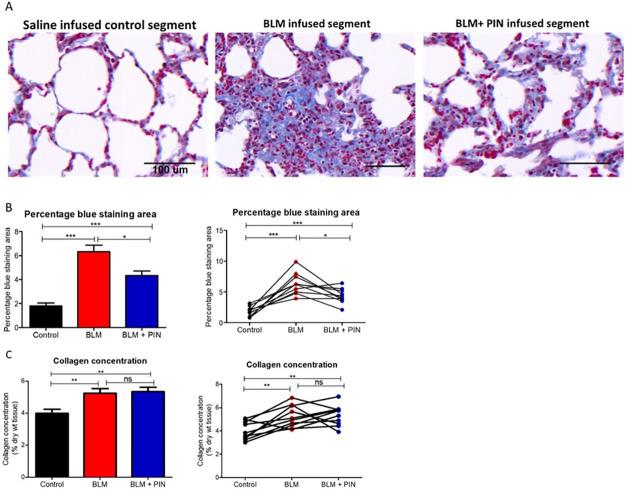
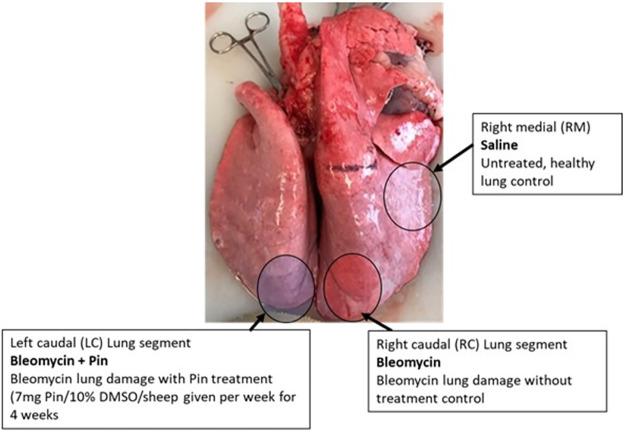
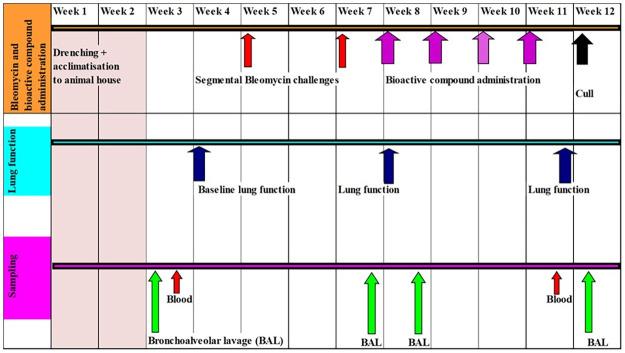
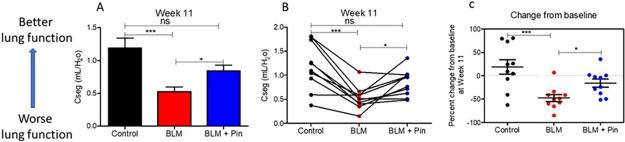
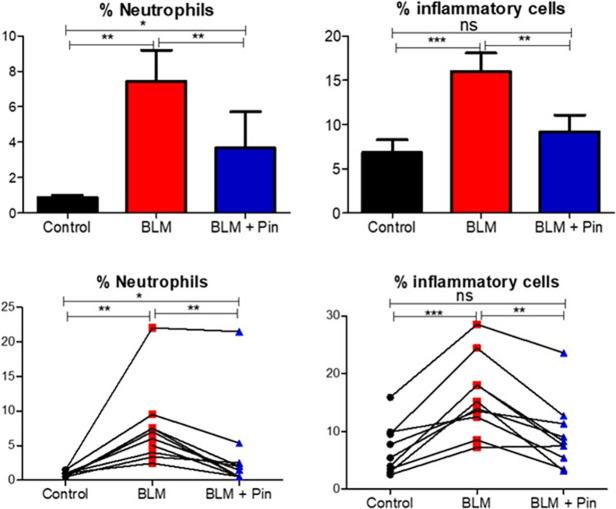
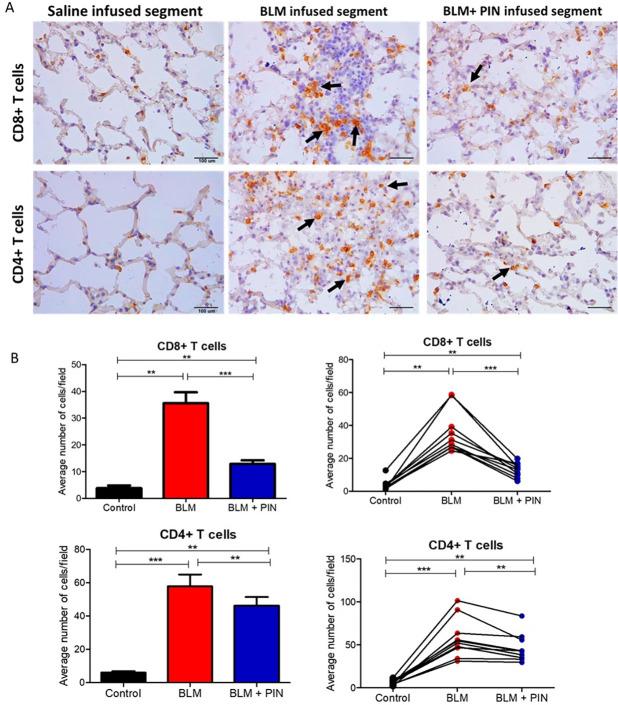
The primary flavonoid, pinocembrin, is thought to have a variety of medical uses which relate to its reported anti-oxidant, anti-inflammatory, anti-microbial and anti-cancer properties. Some studies have reported that this flavonoid has anti-fibrotic activities. In this study, we investigated whether pinocembrin would impede fibrosis, dampen inflammation and improve lung function in a large animal model of pulmonary fibrosis. Fibrosis was induced in two localized lung segments in each of the 10 sheep participating in the study. This was achieved via two infusions of bleomycin delivered bronchoscopically at a two-week interval. Another lung segment in the same sheep was left untreated, and was used as a healthy control. The animals were kept for a little over 5 weeks after the final infusion of bleomycin. Pinocembrin, isolated from Eucalyptus leaves, was administered to one of the two bleomycin damaged lung segments at a dose of 7 mg. This dose was given once-weekly over 4-weeks, starting one week after the final bleomycin infusion. Lung compliance (as a measure of stiffness) was significantly improved after four weekly administrations of pinocembrin to bleomycin-damaged lung segments. There were significantly lower numbers of neutrophils and inflammatory cells in the bronchoalveolar lavage of bleomycin-infused lung segments that were treated with pinocembrin. Compared to bleomycin damaged lung segments without drug treatment, pinocembrin administration was associated with significantly lower numbers of immuno-positive CD8+ and CD4+ T cells in the lung parenchyma. Histopathology scoring data showed that pinocembrin treatment was associated with significant improvement in inflammation and overall pathology scores. Hydroxy proline analysis showed that the administration of pinocembrin did not reduce the increased collagen content that was induced by bleomycin in this model. Analyses of Masson's Trichrome stained sections showed that pinocembrin treatment significantly reduced the connective tissue content in lung segments exposed to bleomycin when compared to bleomycin-infused lungs that did not receive pinocembrin. The striking anti-inflammatory and modest anti-fibrotic remodelling effects of pinocembrin administration were likely linked to the compound's ability to improve lung pathology and functional compliance in this animal model of pulmonary fibrosis.
主要的类黄酮,松属素,被认为具有多种医学用途,与其报道的抗氧化、抗炎、抗微生物和抗癌特性有关。一些研究报告称,这种类黄酮具有抗纤维化活性。在这项研究中,我们研究了松属素是否会在肺纤维化的大动物模型中阻止纤维化、抑制炎症和改善肺功能。研究中,10 只绵羊的每只肺的两个局部肺段都被诱导产生纤维化。这是通过支气管镜下两次间隔两周的博来霉素输注来实现的。同一只绵羊的另一个肺段未接受治疗,用作健康对照。在最后一次博来霉素输注后,动物被饲养了 5 周多一点。从桉树叶中分离出的松属素以 7 毫克的剂量给予其中一个博来霉素损伤的肺段。在最后一次博来霉素输注后一周开始,每周一次给药 4 周。每周给予博来霉素损伤的肺段 4 次松属素后,肺顺应性(作为僵硬的衡量标准)显著改善。用松属素处理的博来霉素输注肺段的支气管肺泡灌洗液中的中性粒细胞和炎症细胞数量明显减少。与未用药物治疗的博来霉素损伤肺段相比,松属素给药与肺实质中免疫阳性 CD8+和 CD4+T 细胞数量明显减少有关。组织病理学评分数据显示,松属素治疗与炎症和整体病理学评分的显著改善相关。羟脯氨酸分析显示,松属素给药并未降低该模型中博来霉素诱导的胶原含量增加。Masson's Trichrome 染色切片分析显示,与未接受松属素治疗的博来霉素输注肺相比,松属素治疗显著降低了暴露于博来霉素的肺段中的结缔组织含量。松属素给药的显著抗炎和适度抗纤维化重塑作用可能与其改善肺病理学和功能顺应性的能力有关,这是在肺纤维化的动物模型中。

 Zotero 插件