
中药辅助治疗乳腺癌:桃红四物汤
Traditional Chinese Medicine for adjuvant treatment of breast cancer: Taohong Siwu Decoction.
作者信息
Jiang Huajuan, Li Minmin, Du Kequn, Ma Chuan, Cheng Yanfen, Wang Shengju, Nie Xin, Fu Chaomei, He Yao
机构信息
State Key Laboratory of Southwestern Chinese Medicine Resources, Pharmacy College, Chengdu University of Traditional Chinese Medicine, 1166 Liutai Avenue, Wenjiang District, Chengdu, 611137, Sichuan, China.
Guizhou Yibai Pharmaceutical Co. Ltd, Guiyang, 550008, Guizhou, China.
出版信息
Chin Med. 2021 Dec 2;16(1):129. doi: 10.1186/s13020-021-00539-7.
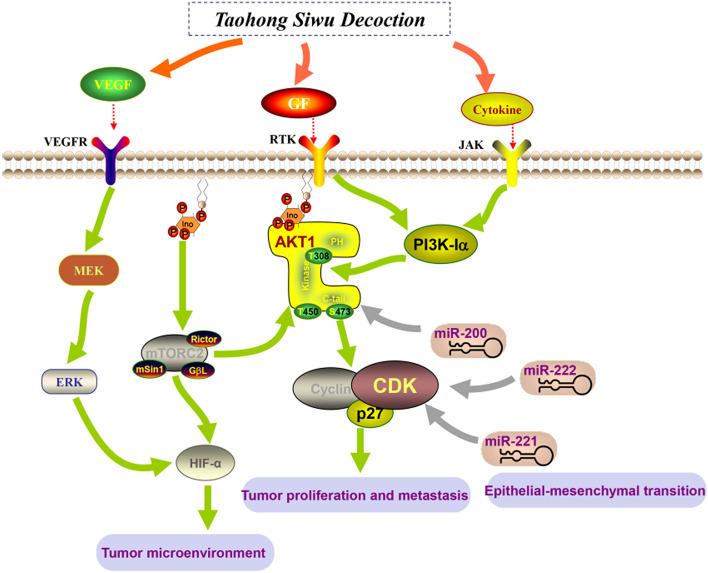
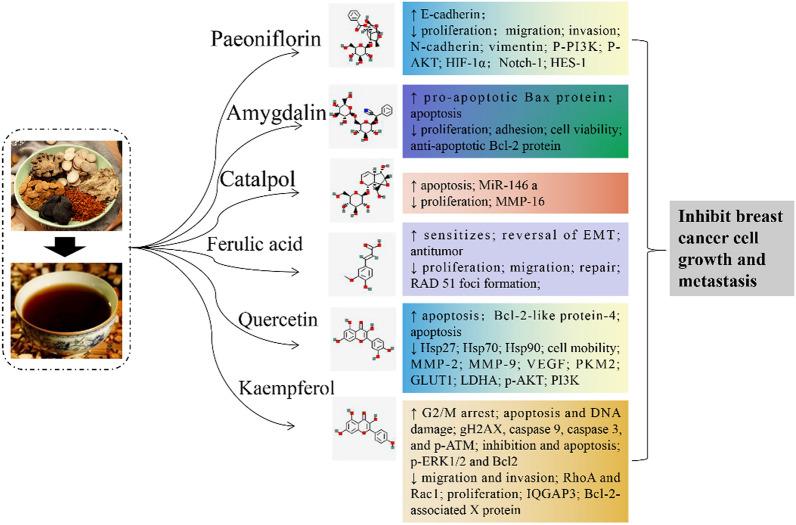
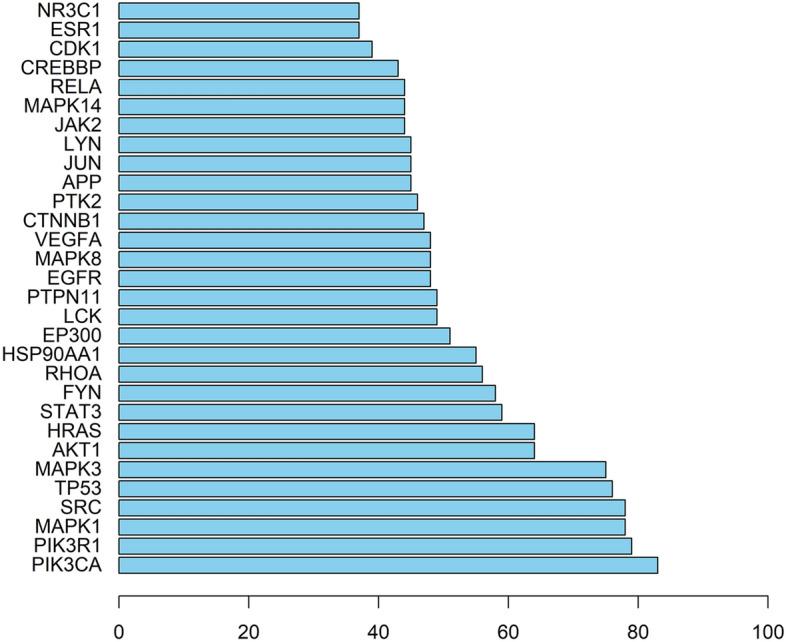
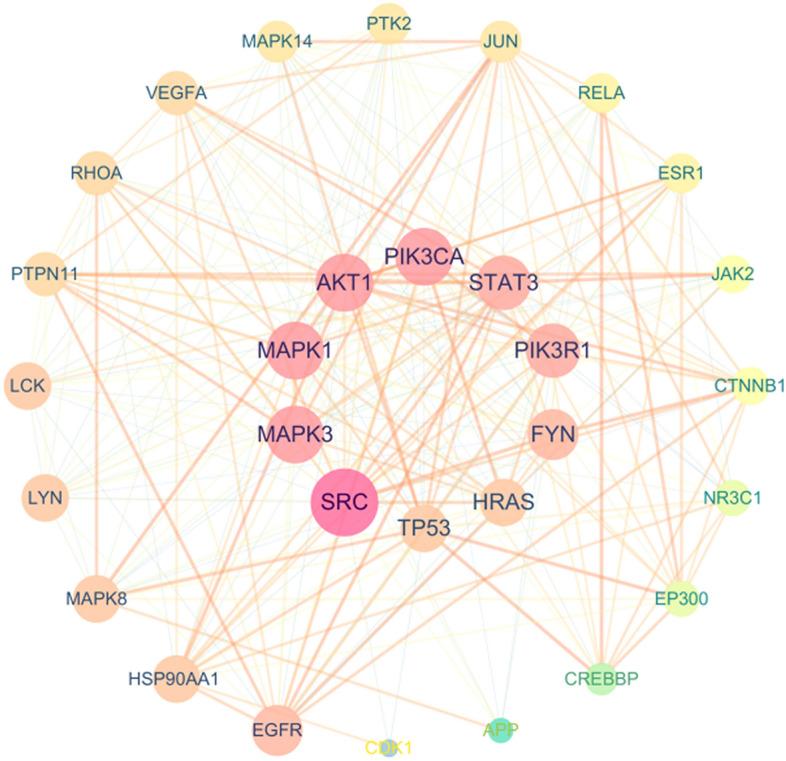
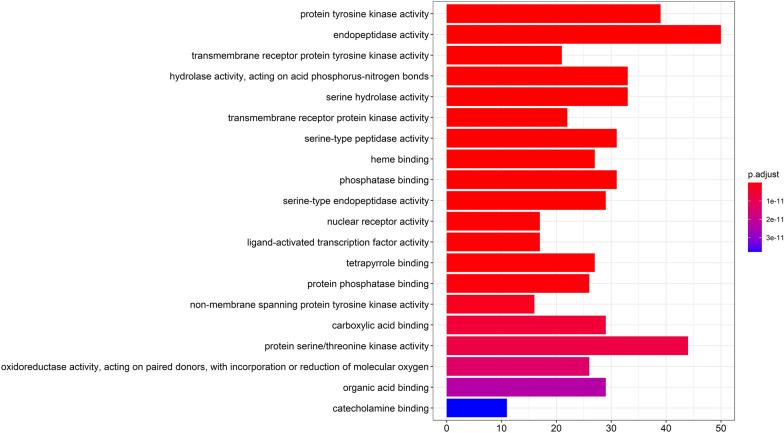
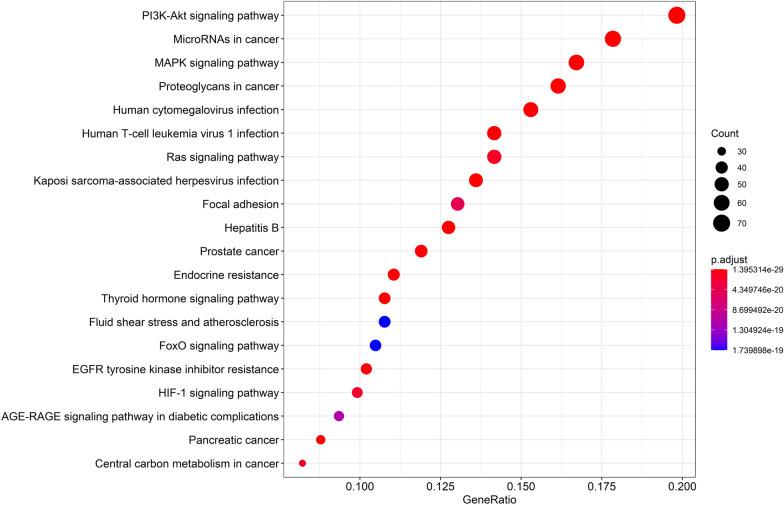
The high incidence of breast cancer is the greastest threat to women' health all over the world. Among them, HER-2 positive breast cancer has the characteristics of high malignancy, easy recurrence and metastasis, and poor prognosis. Traditional Chinese medicine (TCM) has a rich theoretical basis and clinical application for breast cancer. TCM believes that blood stasis syndrome is one of the important pathogenesis of breast formation and development. Taohong Siwu Decoction (TSHWD) is based on the "First Prescription of Gynecology" Siwu Decoction. It is widely used in various blood stasis and blood deficiency syndromes, mainly in gynecological blood stasis. Clinical studies have found that THSWD can treat breast cancer by reducing blood vessel and lymphangiogenesis with auxiliary chemotherapy. In this study, we aim to explore the material basis and mechanism of THSWD in the treatment of HER-2 positive breast cancer through literature review and network pharmacology studies. Through a literature review of the traditional application, chemical composition of Chinese herbal medicine of THSWD, as well as its clinical reports and pharmacological research on breast cancer treatment. Meanwhile, we conducted "component-pathway-target" network through network pharmacology reveals the main material basis, possible targets and pathways of THSWD in inhibiting HER-2 positive breast cancer. Literature review and network pharmacology research results had predicted that, baicalein, kaempferol, caffeic acid, amygdalin, quercetin, ferulic acid, gallic acid, catalpol, hydroxysafflor yellow A, paeoniflorin in THSWD are the main effective chemical composition. THSWD regulates 386 protein targets and 166 pathways related to breast cancer. The molecular mechanism is mainly to improve the microenvironment of tumor cells, regulate the process of tumor cell EMT, and inhibit tumor cell proliferation and metastasis. This study revealed the mechanism of action of THSWD in the treatment of HER-2 positive breast cancer through literature review and network pharmacology studies, providing a scientific basis for clinical application.
乳腺癌的高发病率是全球女性健康面临的最大威胁。其中,HER-2阳性乳腺癌具有恶性程度高、易复发转移、预后差的特点。中医对乳腺癌有丰富的理论基础和临床应用。中医认为血瘀证是乳腺癌形成和发展的重要病机之一。桃红四物汤基于“妇科第一方”四物汤。它广泛应用于各种血瘀和血虚证,主要用于妇科血瘀。临床研究发现,桃红四物汤联合化疗可通过减少血管和淋巴管生成来治疗乳腺癌。在本研究中,我们旨在通过文献综述和网络药理学研究探索桃红四物汤治疗HER-2阳性乳腺癌的物质基础和作用机制。通过对桃红四物汤的传统应用、中药化学成分、以及其治疗乳腺癌的临床报道和药理研究进行文献综述。同时,我们通过网络药理学构建“成分-通路-靶点”网络,揭示桃红四物汤抑制HER-2阳性乳腺癌的主要物质基础、可能的靶点和通路。文献综述和网络药理学研究结果预测,桃红四物汤中的黄芩素、山柰酚、咖啡酸、苦杏仁苷、槲皮素、阿魏酸、没食子酸、梓醇、羟基红花黄色素A、芍药苷是主要的有效化学成分。桃红四物汤调节与乳腺癌相关的386个蛋白质靶点和166条通路。分子机制主要是改善肿瘤细胞的微环境,调节肿瘤细胞EMT过程,抑制肿瘤细胞增殖和转移。本研究通过文献综述和网络药理学研究揭示了桃红四物汤治疗HER-2阳性乳腺癌的作用机制,为临床应用提供了科学依据。




 Zotero 插件