
病例报告:极端且持久的神经性贪食症经反复氯胺酮辅助心理治疗后意外缓解
Case Report: Unexpected Remission From Extreme and Enduring Bulimia Nervosa With Repeated Ketamine Assisted Psychotherapy.
作者信息
Ragnhildstveit Anya, Jackson Laura Kate, Cunningham Sarah, Good Linda, Tanner Quinn, Roughan Matthew, Henrie-Barrus Patricia
机构信息
Department of Psychology, University of Utah, Salt Lake City, UT, United States.
Behavioral Science Department, Utah Valley University, Orem, UT, United States.
出版信息
Front Psychiatry. 2021 Nov 17;12:764112. doi: 10.3389/fpsyt.2021.764112. eCollection 2021.
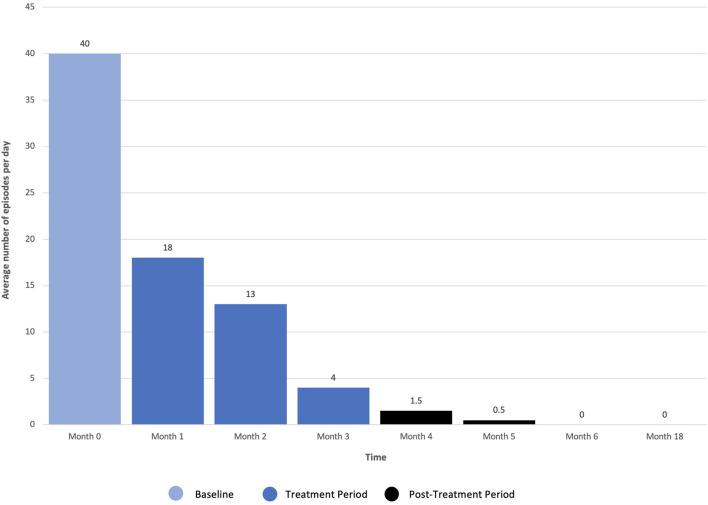
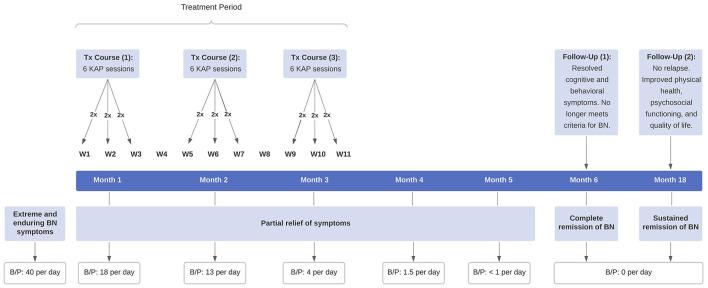
Bulimia nervosa is a disabling psychiatric disorder that considerably impairs physical health, disrupts psychosocial functioning, and reduces overall quality of life. Despite available treatment, less than half of sufferers achieve recovery and approximately a third become chronically ill. Extreme and enduring cases are particularly resistant to first-line treatment, namely antidepressants and cognitive behavioral therapy, and have the highest rate of premature mortality. Here, we demonstrate that in such cases, repeated sessions of ketamine assisted psychotherapy (KAP) is an effective treatment alternative for improving symptoms. A 21-year-old woman presented with extreme and enduring bulimia nervosa. She reported recurrent binge-eating and purging by self-induced vomiting 40 episodes per day, which proved refractory to both pharmacological and behavioral treatment at the outpatient, residential, and inpatient level. Provided this, her physician recommended repeated KAP as an exploratory and off-label intervention for her eating disorder. The patient underwent three courses of KAP over 3 months, with each course consisting of six sessions scheduled twice weekly. She showed dramatic reductions in binge-eating and purging following the first course of treatment that continued with the second and third. Complete cessation of behavioral symptoms was achieved 3 months post-treatment. Her remission has sustained for over 1 year to date. To our knowledge, this is the first report of repeated KAP used to treat bulimia nervosa that led to complete and sustained remission, a rare outcome for severe and enduring cases, let alone extreme ones. Additionally, it highlights the degree to which KAP can be tailored at the individual level based on symptom severity and treatment response. While its mechanism of action is unclear, repeated KAP is a promising intervention for bulimia nervosa that warrants future research and clinical practice consideration.
神经性贪食症是一种致残性精神障碍,严重损害身体健康,扰乱心理社会功能,并降低整体生活质量。尽管有可用的治疗方法,但不到一半的患者能够康复,约三分之一的患者会发展为慢性病。极端和持久的病例对一线治疗(即抗抑郁药和认知行为疗法)特别耐药,且过早死亡率最高。在此,我们证明,在这种情况下,重复进行氯胺酮辅助心理治疗(KAP)是改善症状的一种有效治疗选择。一名21岁女性患有极端和持久的神经性贪食症。她报告每天有40次反复的暴饮暴食和自我催吐行为,在门诊、住院和住院治疗层面,药物和行为治疗均对其无效。鉴于此,她的医生建议重复进行KAP,作为对其饮食失调的一种探索性和超说明书干预。该患者在3个月内接受了三个疗程的KAP,每个疗程包括六次治疗,每周安排两次。在第一个疗程的治疗后,她的暴饮暴食和催吐行为显著减少,并在第二和第三个疗程中持续改善。治疗3个月后,行为症状完全停止。她的缓解状态至今已持续超过1年。据我们所知,这是首次报道重复进行KAP用于治疗神经性贪食症并导致完全和持续缓解的案例,对于严重和持久的病例,更不用说极端病例,这是罕见的结果。此外,它还强调了KAP可以根据症状严重程度和治疗反应在个体层面进行调整的程度。虽然其作用机制尚不清楚,但重复进行KAP是一种有前景的治疗神经性贪食症的干预措施,值得未来研究和临床实践考虑。
 Zotero 插件