
超越单一栽培:将“间作”融入作物种植
Breeding Beyond Monoculture: Putting the "Intercrop" Into Crops.
作者信息
Bourke Peter M, Evers Jochem B, Bijma Piter, van Apeldoorn Dirk F, Smulders Marinus J M, Kuyper Thomas W, Mommer Liesje, Bonnema Guusje
机构信息
Plant Breeding, Wageningen University & Research, Wageningen, Netherlands.
Centre for Crops Systems Analysis, Wageningen University & Research, Wageningen, Netherlands.
出版信息
Front Plant Sci. 2021 Nov 18;12:734167. doi: 10.3389/fpls.2021.734167. eCollection 2021.
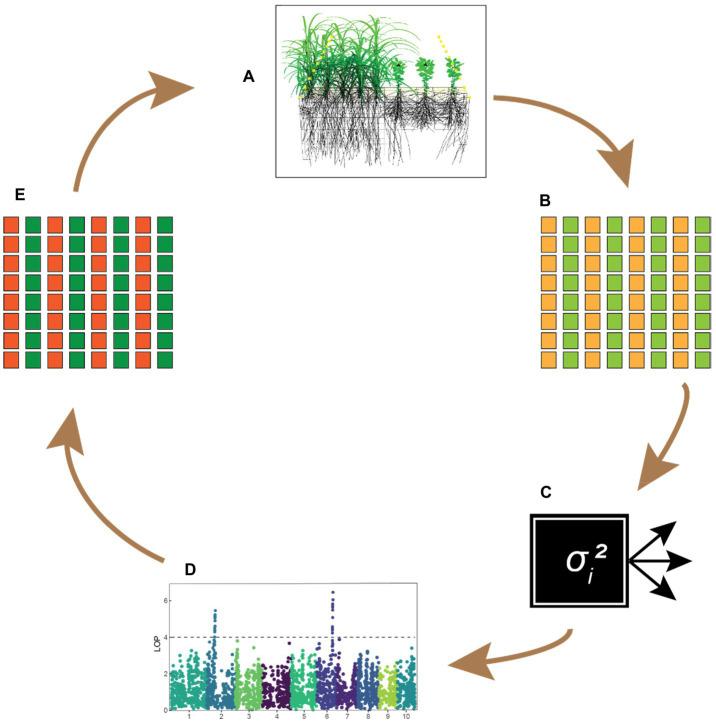
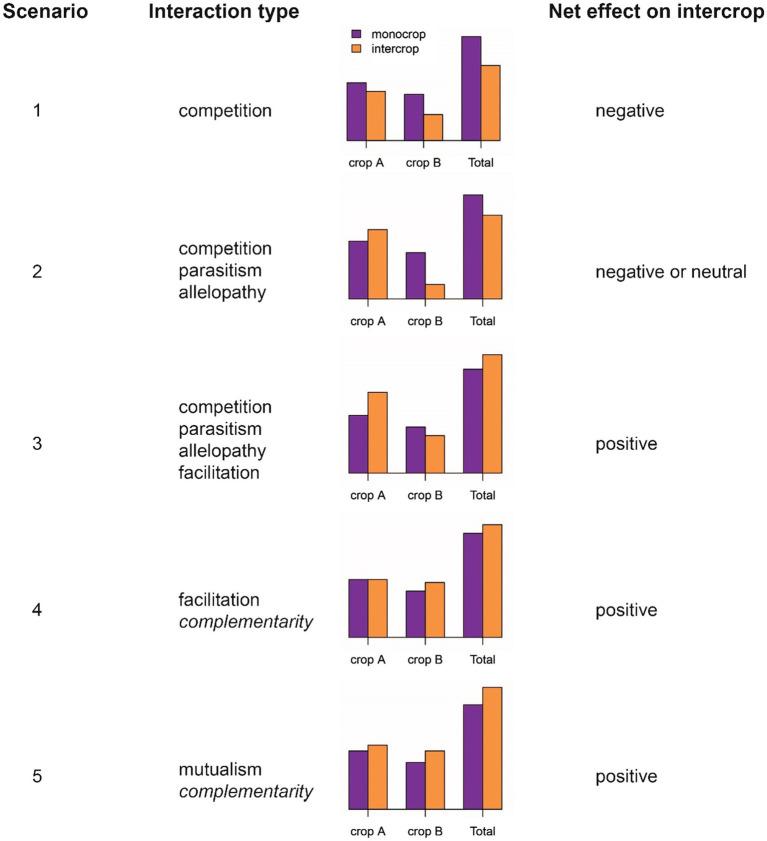
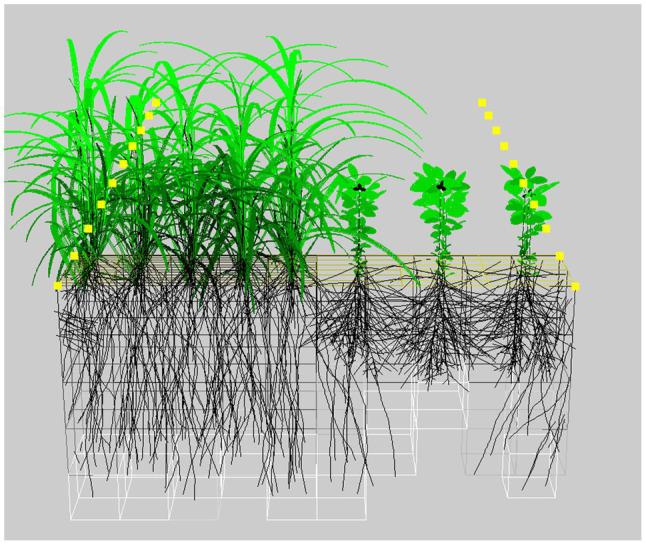
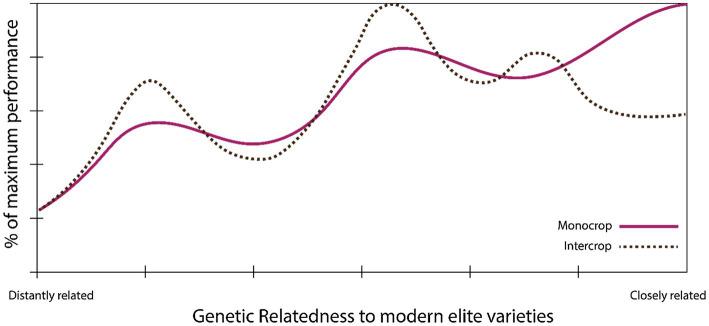
Intercropping is both a well-established and yet novel agricultural practice, depending on one's perspective. Such perspectives are principally governed by geographic location and whether monocultural practices predominate. Given the negative environmental effects of monoculture agriculture (loss of biodiversity, reliance on non-renewable inputs, soil degradation, etc.), there has been a renewed interest in cropping systems that can reduce the impact of modern agriculture while maintaining (or even increasing) yields. Intercropping is one of the most promising practices in this regard, yet faces a multitude of challenges if it is to compete with and ultimately replace the prevailing monocultural norm. These challenges include the necessity for more complex agricultural designs in space and time, bespoke machinery, and adapted crop cultivars. Plant breeding for monocultures has focused on maximizing yield in single-species stands, leading to highly productive yet specialized genotypes. However, indications suggest that these genotypes are not the best adapted to intercropping systems. Re-designing breeding programs to accommodate inter-specific interactions and compatibilities, with potentially multiple different intercropping partners, is certainly challenging, but recent technological advances offer novel solutions. We identify a number of such technology-driven directions, either ideotype-driven (i.e., "trait-based" breeding) or quantitative genetics-driven (i.e., "product-based" breeding). For ideotype breeding, plant growth modeling can help predict plant traits that affect both inter- and intraspecific interactions and their influence on crop performance. Quantitative breeding approaches, on the other hand, estimate breeding values of component crops without necessarily understanding the underlying mechanisms. We argue that a combined approach, for example, integrating plant growth modeling with genomic-assisted selection and indirect genetic effects, may offer the best chance to bridge the gap between current monoculture breeding programs and the more integrated and diverse breeding programs of the future.
间作既是一种既定的农业实践,同时又颇具新意,这取决于个人的视角。这些视角主要受地理位置以及单一栽培实践是否占主导地位的影响。鉴于单一栽培农业对环境的负面影响(生物多样性丧失、依赖不可再生投入、土壤退化等),人们对能够在维持(甚至提高)产量的同时减少现代农业影响的种植系统重新产生了兴趣。间作是这方面最具前景的实践之一,但如果要与现行的单一栽培模式竞争并最终取而代之,仍面临诸多挑战。这些挑战包括在空间和时间上需要更复杂的农业设计、定制机械以及适应性强的作物品种。针对单一栽培的植物育种专注于在单一物种种植中实现产量最大化,从而培育出高产但高度专业化的基因型。然而,有迹象表明这些基因型并非最适合间作系统。重新设计育种计划以适应种间相互作用和兼容性,且可能涉及多种不同的间作伙伴,无疑具有挑战性,但最近的技术进步提供了新的解决方案。我们确定了一些由技术驱动的方向,要么是理想型驱动(即“基于性状”的育种),要么是数量遗传学驱动(即“基于产品”的育种)。对于理想型育种,植物生长建模有助于预测影响种间和种内相互作用及其对作物表现影响的植物性状。另一方面,数量育种方法在不一定了解潜在机制的情况下估计组成作物的育种值。我们认为,例如将植物生长建模与基因组辅助选择和间接遗传效应相结合的综合方法,可能提供最佳机会来弥合当前单一栽培育种计划与未来更综合、更多样化的育种计划之间的差距。
 Zotero 插件