
丹参酮 IIA 通过调控 CCNA2-CDK2 复合物和 AURKA/PLK1 通路抑制肺腺癌的进展。
Tanshinone IIA suppresses the progression of lung adenocarcinoma through regulating CCNA2-CDK2 complex and AURKA/PLK1 pathway.
机构信息
Faculty of Pharmacy, Hubei University of Chinese Medicine, Wuhan, 430065, China.
出版信息
Sci Rep. 2021 Dec 8;11(1):23681. doi: 10.1038/s41598-021-03166-2.
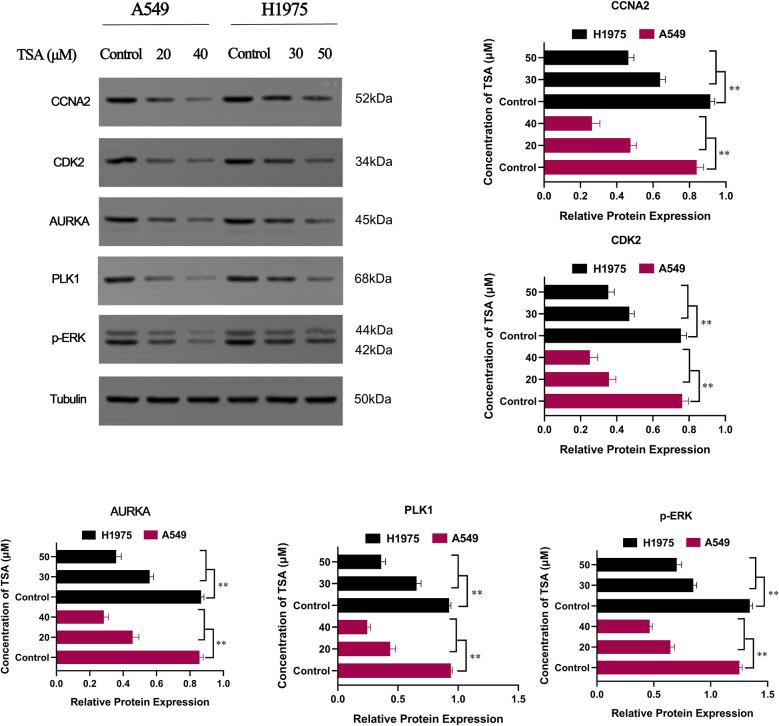
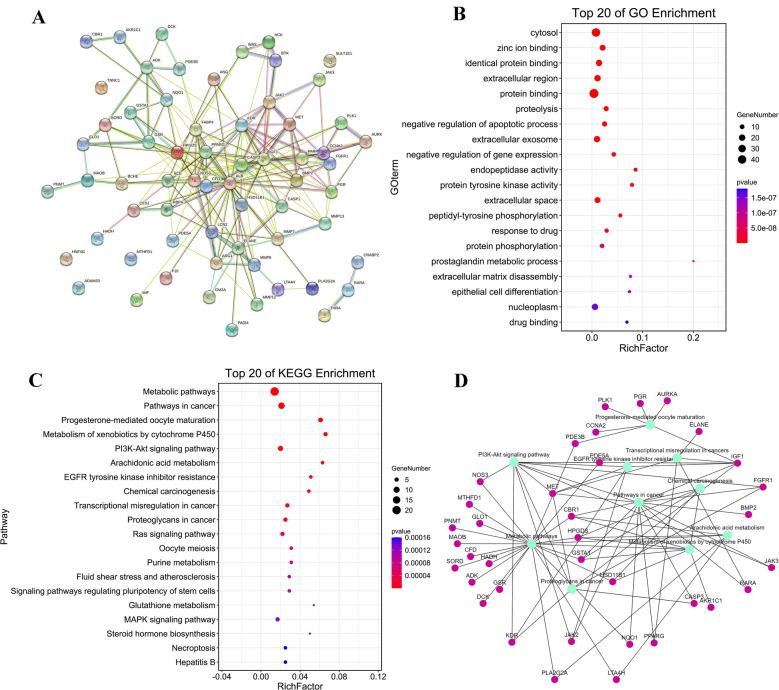
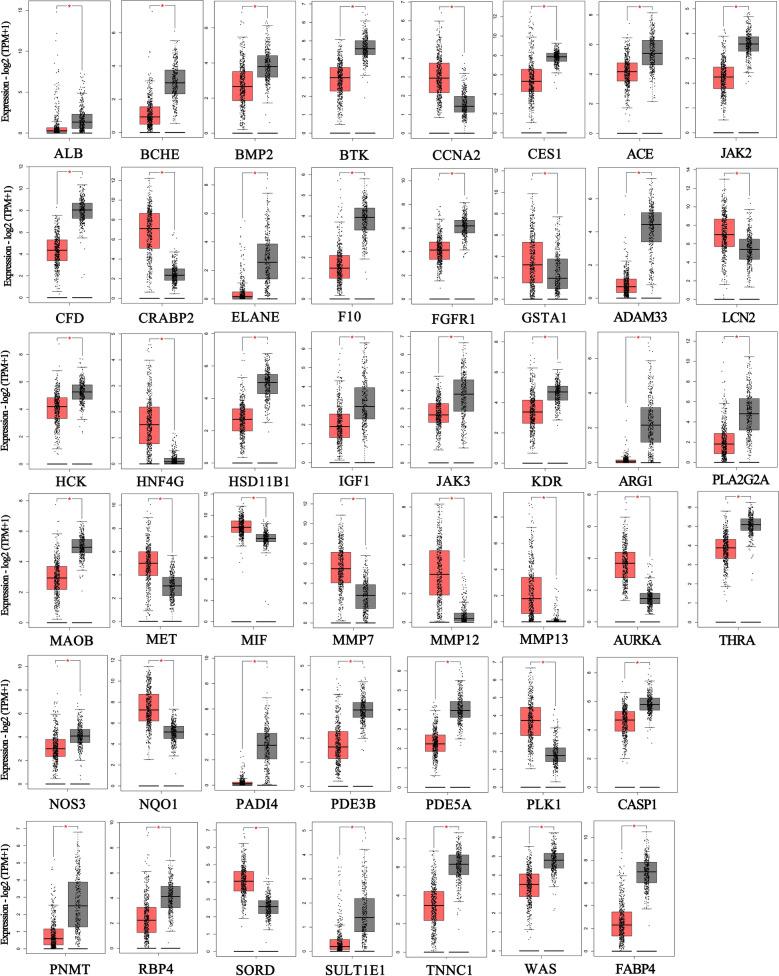
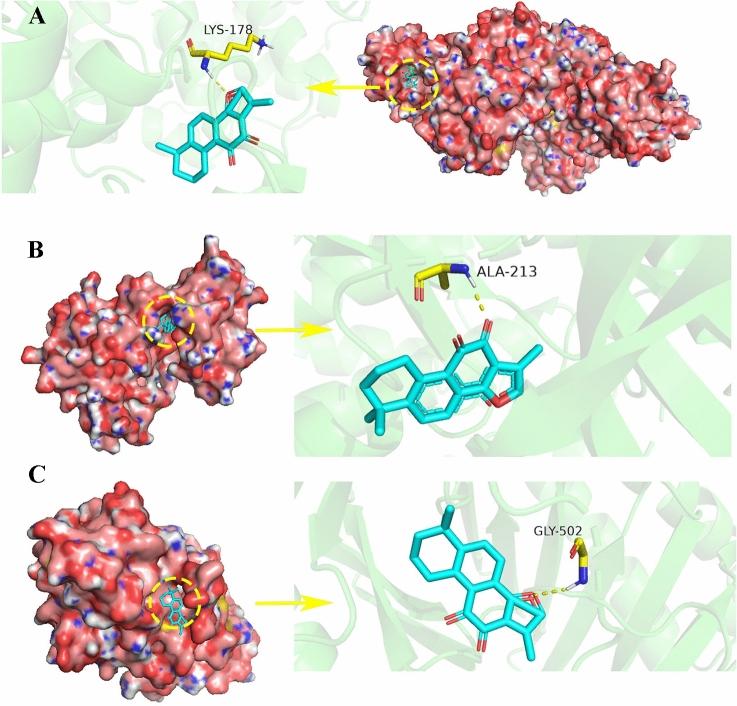
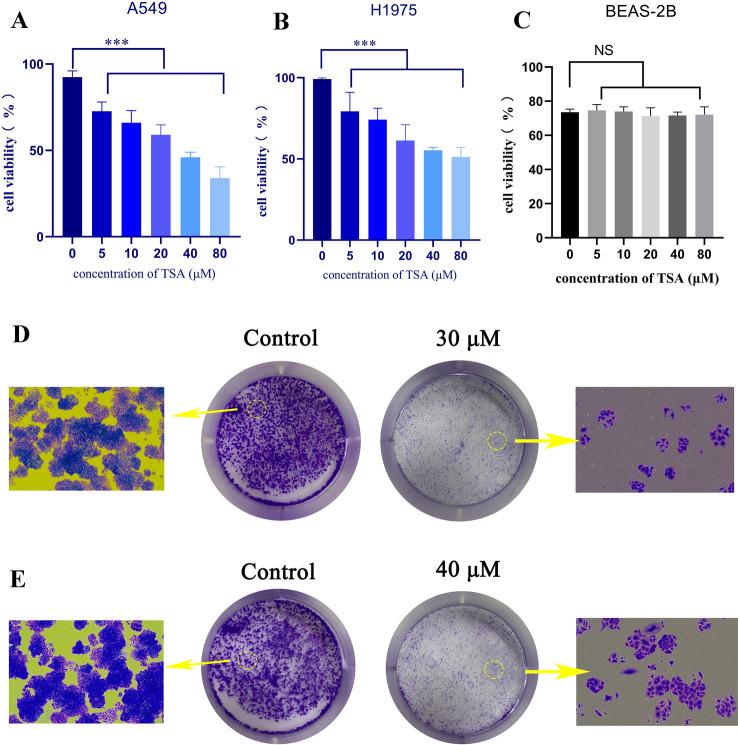
Lung adenocarcinoma (LUAD) belongs to a subgroup of non-small cell lung cancer (NSCLC) with an increasing incidence all over the world. Tanshinone IIA (TSA), an active compound of Salvia miltiorrhiza Bunge., has been found to have anti-tumor effects on many tumors, but its anti-LUAD effect and its mechanism have not been reported yet. In this study, bio-information analysis was applied to characterize the potential mechanism of TSA on LUA, biological experiments were used to verify the mechanisms involved. TCGA, Pubchem, SwissTargetPrediction, Venny2.1.0, STRING, DAVID, Cytoscape 3.7.2, Omicshare, GEPIA, RSCBPDB, Chem Draw, AutoDockTools, and PyMOL were utilized for analysis in the bio-information analysis and network pharmacology. Our experiments in vitro focused on the anti-LUAD effects and mechanisms of TSA on LUAD cells (A549 and NCI-H1975 cells) via MTT, plate cloning, Annexin V-FITC and PI dual staining, flow cytometry, and western blot assays. A total of 64 differentially expressed genes (DEGs) of TSA for treatment of LUAD were screened out. Gene ontology and pathway analysis revealed characteristic of the DEGs network. After GEPIA-based DEGs confirmation, 46 genes were considered having significant differences. Further, 10 key DEGs (BTK, HSD11B1, ADAM33, TNNC1, THRA, CCNA2, AURKA, MIF, PLK1, and SORD) were identified as the most likely relevant genes from overall survival analysis. Molecular Docking results showed that CCNA2, CDK2 and PLK1 had the lowest docking energy. MTT and plate cloning assays results showed that TSA inhibited the proliferation of LUAD cells in a concentration-dependent manner. Annexin V-FITC and PI dual staining and flow cytometry assays results told that TSA promoted the apoptosis of the two LUAD cells in different degrees, and induced cycle arrest in the G1/S phase. Western blot results showed that TSA significantly down-regulated the expression of CCNA2, CDK2, AURKA, PLK1, and p-ERK. In summary, TSA could suppress the progression of LUAD by inducing cell apoptosis and arresting cell cycle, and these were done by regulating CCNA2-CDK2 complex and AURKA/PLK1 pathway. These findings are the first to demonstrate the molecular mechanism of TSA in treatment of LUAD combination of network bio-information analysis and biological experiments in vitro.
肺腺癌 (LUAD) 属于非小细胞肺癌 (NSCLC) 的一个亚组,其发病率在全球范围内呈上升趋势。丹参酮 IIA (TSA) 是丹参的一种活性化合物,已被发现对许多肿瘤具有抗肿瘤作用,但它对 LUAD 的作用及其机制尚未报道。在这项研究中,应用生物信息学分析来描述 TSA 对 LUAD 的潜在作用机制,并用生物学实验来验证所涉及的机制。TCGA、Pubchem、SwissTargetPrediction、Venny2.1.0、STRING、DAVID、Cytoscape 3.7.2、Omicshare、GEPIA、RSCBPDB、Chem Draw、AutoDockTools 和 PyMOL 用于生物信息学分析和网络药理学分析。我们的体外实验主要集中在 TSA 对 LUAD 细胞 (A549 和 NCI-H1975 细胞) 的抗 LUAD 作用和机制上,通过 MTT、平板克隆、Annexin V-FITC 和 PI 双重染色、流式细胞术和 Western blot 检测。筛选出 TSA 治疗 LUAD 的 64 个差异表达基因 (DEGs)。基因本体论和通路分析揭示了 DEGs 网络的特征。基于 GEPIA 的 DEGs 确认后,有 46 个基因被认为有显著差异。进一步,从整体生存分析中鉴定出 10 个关键 DEGs (BTK、HSD11B1、ADAM33、TNNC1、THRA、CCNA2、AURKA、MIF、PLK1 和 SORD) 作为最可能相关的基因。分子对接结果表明,CCNA2、CDK2 和 PLK1 的对接能最低。MTT 和平板克隆检测结果表明 TSA 呈浓度依赖性抑制 LUAD 细胞的增殖。Annexin V-FITC 和 PI 双重染色和流式细胞术检测结果表明 TSA 能不同程度地促进两种 LUAD 细胞的凋亡,并诱导细胞周期在 G1/S 期停滞。Western blot 结果表明 TSA 显著下调了 CCNA2、CDK2、AURKA、PLK1 和 p-ERK 的表达。总之,TSA 通过诱导细胞凋亡和阻滞细胞周期来抑制 LUAD 的进展,这是通过调节 CCNA2-CDK2 复合物和 AURKA/PLK1 通路来实现的。这些发现首次证明了网络生物信息学分析和体外生物学实验相结合,TSA 在治疗 LUAD 中的分子机制。



 Zotero 插件