
波兰成年C1抑制物缺乏所致遗传性血管性水肿患者血管性水肿发作的临床特征与管理
Clinical Characteristics and Management of Angioedema Attacks in Polish Adult Patients with Hereditary Angioedema Due to C1-Inhibitor Deficiency.
作者信息
Piotrowicz-Wójcik Katarzyna, Bulanda Małgorzata, Juchacz Aldona, Jamróz-Brzeska Joanna, Gocki Jacek, Kuziemski Krzysztof, Pawłowicz Robert, Porebski Grzegorz
机构信息
Department of Clinical and Environmental Allergology, Jagiellonian University Medical College, Botaniczna 3, 31-503 Krakow, Poland.
Greater Poland Center of Pulmonology and Thoracic Surgery, Szamarzewskiego 62, 60-569 Poznan, Poland.
出版信息
J Clin Med. 2021 Nov 29;10(23):5609. doi: 10.3390/jcm10235609.
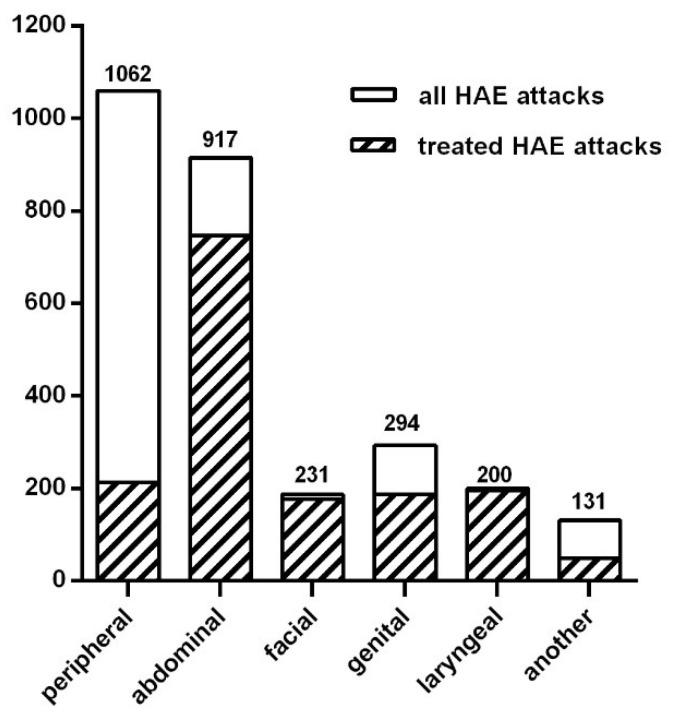
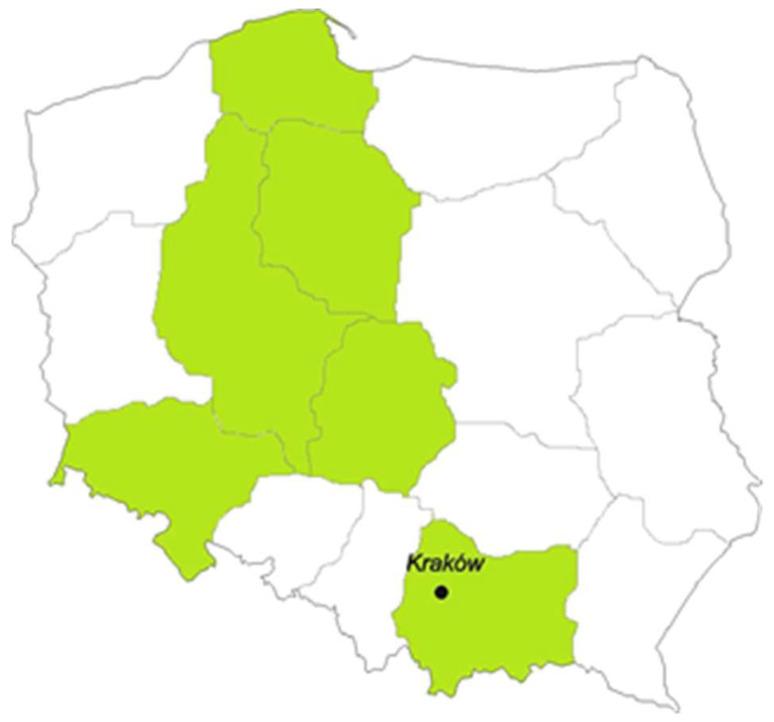
Hereditary angioedema (HAE) due to C1-inhibitor (C1-INH) deficiency is a rare disease characterized by recurrent swellings. This study aims to determine (i) the clinical characteristics of the HAE patient population from Poland, and (ii) real-life patients' treatment practices. A cross-sectional study involved 138 adult HAE patients (88 females, 50 males) treated in six regional HAE centers in Poland. Consecutive patients during routine follow-up visits underwent a structured medical interview on the clinical characteristics of the course and treatment of HAE attacks within the last six months. A total of 118 of 138 patients was symptomatic. They reported in total 2835 HAE attacks predominantly peripheral and abdominal, treated with plasma-derived C1-INH (61.4%), icatibant (36.7%) and recombinant C1-INH (1.9%). An amount of 116 patients carried the rescue medication with them while traveling, and 74 patients self-administrated on demand treatment. There were twice as many symptomatic women ( = 78) as there were men ( = 40). Women treated their HAE attacks significantly more often than men. Older patients (≥65 years) reported a longer delay in diagnosis, and practiced the self-administration of rescue medication less frequently in comparison to other patients. Clinical features of the surveyed population are similar to other European, but not Asian, HAE patient groups. Self-administration still remains an unmet medical need. Some distinct HAE patients may require special attention due to the severe course of the disease (females) or a delay in diagnosis (the elderly).
由于C1抑制剂(C1-INH)缺乏引起的遗传性血管性水肿(HAE)是一种以反复发作肿胀为特征的罕见疾病。本研究旨在确定:(i)波兰HAE患者群体的临床特征,以及(ii)现实生活中患者的治疗方法。一项横断面研究纳入了波兰六个地区HAE中心治疗的138例成年HAE患者(88例女性,50例男性)。在常规随访期间,连续的患者接受了关于过去六个月内HAE发作的病程和治疗的临床特征的结构化医学访谈。138例患者中有118例有症状。他们共报告了2835次HAE发作,主要发生在四肢和腹部,治疗方法主要有:血浆源性C1-INH(61.4%)、艾替班特(36.7%)和重组C1-INH(1.9%)。116例患者在旅行时随身携带急救药物,74例患者按需自行给药治疗。有症状的女性(=78)是男性(=40)的两倍。女性治疗HAE发作的频率明显高于男性。老年患者(≥65岁)报告诊断延迟时间更长,与其他患者相比,自行使用急救药物的频率更低。被调查人群的临床特征与其他欧洲HAE患者群体相似,但与亚洲患者群体不同。自行给药仍然是一项未满足的医疗需求。由于疾病病程严重(女性)或诊断延迟(老年人),一些特殊的HAE患者可能需要特别关注。
 Zotero 插件