
职业女子足球运动员赛季中内部负荷和健康变化:比赛位置和身份的比较。
In-Season Internal Load and Wellness Variations in Professional Women Soccer Players: Comparisons between Playing Positions and Status.
机构信息
Sports Science School of Rio Maior-Polytechnic Institute of Santarém, 2040-413 Rio Maior, Portugal.
Life Quality Research Centre, 2040-413 Rio Maior, Portugal.
出版信息
Int J Environ Res Public Health. 2021 Dec 5;18(23):12817. doi: 10.3390/ijerph182312817.
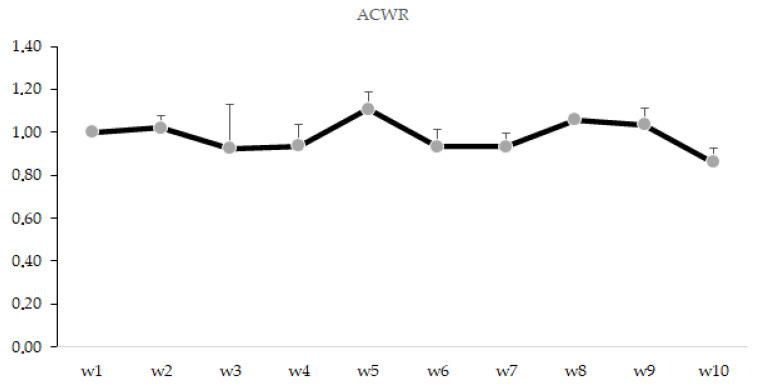
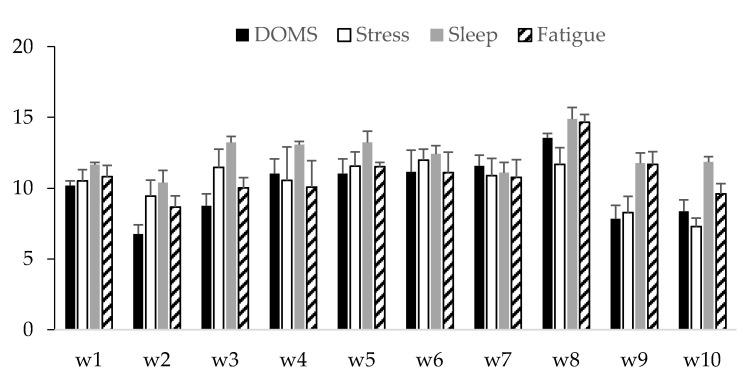
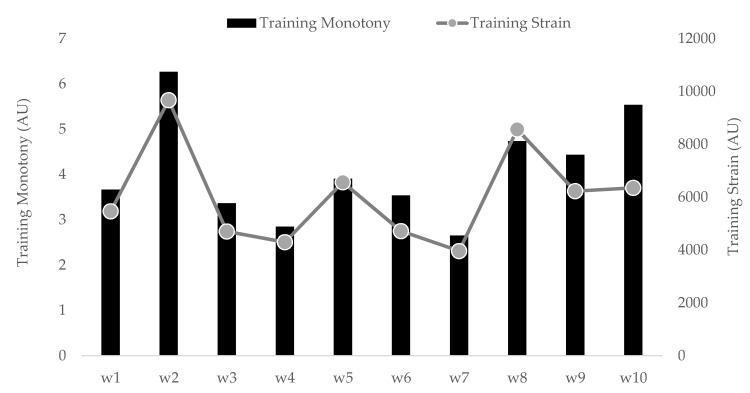
The internal intensity monitoring in soccer has been used more in recent years in men's football; however, in women's soccer, the existing literature is still scarce. The aims of this study were threefold: (a) to describe the weekly variations of training monotony, training strain and acute: chronic workload ratio through session Rated Perceived Exertion (s-RPE); (b) to describe weekly variations of Hooper Index [stress, fatigue, Delayed Onset Muscle Soreness (DOMS) and sleep]; and (c) to compare those variations between playing positions and player status. Nineteen players (24.1 ± 2.7 years) from a Portuguese BPI League professional team participated in this study. All variables were collected in a 10-week in-season period with three training sessions and one match per week during the 2019/20 season. Considering the overall team, the results showed that there were some associations between Hooper Index categories and s-RPE like stress or fatigue (0.693, < 0.01), stress or DOMS (0.593, < 0.01), stress or s-RPE (-0.516, < 0.05) and fatigue or DOMS (0.688, < 0.01). There were no differences between all parameters in playing positions or player status. In conclusion, the study revealed that higher levels of fatigue and DOMS occur concurrently with better nights of sleep. Moreover, any in-season variations concerning internal load and perceived wellness seems independent of position or status in outfield players. The data also showed that the higher the players' reported stress, the lower the observed s-RPE, thus possibly indicating a mutual interference of experienced stress levels on the assimilation of training intensity by elite women soccer players.
近年来,足球领域越来越多地使用内部强度监测,然而在女子足球中,相关文献仍然很少。本研究旨在:(一)通过赛中感知用力程度(s-RPE)描述训练单调、训练紧张和急性:慢性工作负荷比的每周变化;(二)描述 Hooper 指数[应激、疲劳、延迟性肌肉酸痛(DOMS)和睡眠]的每周变化;(三)比较不同比赛位置和球员状态的这些变化。本研究纳入了来自葡萄牙 BPI 联赛的一支职业球队的 19 名球员(24.1 ± 2.7 岁)。在 2019/20 赛季,所有变量均在 10 周的赛季期间收集,每周有 3 次训练和 1 次比赛。就整个球队而言,结果表明 Hooper 指数类别和 s-RPE 之间存在一些关联,如应激或疲劳(0.693, < 0.01)、应激或 DOMS(0.593, < 0.01)、应激或 s-RPE(-0.516, < 0.05)和疲劳或 DOMS(0.688, < 0.01)。在比赛位置或球员状态方面,所有参数均无差异。结论表明,较高的疲劳和 DOMS 水平与更好的睡眠质量同时出现。此外,任何与内部负荷和感知健康有关的赛季变化似乎都与外场球员的位置或状态无关。数据还表明,球员报告的应激水平越高,观察到的 s-RPE 越低,这可能表明精英女子足球运动员在承受应激水平时对训练强度的同化存在相互干扰。
 Zotero 插件