
调查年龄和地区因素对与热相关的救护车转运发病率和日最高温度或 WBGT 之间关系的影响。
Investigating age and regional effects on the relation between the incidence of heat-related ambulance transport and daily maximum temperature or WBGT.
机构信息
Work Environment Research Group, National Institute of Occupational Safety and Health, Japan Organization of Occupational Health and Safety, Kawasaki, Japan.
Department of Emergency and Critical Care Medicine, Kanto Rosai Hospital, Japan Organization of Occupational Health and Safety, Kawasaki, Japan.
出版信息
Environ Health Prev Med. 2021 Dec 10;26(1):116. doi: 10.1186/s12199-021-01034-z.
BACKGROUND
Although age and regional climate are considered to have effects on the incidence ratio of heat-related illness, quantitative estimation of age or region on the effect of occurring temperature for heat stroke is limited.
METHODS
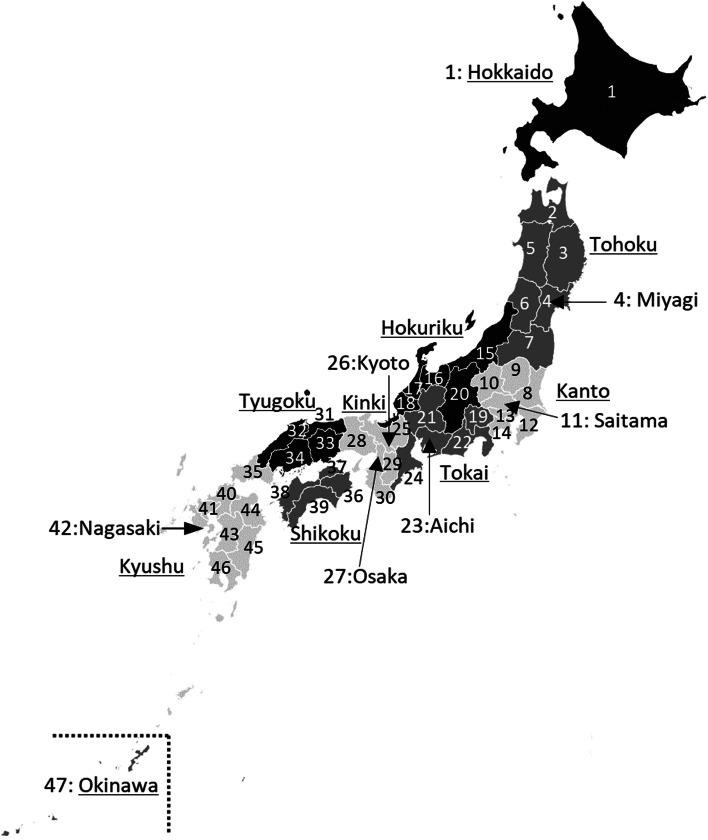
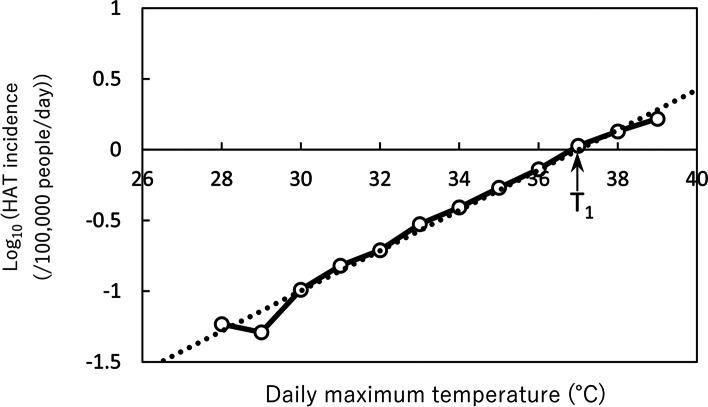
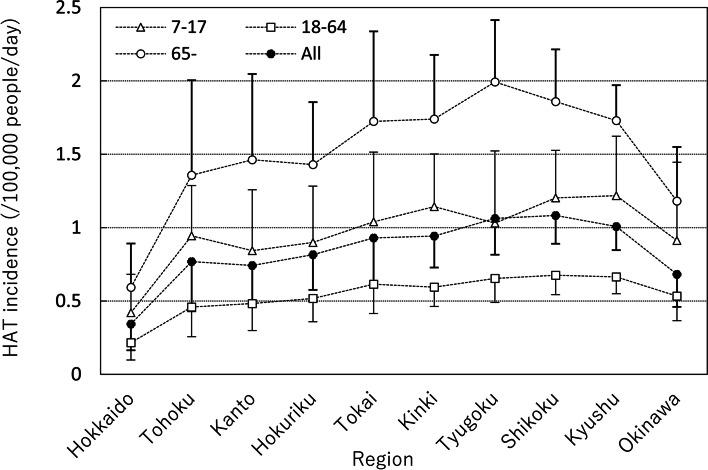
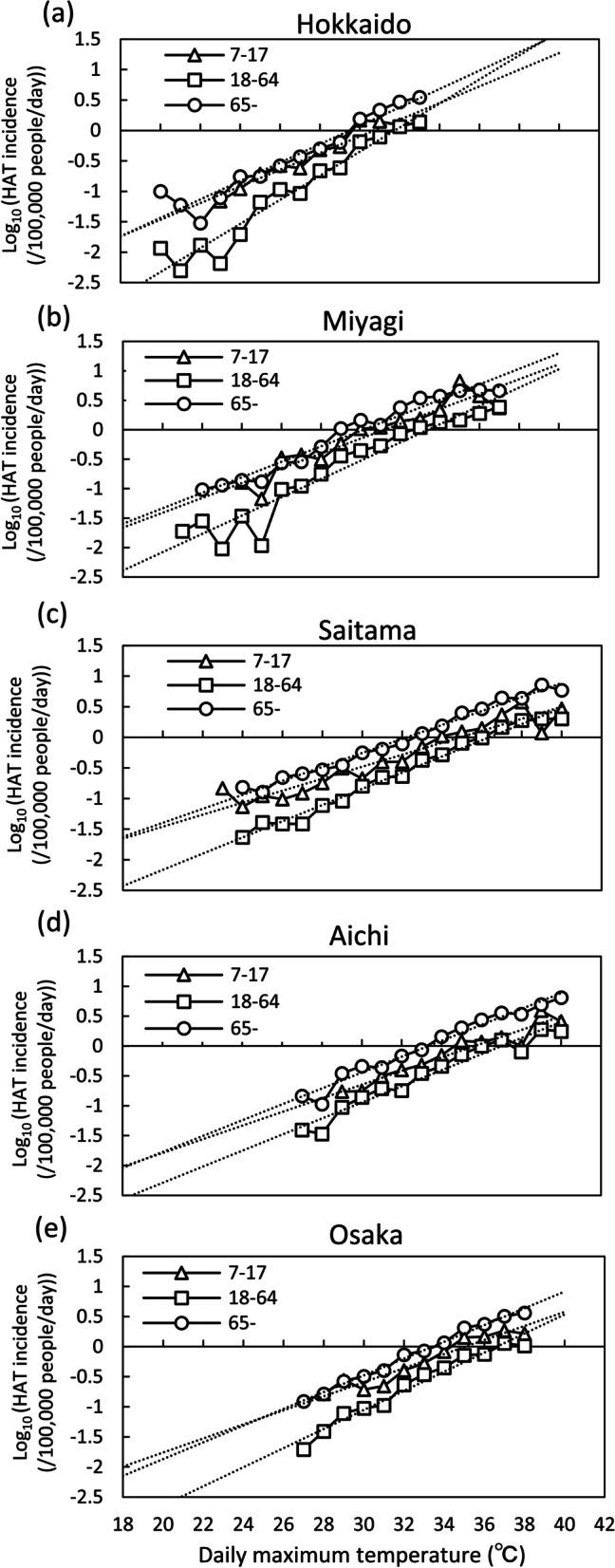
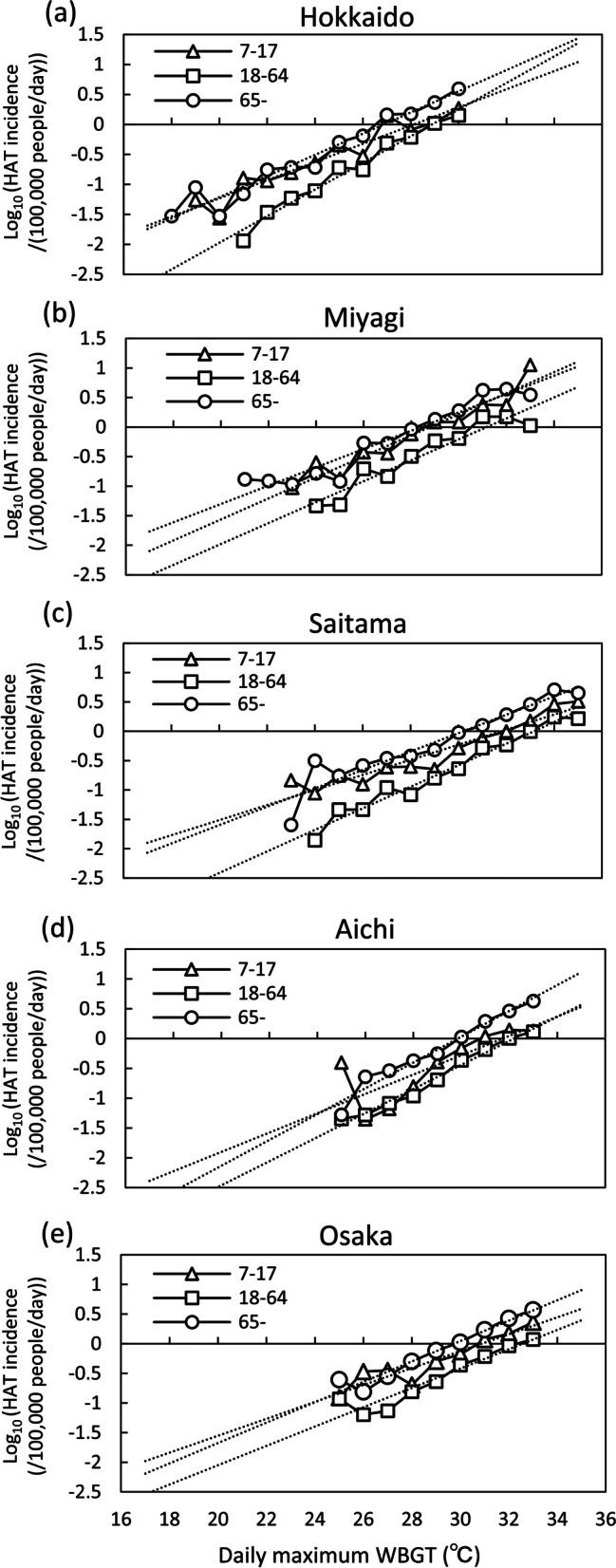
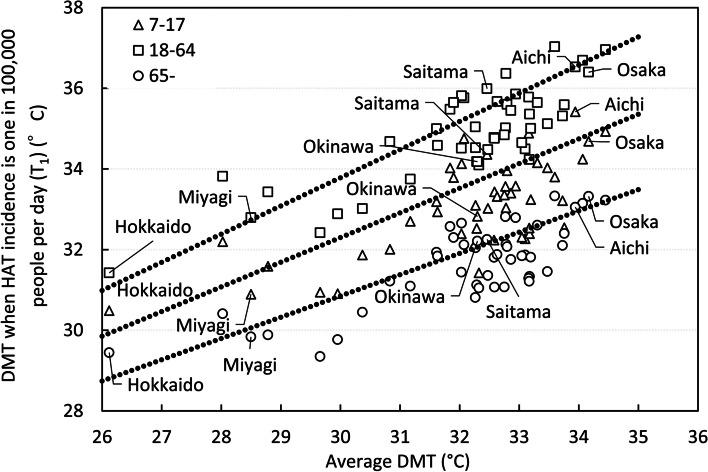
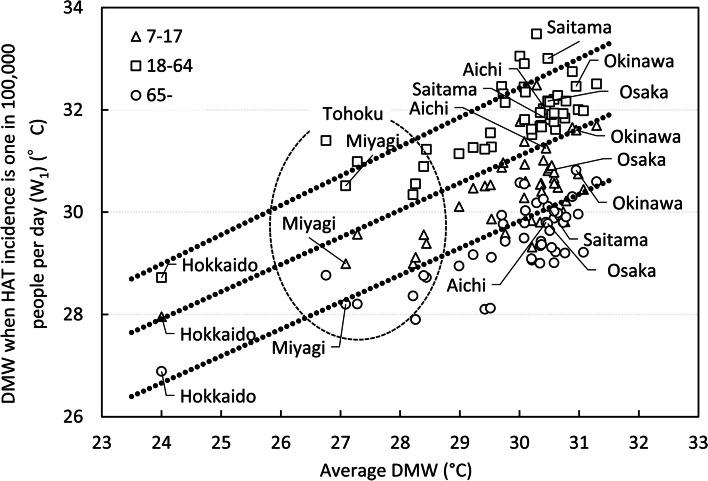
By utilizing data on the number of daily heat-related ambulance transport (HAT) in each of three age groups (7-17, 18-64, 65 years old, or older) and 47 prefectures in Japan, and daily maximum temperature (DMT) or Wet Bulb Globe Temperature (DMW) of each prefecture for the summer season, the effects of age and region on heat-related illness were studied. Two-way ANOVA was used to analyze the significance of the effect of age and 10 regions in Japan on HAT. The population-weighted average of DMT or DMW measured at weather stations in each prefecture was used as DMT or DMW for each prefecture. DMT or DMW when HAT is one in 100,000 people (T and W, respectively) was calculated for each age category and prefecture as an indicator of heat acclimatization. The relation between T or W and average DMT or DMW of each age category and prefecture were also analyzed.
RESULTS
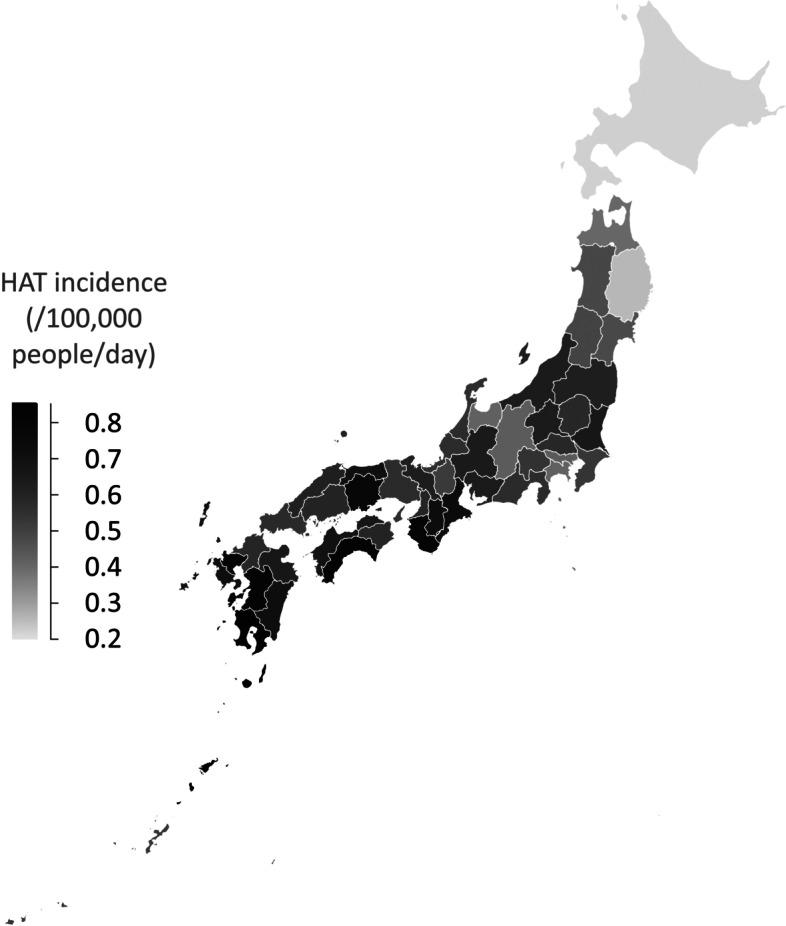
HAT of each age category and prefecture was plotted nearly on the exponential function of corresponding DMT or DMW. Average R of the regression function in 47 prefectures in terms of DMW was 0.86, 0.93, and 0.94 for juveniles, adults, and elderly, respectively. The largest regional difference of W in 47 prefectures was 4.5 and 4.8 °C for juveniles and adults, respectively between Hokkaido and Tokyo, 3.9 °C for elderly between Hokkaido and Okinawa. Estimated W and average DMT or DMW during the summer season for 47 prefectures was linearly related. Regarding age difference, the regression line showed that W of the prefecture for DMW at 30 °C of WBGT was 31.1 °C, 32.4 °C, and 29.8 °C for juveniles, adults, and elderly, respectively.
CONCLUSIONS
Age and regional differences affected the incidence of HAT. Thus, it is recommended that public prevention measures for heat-related disorders take into consideration age and regional variability.
背景
虽然年龄和区域气候被认为对与热相关的疾病的发病率有影响,但定量估计年龄或区域对中暑发生的温度影响是有限的。
方法
利用日本三个年龄组(7-17 岁、18-64 岁、65 岁及以上)和 47 个县的每日与热相关的救护车转运(HAT)数量以及每个县夏季的日最高温度(DMT)或湿球黑球温度(DMW)的数据,研究年龄和区域对与热相关的疾病的影响。采用双向方差分析(Two-way ANOVA)分析年龄和日本的 10 个地区对 HAT 的影响的显著性。以每个县的气象站测量的 DMT 或 DMW 的人口加权平均值作为每个县的 DMT 或 DMW。根据每个年龄组和每个县每 10 万人发生 1 例 HAT 的情况计算 DMT 或 DMW(分别为 T 和 W),作为热适应的指标。还分析了 T 或 W 与每个年龄组和每个县的平均 DMT 或 DMW 之间的关系。
结果
每个年龄组和每个县的 HAT 几乎都绘制在相应的 DMT 或 DMW 的指数函数上。在 47 个县中,以 DMW 表示的回归函数的平均 R 值分别为 0.86、0.93 和 0.94,分别为青少年、成年人和老年人。在 47 个县中,W 的最大区域差异分别为青少年和成年人之间北海道和东京之间的 4.5°C 和 4.8°C,老年人之间北海道和冲绳之间的 3.9°C。估计的 47 个县夏季的 W 和平均 DMT 或 DMW 呈线性相关。关于年龄差异,回归线表明,对于 DMW 为 30°C 的 WBGT 的各县的 W 分别为 31.1°C、32.4°C 和 29.8°C,分别为青少年、成年人和老年人。
结论
年龄和区域差异影响 HAT 的发生。因此,建议针对与热相关的疾病的公共预防措施考虑年龄和区域变异性。

 Zotero 插件