
影响合作规划方法在学校环境中有效性的因素。
Factors influencing the effectiveness of a Cooperative Planning approach in the school setting.
机构信息
Institute of Sport Science, University of Bayreuth, Universitätsstr. 30, 95447 Bayreuth, Germany.
出版信息
Health Promot Int. 2021 Dec 13;36(Supplement_2):ii16-ii25. doi: 10.1093/heapro/daab164.
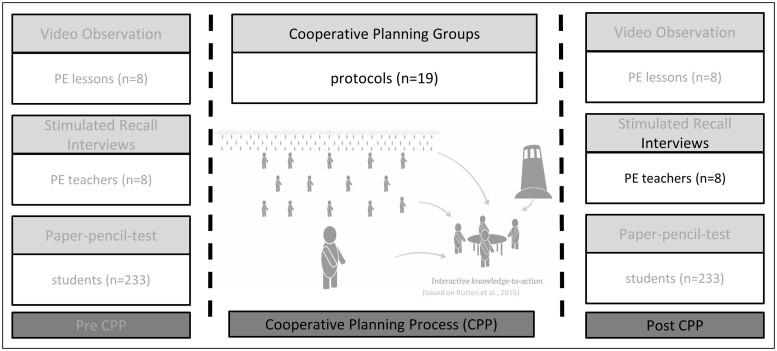
The purpose of the Health.edu project was to develop, implement and evaluate effective and feasible measures addressing students' health-related knowledge and understanding (HKU) in physical education (PE) with a specific focus on a co-creation approach (Cooperative Planning). The general procedure was identical in the four intervention schools involved; however, effectiveness (i.e. an increase in HKU) differed. Therefore, the present study investigated how different contextual factors supported or hindered the Cooperative Planning approach (evaluation of program implementation). To consider different perspectives in the analysis, we used data triangulation. On the one hand, written protocols (N = 19) document relevant statements and decisions in each planning group meeting (scientific perspective). On the other hand, we captured the participating PE teachers' (N = 8) individual attitudes after the Cooperative Planning process through semi-structured interviews (teachers' perspective). Data were analysed via qualitative content analysis. We identified three relevant factors with influence on the Cooperative Planning approach. First, the Cooperative Planning intervention worked if teachers saw a benefit in providing evidence-based knowledge, reflected their teaching practices and made an effort to implement new teaching strategies. Second, it was beneficial to have students represented as partners in the decision-making process. Third, support from the principal appeared to be helpful but not mandatory for implementing progressive pedagogical concepts. Continuous monitoring and reflection on those factors by the leading project team might help facilitate subsequent interventions using Cooperative Planning.
健康教育项目的目的是开发、实施和评估针对体育教育中学生健康相关知识和理解(HKU)的有效且可行的措施,重点是采用共创方法(合作规划)。四个参与干预学校的一般程序相同,但效果(即 HKU 的增加)不同。因此,本研究调查了不同的情境因素如何支持或阻碍合作规划方法(对项目实施的评估)。为了在分析中考虑不同的观点,我们使用了数据三角剖分。一方面,书面协议(N=19)记录了每个规划小组会议中的相关陈述和决策(科学视角)。另一方面,我们通过半结构化访谈(教师视角)记录了参与合作规划过程后的八位体育教师的个人态度。通过定性内容分析对数据进行了分析。我们确定了三个对合作规划方法有影响的相关因素。首先,如果教师认为提供基于证据的知识有益、反映了他们的教学实践并努力实施新的教学策略,那么合作规划干预就会奏效。其次,让学生作为决策过程的伙伴参与是有益的。第三,校长的支持似乎有助于实施渐进式教学理念,但并非必需。由项目领导团队对这些因素进行持续监测和反思可能有助于促进后续使用合作规划的干预措施。
 Zotero 插件