
在三合一神经血管单元芯片上模拟缺血性中风。
Modeling ischemic stroke in a triculture neurovascular unit on-a-chip.
机构信息
MIMETAS BV, Leiden, The Netherlands.
Department of Molecular Cell Biology and Immunology, Amsterdam UMC, Location VUmc, Amsterdam Neuroscience, Amsterdam, The Netherlands.
出版信息
Fluids Barriers CNS. 2021 Dec 14;18(1):59. doi: 10.1186/s12987-021-00294-9.
BACKGROUND
In ischemic stroke, the function of the cerebral vasculature is impaired. This vascular structure is formed by the so-called neurovascular unit (NVU). A better understanding of the mechanisms involved in NVU dysfunction and recovery may lead to new insights for the development of highly sought therapeutic approaches. To date, there remains an unmet need for complex human in vitro models of the NVU to study ischemic events seen in the human brain.
METHODS
We here describe the development of a human NVU on-a-chip model using a platform that allows culture of 40 chips in parallel. The model comprises a perfused vessel of primary human brain endothelial cells in co-culture with induced pluripotent stem cell derived astrocytes and neurons. Ischemic stroke was mimicked using a threefold approach that combines chemical hypoxia, hypoglycemia, and halted perfusion.
RESULTS
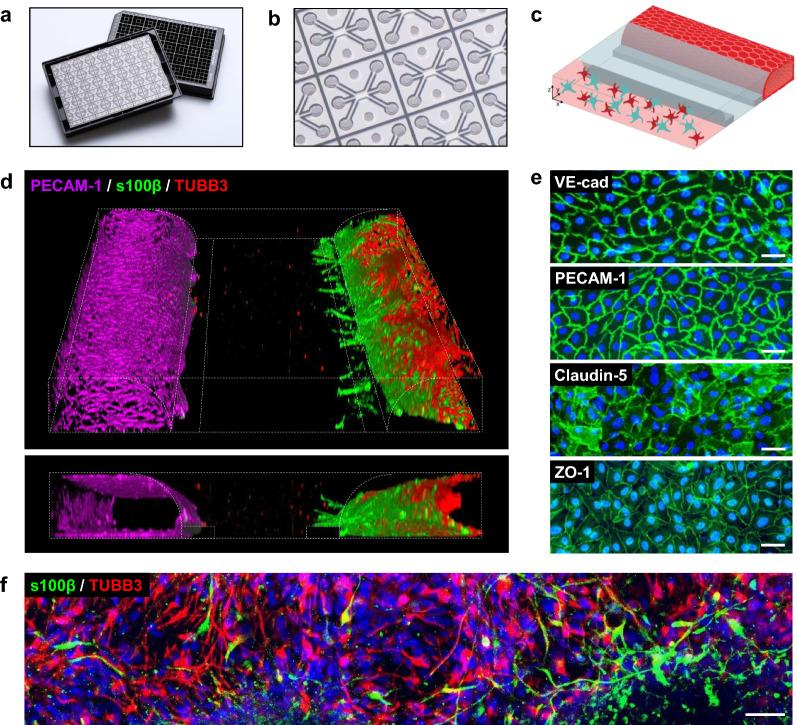
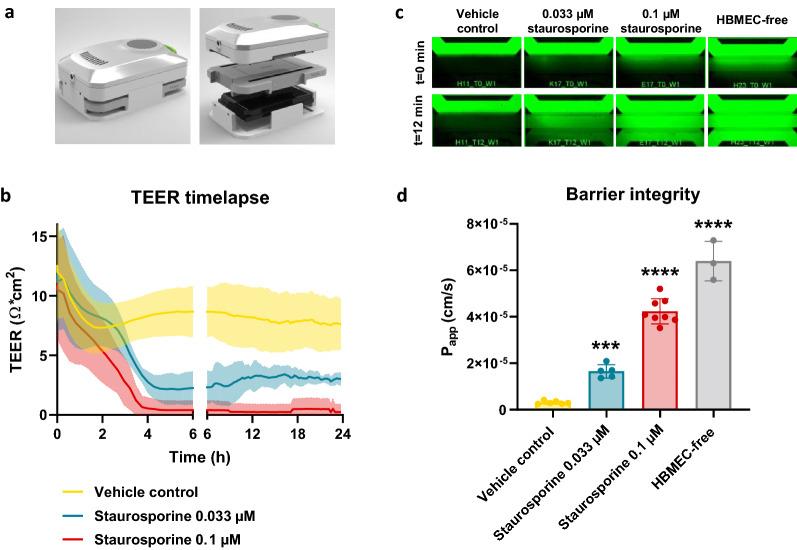
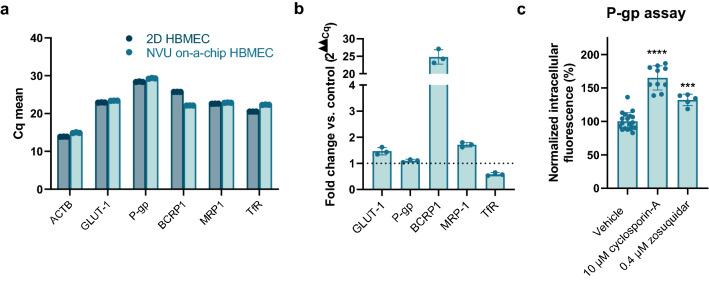
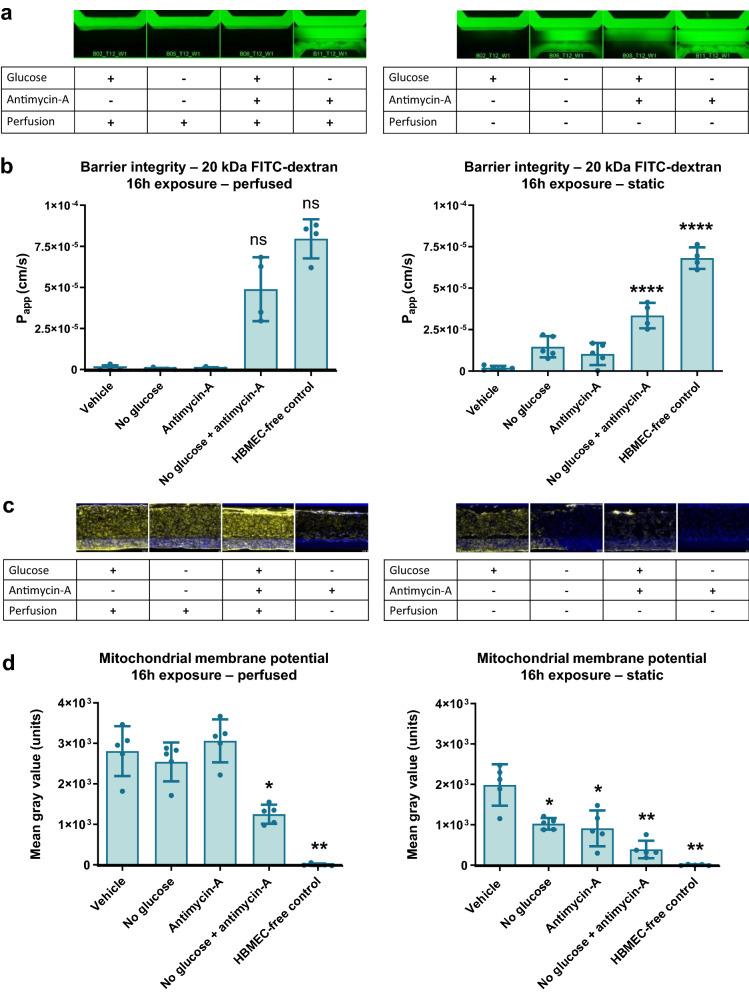
Immunofluorescent staining confirmed expression of endothelial adherens and tight junction proteins, as well as astrocytic and neuronal markers. In addition, the model expresses relevant brain endothelial transporters and shows spontaneous neuronal firing. The NVU on-a-chip model demonstrates tight barrier function, evidenced by retention of small molecule sodium fluorescein in its lumen. Exposure to the toxic compound staurosporine disrupted the endothelial barrier, causing reduced transepithelial electrical resistance and increased permeability to sodium fluorescein. Under stroke mimicking conditions, brain endothelial cells showed strongly reduced barrier function (35-fold higher apparent permeability) and 7.3-fold decreased mitochondrial potential. Furthermore, levels of adenosine triphosphate were significantly reduced on both the blood- and the brain side of the model (4.8-fold and 11.7-fold reduction, respectively).
CONCLUSIONS
The NVU on-a-chip model presented here can be used for fundamental studies of NVU function in stroke and other neurological diseases and for investigation of potential restorative therapies to fight neurological disorders. Due to the platform's relatively high throughput and compatibility with automation, the model holds potential for drug compound screening.
背景
在缺血性中风中,脑血管的功能受损。这种血管结构由所谓的神经血管单元(NVU)组成。更好地了解 NVU 功能障碍和恢复的机制可能会为开发备受关注的治疗方法提供新的见解。迄今为止,仍然需要一种复杂的体外人类 NVU 模型来研究人类大脑中出现的缺血事件。
方法
我们在这里描述了一种使用允许 40 个芯片并行培养的平台开发人类 NVU 芯片模型的方法。该模型包括与人诱导多能干细胞衍生的星形胶质细胞和神经元共培养的原代人脑内皮细胞的灌注血管。通过化学缺氧、低血糖和停止灌注相结合的三重方法模拟缺血性中风。
结果
免疫荧光染色证实了内皮细胞黏附连接和紧密连接蛋白以及星形胶质细胞和神经元标志物的表达。此外,该模型表达相关的脑内皮转运体并显示自发的神经元放电。NVU 芯片模型表现出紧密的屏障功能,这一点通过其管腔中小分子荧光素钠的保留得到证明。暴露于毒性化合物星形孢菌素会破坏内皮屏障,导致跨上皮电阻降低和荧光素钠通透性增加。在模拟中风的条件下,脑内皮细胞的屏障功能明显降低(表观通透性增加 35 倍),线粒体电位降低 7.3 倍。此外,模型的血液侧和脑侧的三磷酸腺苷水平均显著降低(分别降低 4.8 倍和 11.7 倍)。
结论
本文提出的 NVU 芯片模型可用于研究中风和其他神经疾病中 NVU 功能的基础研究,并用于研究潜在的恢复性治疗方法以对抗神经疾病。由于该平台具有相对较高的通量和与自动化的兼容性,该模型具有药物化合物筛选的潜力。

 Zotero 插件