
金沙萨医疗中心 COVID-19 患者死亡率的预测因素及生存分析:一项回顾性队列研究。
Predictors of mortality in COVID-19 patients at Kinshasa Medical Center and a survival analysis: a retrospective cohort study.
机构信息
Intensive Care Unit, Kinshasa Medical Center, Kinshasa, Democratic Republic of the Congo.
Nephrology Unit, Kinshasa University Hospital, Kinshasa, Democratic Republic of the Congo.
出版信息
BMC Infect Dis. 2021 Dec 20;21(1):1272. doi: 10.1186/s12879-021-06984-x.
BACKGROUND
Despite it being a global pandemic, there is little research examining the clinical features of severe COVID-19 in sub-Saharan Africa. This study aims to identify predictors of mortality in COVID-19 patients at Kinshasa Medical Center (KMC).
METHODS
In this retrospective, observational, cohort study carried out at the Kinshasa Medical Center (KMC) between March 10, 2020 and July 10, 2020, we included all adult inpatients (≥ 18 years old) with a positive COVID-19 PCR result. The end point of the study was survival. The study population was dichotomized into survivors and non-survivors group. Kaplan-Meier plot was used for survival analyses. The Log-Rank test was employed to compare the survival curves. Predictors of mortality were identified by Cox regression models. The significance level of p value was set at 0.05.
RESULTS
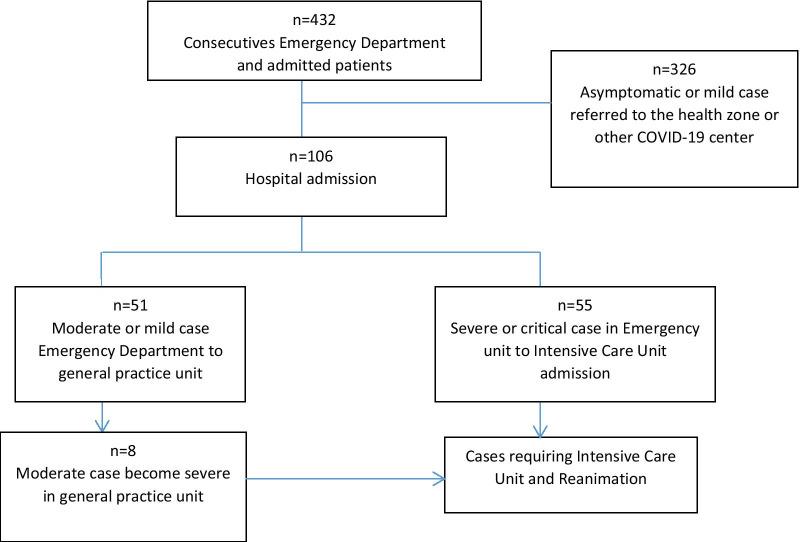
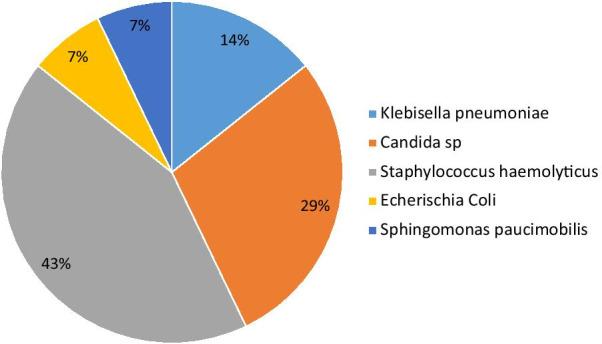
432 patients with confirmed COVID-19 were identified and only 106 (24.5%) patients with moderate, severe or critical illness (mean age 55.6 ± 13.2 years old, 80.2% were male) were included in this study, of whom 34 (32%) died during their hospitalisation. The main complications of the patients included ARDS in 59/66 (89.4%) patients, coagulopathy in 35/93 (37.6%) patients, acute cardiac injury in 24/98 (24.5%) patients, AKI in 15/74 (20.3%) patients and secondary infection in 12/81 (14.8%) patients. The independent predictors of mortality were found to be age [aHR 1.38; 95% CI 1.10-1.82], AKI stage 3 [aHR 2.51; 95% CI 1.33-6.80], proteinuria [aHR 2.60; 95% CI 1.40-6.42], respiratory rate [aHR 1.42; 95% CI 1.09-1.92] and procalcitonin [aHR 1.08; 95% CI 1.03-1.14]. The median survival time of the entire group was 12 days. The cumulative survival rate of COVID-19 patients was 86.9%, 65.0% and 19.9% respectively at 5, 10 and 20 days. Levels of creatinine (p = 0.012), were clearly elevated in non-survivors compared with survivors throughout the clinical course and increased deterioration.
CONCLUSION
Mortality rate of COVID-19 patients is high, particularly in intubated patients and is associated with age, respiratory rate, proteinuria, procalcitonin and acute kidney injury.
背景
尽管这是一场全球性的大流行,但几乎没有研究探讨撒哈拉以南非洲地区严重 COVID-19 的临床特征。本研究旨在确定金沙萨医疗中心(KMC) COVID-19 患者死亡的预测因素。
方法
本研究为 2020 年 3 月 10 日至 7 月 10 日在金沙萨医疗中心(KMC)进行的回顾性、观察性队列研究,纳入所有成年住院患者(≥18 岁),其 COVID-19 PCR 结果为阳性。本研究的终点是生存。将研究人群分为幸存者和非幸存者组。采用 Kaplan-Meier 图进行生存分析。采用 Log-Rank 检验比较生存曲线。通过 Cox 回归模型确定死亡的预测因素。p 值的显著性水平设定为 0.05。
结果
确定了 432 例确诊 COVID-19 患者,仅有 106 例(24.5%)中度、重度或危重症患者(平均年龄 55.6±13.2 岁,80.2%为男性)纳入本研究,其中 34 例(32%)在住院期间死亡。患者的主要并发症包括 66 例中的 59 例(89.4%)急性呼吸窘迫综合征、93 例中的 35 例(37.6%)凝血功能障碍、98 例中的 24 例(24.5%)急性心脏损伤、74 例中的 15 例(20.3%)急性肾损伤和 81 例中的 12 例(14.8%)继发感染。独立的死亡预测因素为年龄[aHR 1.38;95%CI 1.10-1.82]、AKI 3 期[aHR 2.51;95%CI 1.33-6.80]、蛋白尿[aHR 2.60;95%CI 1.40-6.42]、呼吸频率[aHR 1.42;95%CI 1.09-1.92]和降钙素原[aHR 1.08;95%CI 1.03-1.14]。整个组的中位生存时间为 12 天。COVID-19 患者的累积生存率分别为第 5、10 和 20 天的 86.9%、65.0%和 19.9%。与幸存者相比,非幸存者的肌酐水平(p=0.012)在整个临床过程中明显升高,且恶化程度更高。
结论
COVID-19 患者的死亡率很高,尤其是在需要插管的患者中,与年龄、呼吸频率、蛋白尿、降钙素原和急性肾损伤有关。



 Zotero 插件