
处理和治理膜浓缩液中的全氟和多氟烷基物质(PFAS)
Managing and treating per- and polyfluoroalkyl substances (PFAS) in membrane concentrates.
作者信息
Tow Emily W, Ersan Mahmut Selim, Kum Soyoon, Lee Tae, Speth Thomas F, Owen Christine, Bellona Christopher, Nadagouda Mallikarjuna N, Mikelonis Anne M, Westerhoff Paul, Mysore Chandra, Frenkel Val S, deSilva Viraj, Walker W Shane, Safulko Andrew K, Ladner David A
机构信息
F. W. Olin College of Engineering, Needham, Massachusetts, USA.
School of Sustainable Engineering and the Built Environment, Nanosystems Engineering Research Center for Nanotechnology-Enabled Water Treatment (NEWT), Arizona State University, Tempe, Arizona, USA.
出版信息
AWWA Water Sci. 2021 Sep 2;3(5):1-23. doi: 10.1002/aws2.1233.
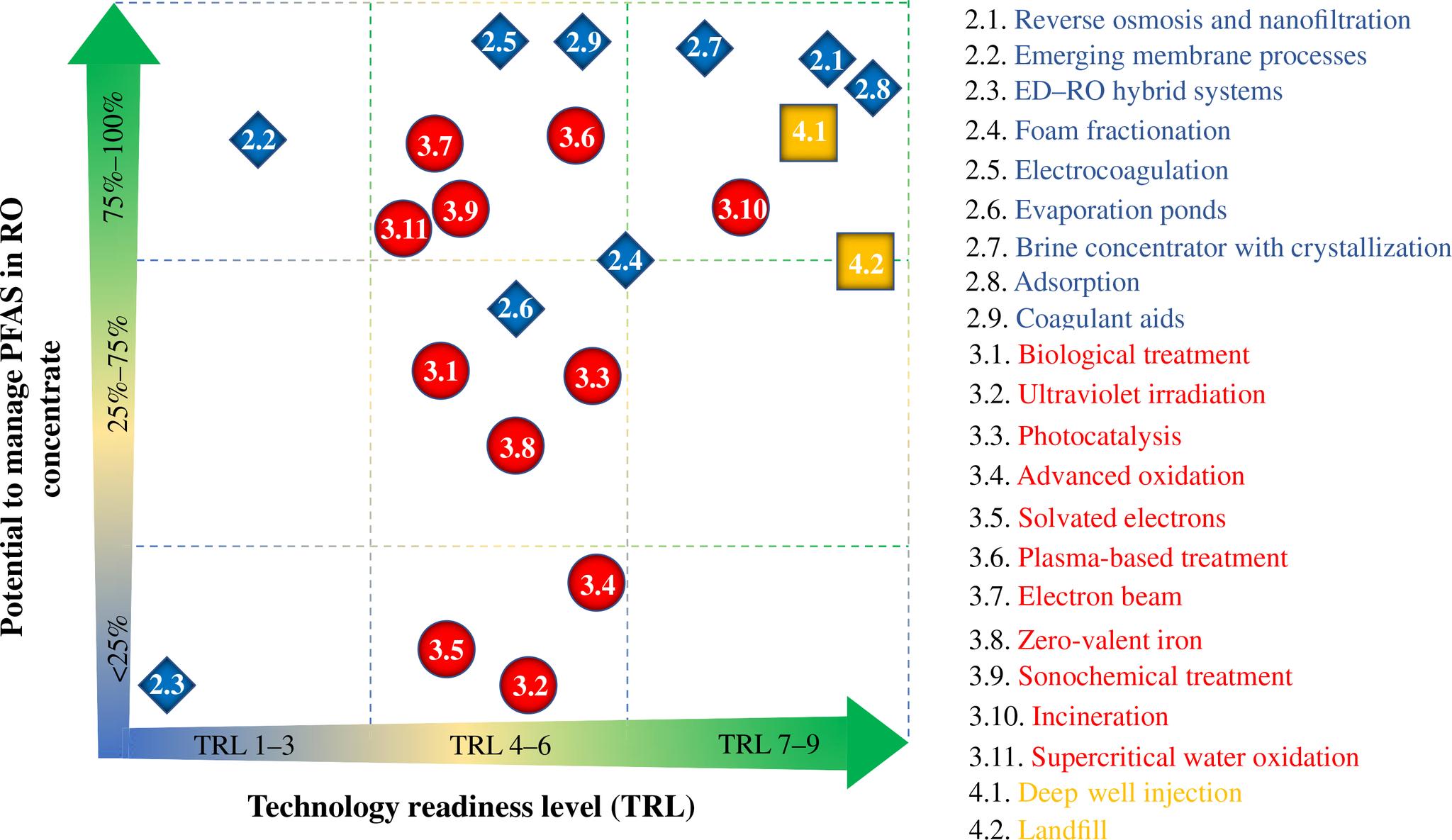
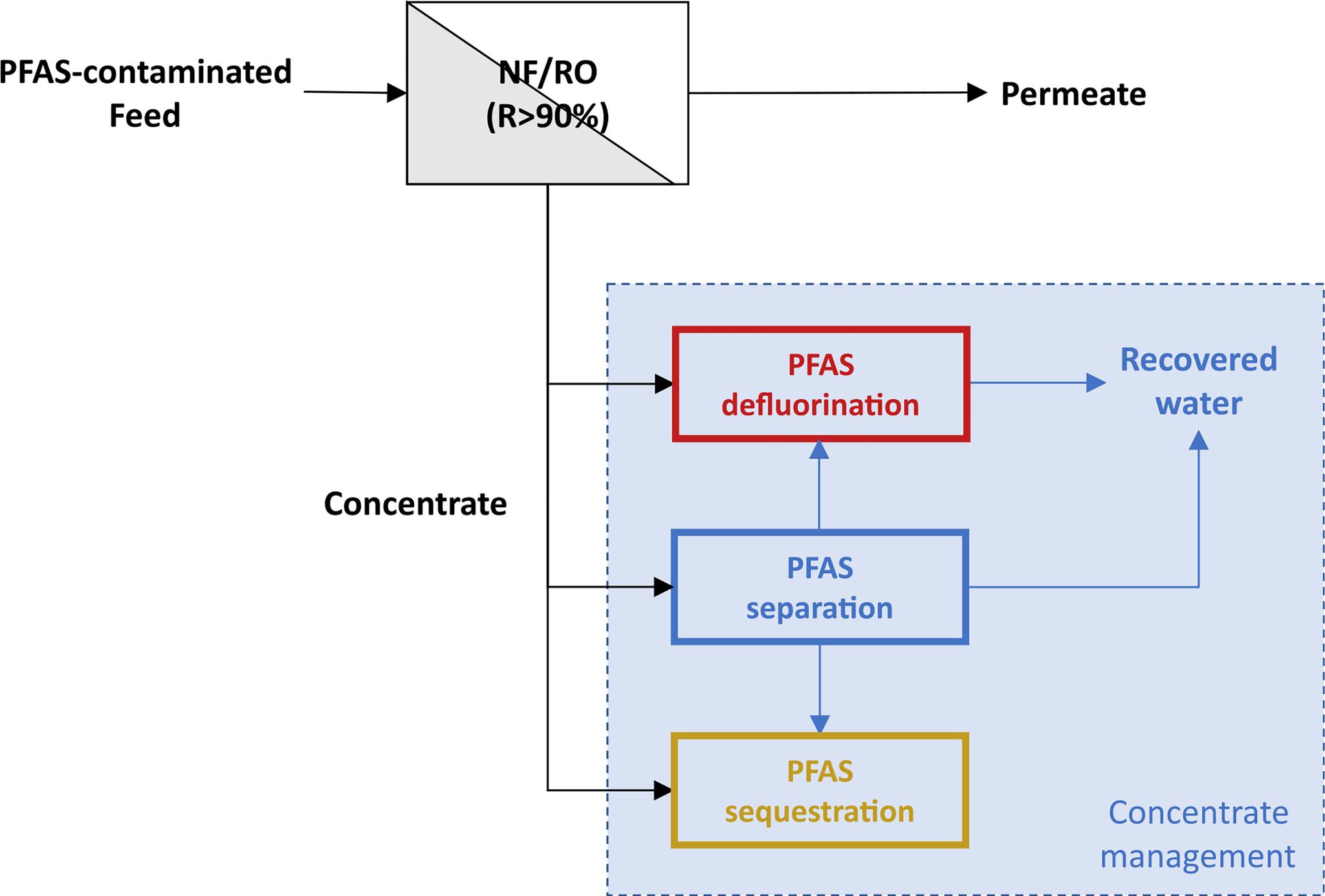
Per- and polyfluoroalkyl substances (PFAS), which are present in many waters, have detrimental impacts on human health and the environment. Reverse osmosis (RO) and nanofiltration (NF) have shown excellent PFAS separation performance in water treatment; however, these membrane systems do not destroy PFAS but produce concentrated residual streams that need to be managed. Complete destruction of PFAS in RO and NF concentrate streams is ideal, but long-term sequestration strategies are also employed. Because no single technology is adequate for all situations, a range of processes are reviewed here that hold promise as components of treatment schemes for PFAS-laden membrane system concentrates. Attention is also given to relevant concentration processes because it is beneficial to reduce concentrate volume prior to PFAS destruction or sequestration. Given the costs and challenges of managing PFAS in membrane concentrates, it is critical to evaluate both established and emerging technologies in selecting processes for immediate use and continued research.
全氟和多氟烷基物质(PFAS)存在于许多水体中,对人类健康和环境有不利影响。反渗透(RO)和纳滤(NF)在水处理中表现出优异的PFAS分离性能;然而,这些膜系统并不能破坏PFAS,而是产生需要处理的浓缩残余物流。在RO和NF浓缩物流中完全破坏PFAS是理想的,但也采用长期封存策略。由于没有单一技术适用于所有情况,本文综述了一系列有望作为含PFAS膜系统浓缩物处理方案组成部分的工艺。还关注了相关的浓缩工艺,因为在PFAS破坏或封存之前减少浓缩物体积是有益的。鉴于处理膜浓缩物中PFAS的成本和挑战,在选择立即使用和持续研究的工艺时,评估成熟技术和新兴技术至关重要。


 Zotero 插件