
上皮性卵巢癌的中枢神经系统受累的生物标志物。
Biomarkers of Central Nervous System Involvement from Epithelial Ovarian Cancer.
机构信息
Department of Oncology, University of Torino, 10123 Torino, Italy.
Division of Medical Oncology, Candiolo Cancer Institute, FPO-IRCCS, 10060 Candiolo, Italy.
出版信息
Cells. 2021 Dec 3;10(12):3408. doi: 10.3390/cells10123408.
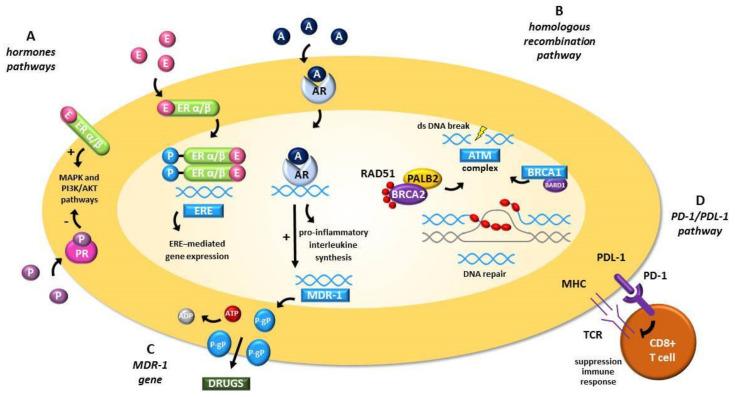
Epithelial ovarian cancer (EOC) is the leading cause of death among women affected by gynaecological malignancies. Most patients show advanced disease at diagnosis (FIGO stage III-IV) and, despite the introduction of new therapeutic options, most women experience relapses. In most cases, recurrence is abdominal-pelvic; however, EOC can occasionally metastasize to distant organs, including the central nervous system. The incidence of brain metastases (BMs) from EOC is low, but it has grown over time; currently, there are no follow-up strategies available. In the last decade, a few biomarkers able to predict the risk of developing BMs from OC or as potential therapeutic targets have been investigated by several authors; to date, none have entered clinical practice. The purpose of this review is to offer a summary on the role of the most relevant predictors of central nervous system (CNS) involvement (hormone receptors; BRCA; MRD1; PD-1/PD-L1) and to highlight possible therapeutic strategies for the management of metastatic brain disease in EOC.
上皮性卵巢癌 (EOC) 是妇科恶性肿瘤患者死亡的主要原因。大多数患者在诊断时已处于晚期疾病 (FIGO 分期 III-IV),尽管引入了新的治疗选择,但大多数女性仍会复发。在大多数情况下,复发是腹部-骨盆;然而,EOC 偶尔也会转移到远处器官,包括中枢神经系统。EOC 脑转移 (BMs) 的发病率较低,但随着时间的推移有所增加;目前,尚无可用的随访策略。在过去十年中,一些作者研究了几种能够预测 OC 或作为潜在治疗靶点发生 BMs 风险的生物标志物;迄今为止,尚无一种进入临床实践。本文综述了与中枢神经系统 (CNS) 受累相关的最相关预测因子(激素受体;BRCA;MRD1;PD-1/PD-L1)的作用,并强调了上皮性卵巢癌转移性脑疾病管理的可能治疗策略。
 Zotero 插件