
在新型同源性高级别浆液性卵巢癌模型中进行肿瘤内神经示踪。
Intra-Tumoral Nerve-Tracing in a Novel Syngeneic Model of High-Grade Serous Ovarian Carcinoma.
机构信息
Cancer Biology and Immunotherapies Group, Sanford Research, 2301 East 60th St. North, Sioux Falls, SD 57104, USA.
Sanford School of Medicine, University of South Dakota, 414 East Clark St., Vermillion, SD 57069, USA.
出版信息
Cells. 2021 Dec 10;10(12):3491. doi: 10.3390/cells10123491.
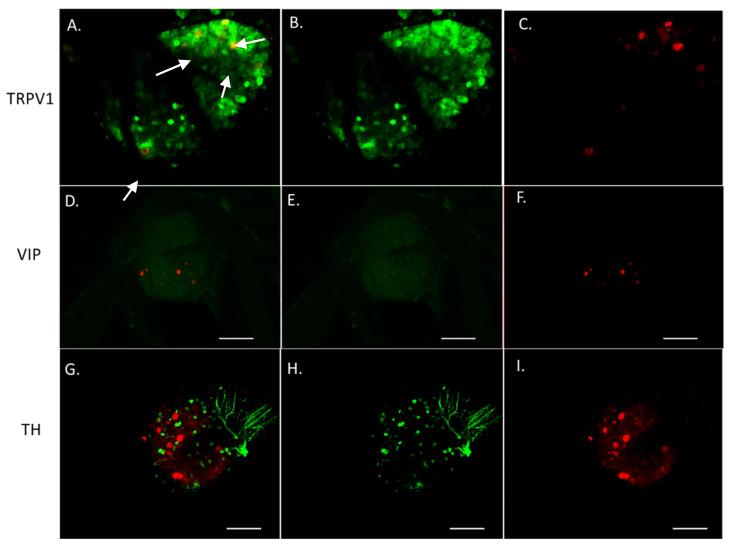
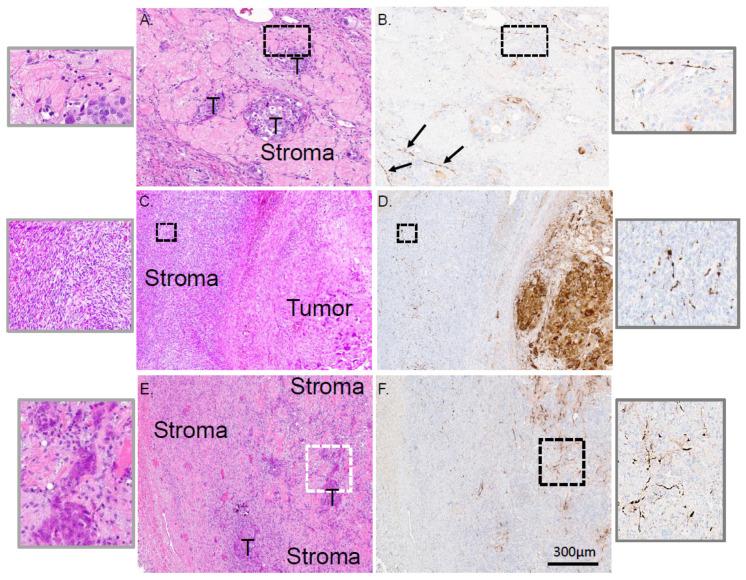
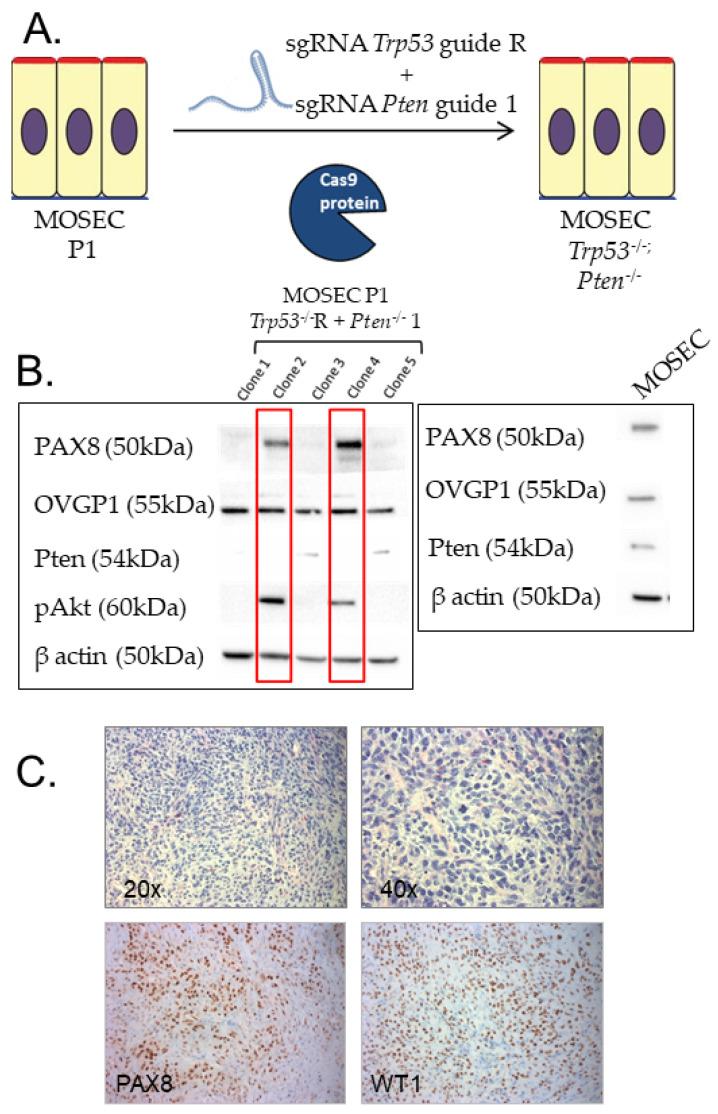
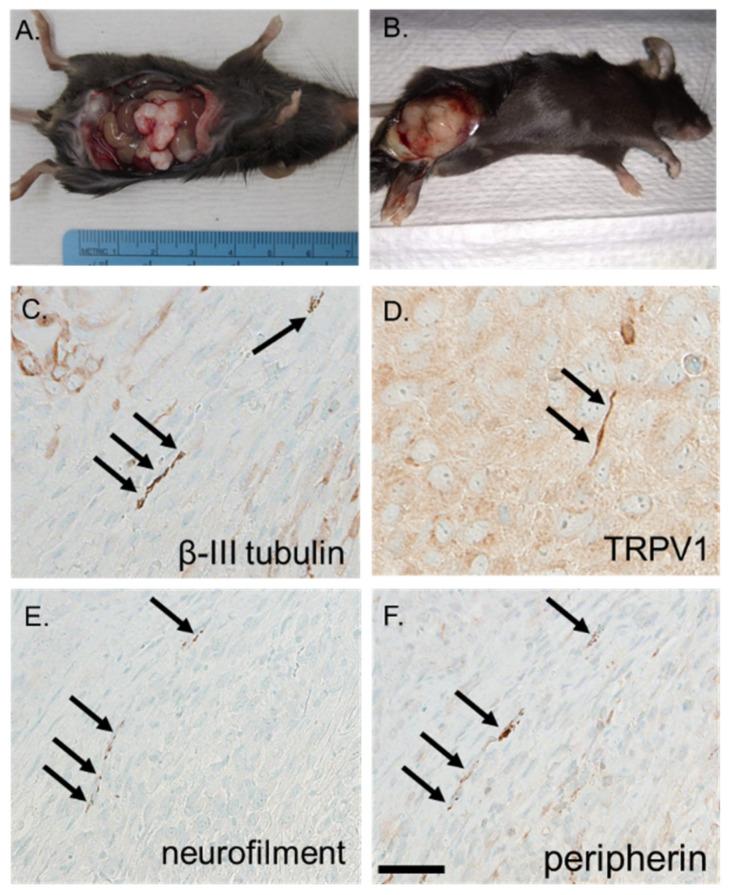
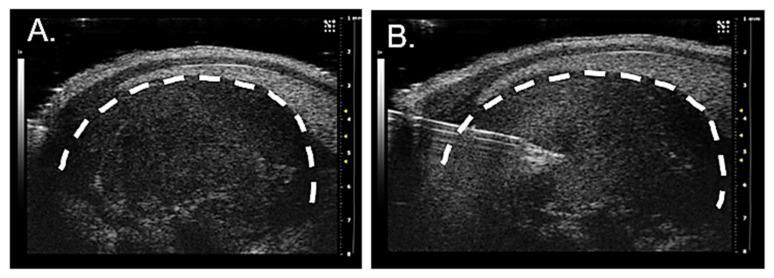
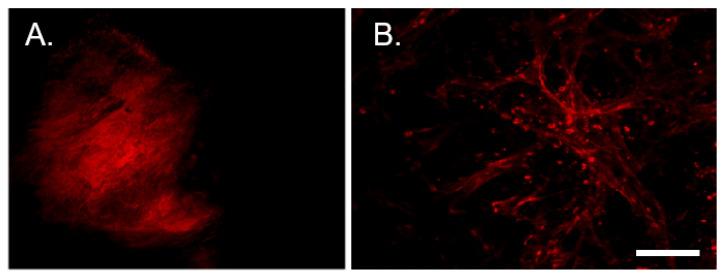
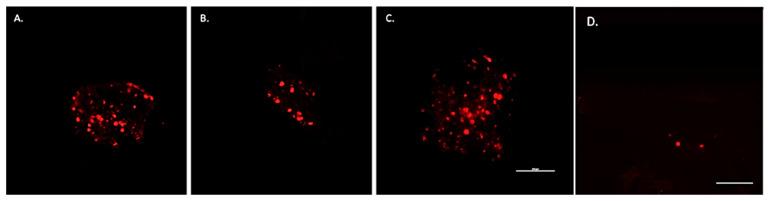
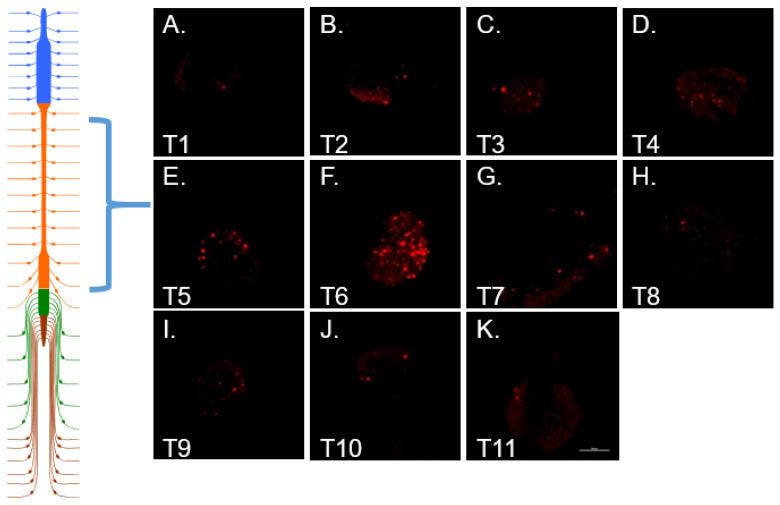
Dense tumor innervation is associated with enhanced cancer progression and poor prognosis. We observed innervation in breast, prostate, pancreatic, lung, liver, ovarian, and colon cancers. Defining innervation in high-grade serous ovarian carcinoma (HGSOC) was a focus since sensory innervation was observed whereas the normal tissue contains predominantly sympathetic input. The origin, specific nerve type, and the mechanisms promoting innervation and driving nerve-cancer cell communications in ovarian cancer remain largely unknown. The technique of neuro-tracing enhances the study of tumor innervation by offering a means for identification and mapping of nerve sources that may directly and indirectly affect the tumor microenvironment. Here, we establish a murine model of HGSOC and utilize image-guided microinjections of retrograde neuro-tracer to label tumor-infiltrating peripheral neurons, mapping their source and circuitry. We show that regional sensory neurons innervate HGSOC tumors. Interestingly, the axons within the tumor trace back to local dorsal root ganglia as well as jugular-nodose ganglia. Further manipulations of these tumor projecting neurons may define the neuronal contributions in tumor growth, invasion, metastasis, and responses to therapeutics.
密集的肿瘤神经支配与癌症的进展和预后不良有关。我们观察到乳腺癌、前列腺癌、胰腺癌、肺癌、肝癌、卵巢癌和结肠癌存在神经支配。由于观察到感觉神经支配,而正常组织主要含有交感神经输入,因此高等级浆液性卵巢癌(HGSOC)中的神经支配的定义是一个重点。神经支配的起源、特定神经类型以及促进神经-癌细胞通讯的机制在卵巢癌中仍然很大程度上未知。神经追踪技术通过提供一种识别和绘制可能直接和间接影响肿瘤微环境的神经来源的方法,增强了对肿瘤神经支配的研究。在这里,我们建立了 HGSOC 的小鼠模型,并利用图像引导的逆行神经示踪剂微注射来标记肿瘤浸润的周围神经元,绘制其来源和回路。我们表明,局部感觉神经元支配 HGSOC 肿瘤。有趣的是,肿瘤内的轴突回溯到局部背根神经节和颈静脉神经节。对这些肿瘤投射神经元的进一步操作可能会确定神经元在肿瘤生长、侵袭、转移和对治疗的反应中的贡献。
 Zotero 插件