
个体化 HbA1c 目标与 2 型糖尿病患者的知晓和达标情况:一项真实世界的跨国调查。
Individualized HbA Goals, and Patient Awareness and Attainment of Goals in Type 2 Diabetes Mellitus: A Real-World Multinational Survey.
机构信息
Merck & Co., Inc, Kenilworth, NJ, USA.
Adelphi Real World, Adelphi Mill, Grimshaw Lane, Bollington, Macclesfield, SK10 5JB, Cheshire, UK.
出版信息
Adv Ther. 2022 Feb;39(2):1016-1032. doi: 10.1007/s12325-021-01985-3. Epub 2021 Dec 24.
AIMS
While glycemic control is key in effective type 2 diabetes mellitus management, many patients fail to reach their individualized glycemic goal. This analysis aimed to describe a real-world picture of diabetes management: individualized hemoglobin A (HbA) goals, rate of goal attainment, HbA at each line of therapy, and patient awareness of their glycemic goal. Secondly, we aimed to understand physician satisfaction with HbA amongst patients aware vs. those unaware of HbA goal.
METHODS
Analysis of physicians and the next ten consulting patients with type 2 diabetes mellitus conducted in Europe and the USA including medical record data abstraction/assessment by physicians, a patient-reported survey and a physician survey. Patients were diagnosed for 3 months or more with a known current and target HbA. For the sub-analysis assessment of patient awareness of HbA goal, in addition to the above, these patients had to have completed a patient-reported questionnaire and answer the question on awareness of HbA goal.
RESULTS
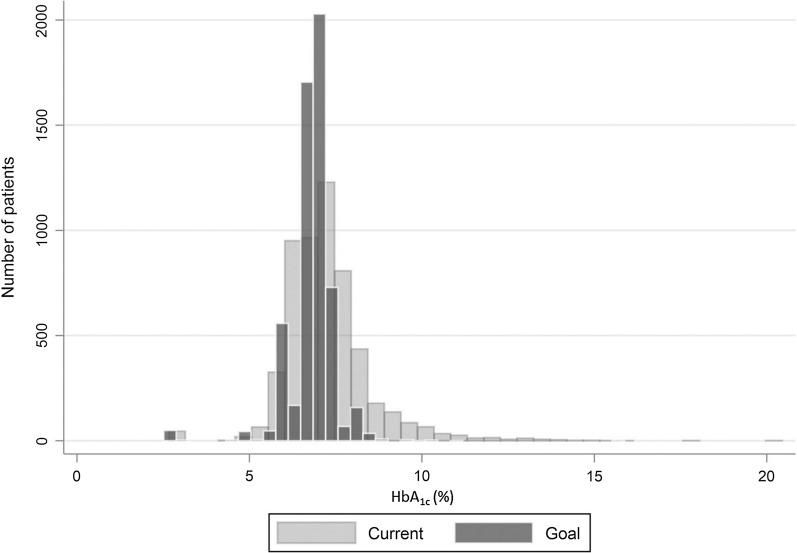
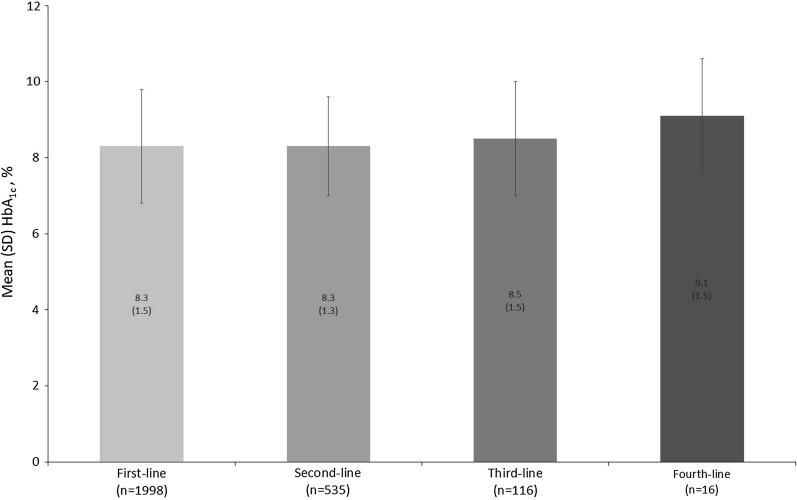
A total of 730 physicians provided data on 8794 patients with type 2 diabetes mellitus; 5331 patients were eligible for this analysis. Overall, mean (standard deviation, SD) individualized HbA goal was 6.8% (0.68%). Of eligible patients, 39.1% met their HbA goal; of 60.9% of patients not reaching their HbA goal, the mean distance from individualized HbA goal was 0.9% (SD 1.0%). Physicians progressed patients' antihyperglycemic therapy when HbA was 8% or higher. Among 2560 patients who were included in the sub-analysis assessing the effect of patient awareness of their HbA goal on multiple parameters, 70.5% were aware of their HbA goal; mean HbA goal was 6.8% (0.7%) and current mean HbA value 7.1% (1.2%). A total of 949 patients in the sub-analysis (39.2%) achieved their goal; achieving HbA goal was not related to knowledge of goal. Patients aware of their HbA goal were slightly more adherent to their antihyperglycemic medication. They also were prescribed more antihyperglycemic agents, more often on a later therapy line receiving a GLP-1 receptor agonist, SGLT2i, or insulin, and more often tested their blood glucose levels than patients who were unaware. Physicians were not satisfied with the current blood glucose level of one third of their patients, believing that more of those who were aware of their HbA goal could achieve better glucose control (32.4% of aware vs. 28.2% of unaware patients; p = 0.003).
CONCLUSIONS
Our results showed that the proportion of patients with type 2 diabetes mellitus achieving their goals for glycemic control was suboptimal when compared to current guideline criteria, with only about 40% of patients achieving their individualized HbA goal. Treatment intensification was often delayed until HbA was 8% and higher. Patients aware of their HbA goal were slightly more adherent to their antihyperglycemic medication; however, awareness of HbA goal did not enhance goal attainment. This highlights the need for a holistic approach to diabetes management, involving patient education, and patient-physician communication and partnership.
目的
尽管血糖控制是有效管理 2 型糖尿病的关键,但许多患者仍未能达到其个体化的血糖目标。本分析旨在描述糖尿病管理的真实情况:个体化的血红蛋白 A(HbA)目标、达标率、每一线治疗的 HbA 水平以及患者对其血糖目标的知晓情况。其次,我们旨在了解知晓与不知晓 HbA 目标的患者中医生对 HbA 的满意度。
方法
在欧洲和美国对 2 型糖尿病的医生和接下来的十位就诊患者进行了分析,包括医生对病历数据的摘要/评估、患者报告调查和医生调查。患者被诊断为 3 个月或以上,且目前和目标 HbA 已知。对于评估患者对 HbA 目标知晓情况的亚分析,除了上述内容外,这些患者还必须完成患者报告问卷调查并回答对 HbA 目标知晓的问题。
结果
共 730 名医生提供了 8794 例 2 型糖尿病患者的数据;5331 例患者符合本分析条件。总体而言,个体化 HbA 目标的平均值(标准差,SD)为 6.8%(0.68%)。在符合条件的患者中,39.1%达到了 HbA 目标;在未达到 HbA 目标的 60.9%患者中,HbA 目标的平均差距为 0.9%(SD 为 1.0%)。当 HbA 为 8%或更高时,医生会为患者调整抗高血糖治疗。在纳入评估患者对其 HbA 目标知晓情况对多个参数影响的亚分析的 2560 例患者中,70.5%知晓其 HbA 目标;平均 HbA 目标为 6.8%(0.7%),当前平均 HbA 值为 7.1%(1.2%)。在亚分析中,共有 949 例患者(39.2%)达到了目标;达到 HbA 目标与知识无关。知晓其 HbA 目标的患者对其抗高血糖药物的依从性略高。他们还接受了更多的抗高血糖药物治疗,更常使用 GLP-1 受体激动剂、SGLT2i 或胰岛素,且更常检测血糖水平,而不知晓的患者则不然。医生对三分之一患者的当前血糖水平不满意,认为更多知晓 HbA 目标的患者可以实现更好的血糖控制(知晓患者中为 32.4%,不知晓患者中为 28.2%;p=0.003)。
结论
与当前指南标准相比,我们的结果表明,达到血糖控制目标的 2 型糖尿病患者比例并不理想,只有约 40%的患者达到了个体化的 HbA 目标。治疗强化通常要等到 HbA 达到 8%及更高水平才开始。知晓其 HbA 目标的患者对其抗高血糖药物的依从性略高;然而,知晓 HbA 目标并没有提高达标率。这突出表明需要采取整体方法来管理糖尿病,包括患者教育以及患者-医生之间的沟通和合作。

 Zotero 插件