
SARS-CoV-2 特异性 IgG 抗体在先前感染个体的口腔黏膜液中可维持 12 个月以上。
SARS-CoV-2 Specific IgG Antibodies Persist Over a 12-Month Period in Oral Mucosal Fluid Collected From Previously Infected Individuals.
机构信息
Department of Serology Research and Development, Curative, Monrovia, CA, United States.
Mork Family Department of Chemical Engineering and Materials Science, Viterbi School of Engineering, University of Southern California, Los Angeles, CA, United States.
出版信息
Front Immunol. 2021 Dec 9;12:777858. doi: 10.3389/fimmu.2021.777858. eCollection 2021.
BACKGROUND
Developing an understanding of the antibody response, seroprevalence, and seroconversion from natural infection and vaccination against SARS-CoV-2 will give way to a critical epidemiological tool to predict reinfection rates, identify vulnerable communities, and manage future viral outbreaks. To monitor the antibody response on a larger scale, we need an inexpensive, less invasive, and high throughput method.
METHODS
Here we investigate the use of oral mucosal fluids from individuals recovered from SARS-CoV-2 infection to monitor antibody response and persistence over a 12-month period. For this cohort study, enzyme-linked immunosorbent assays (ELISAs) were used to quantify anti-Spike(S) protein IgG antibodies in participants who had prior SARS-CoV-2 infection and regularly (every 2-4 weeks) provided both serum and oral fluid mucosal fluid samples for longitudinal antibody titer analysis.
RESULTS
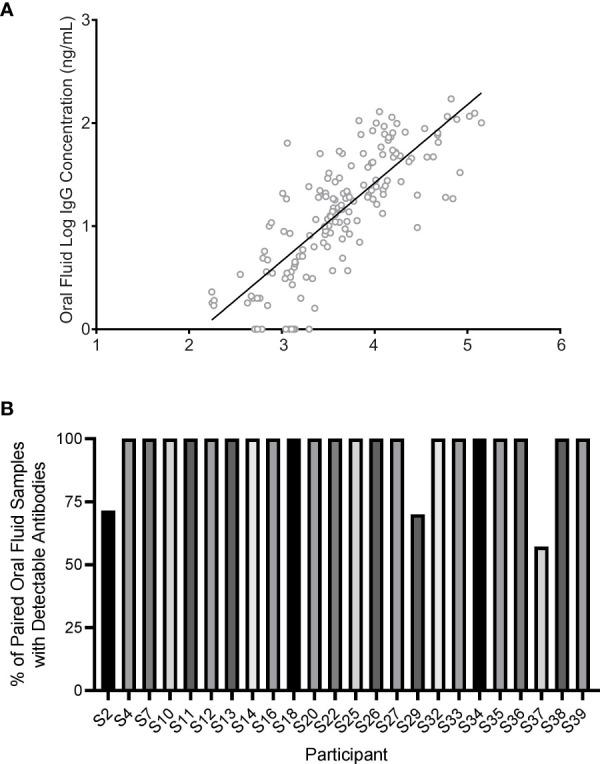
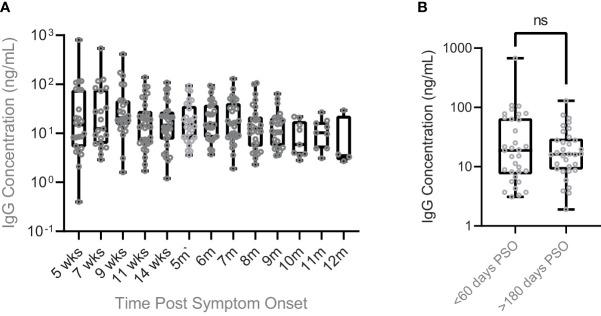
In our study cohort (n=42) with 17 males and 25 females with an average age of 45.6 +/- 19.3 years, we observed no significant change in oral mucosal fluid IgG levels across the time course of antibody monitoring. In oral mucosal fluids, all the participants who initially had detectable antibodies continued to have detectable antibodies throughout the study.
CONCLUSIONS
Based on the results presented here, we have shown that oral mucosal fluid-based assays are an effective, less invasive tool for monitoring seroprevalence and seroconversion, which offers an alternative to serum-based assays for understanding the protective ability conferred by the adaptive immune response from viral infection and vaccination against future reinfections.
背景
了解 SARS-CoV-2 自然感染和疫苗接种产生的抗体反应、血清流行率和血清转化率,将为预测再感染率、识别脆弱群体和管理未来病毒爆发提供重要的流行病学工具。为了在更大规模上监测抗体反应,我们需要一种廉价、微创和高通量的方法。
方法
在这里,我们研究了使用从 SARS-CoV-2 感染中康复的个体的口腔黏膜液来监测 12 个月内的抗体反应和持久性。对于这项队列研究,酶联免疫吸附测定(ELISA)用于定量先前感染过 SARS-CoV-2 的参与者的抗刺突(S)蛋白 IgG 抗体,并且这些参与者定期(每 2-4 周)提供血清和口腔黏膜液样本,以进行纵向抗体滴度分析。
结果
在我们的研究队列(n=42)中,有 17 名男性和 25 名女性,平均年龄为 45.6 +/- 19.3 岁,我们在整个抗体监测过程中未观察到口腔黏膜液 IgG 水平的显著变化。在口腔黏膜液中,所有最初具有可检测抗体的参与者在整个研究期间都持续具有可检测抗体。
结论
基于这里提出的结果,我们已经表明,基于口腔黏膜液的检测是监测血清流行率和血清转化率的有效、微创工具,为基于血清的检测提供了替代方法,用于了解病毒感染和针对未来再感染的疫苗接种引起的适应性免疫反应的保护能力。

 Zotero 插件