
6-硫鸟嘌呤和6-巯基嘌呤对人下颌下腺癌细胞中USP2a靶标脂肪酸合酶的抑制作用。
The Inhibitory Effects of 6-Thioguanine and 6-Mercaptopurine on the USP2a Target Fatty Acid Synthase in Human Submaxillary Carcinoma Cells.
作者信息
Cheng Chiao-Pei, Liu Shu-Ting, Chiu Yi-Lin, Huang Shih-Ming, Ho Ching-Liang
机构信息
Department of Anesthesiology, Tri-Service General Hospital, National Defense Medical Center, Taipei City, Taiwan.
Department of Biochemistry, National Defense Medical Center, Taipei City, Taiwan.
出版信息
Front Oncol. 2021 Dec 10;11:749661. doi: 10.3389/fonc.2021.749661. eCollection 2021.
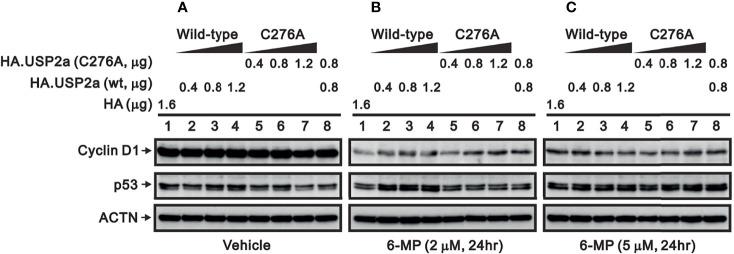
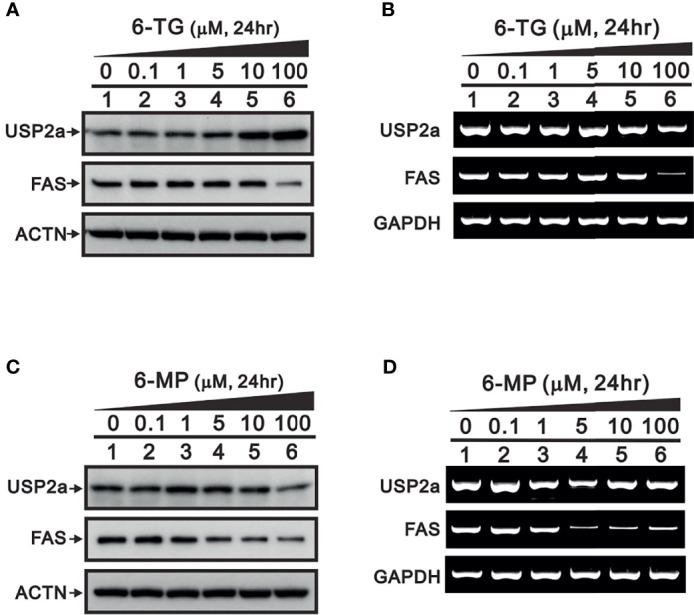
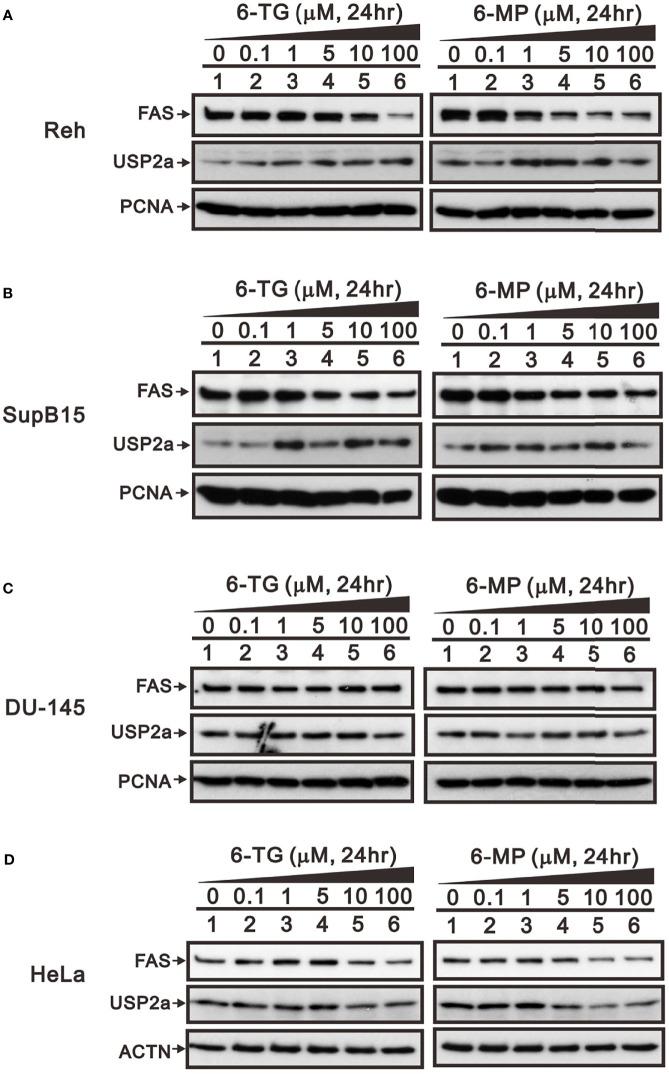
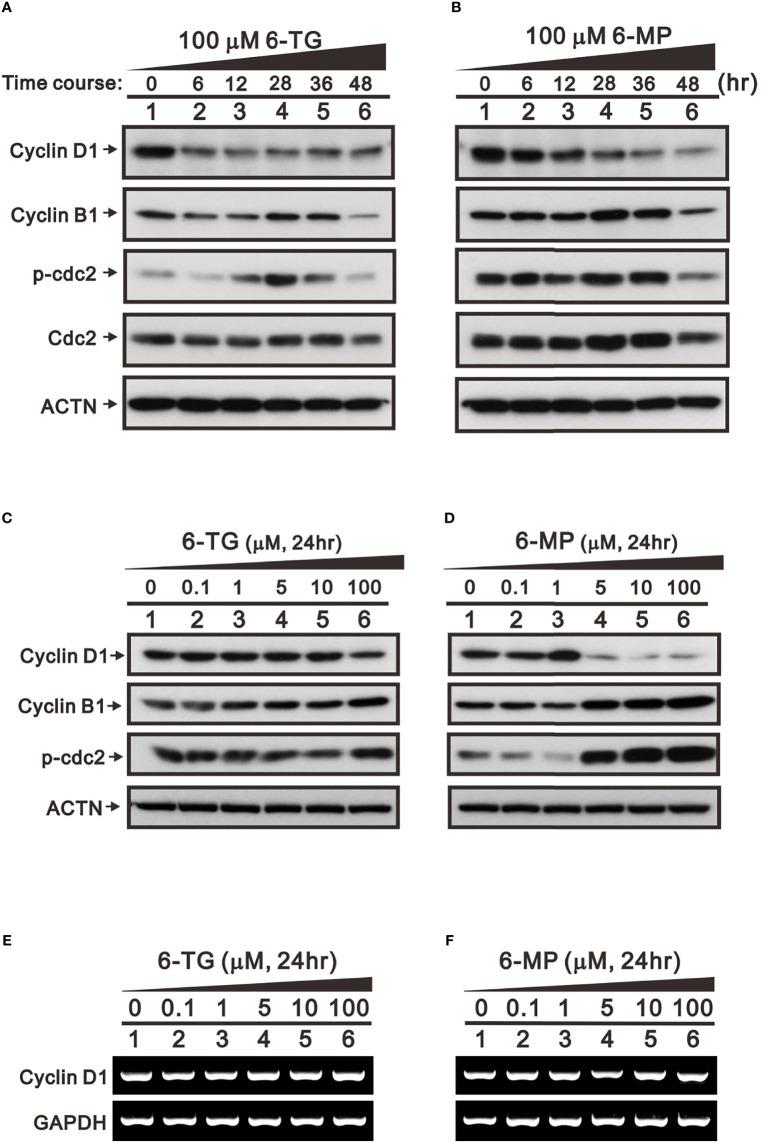
Overexpression of the deubiquitinase USP2a leads to stabilization of fatty acid synthase (FAS), the levels of which are often elevated in aggressive human cancers. Consequently, there is an urgent need for inhibitors to suppress the deubiquitination activity of USP2a so as to upregulate FAS protein degradation. We first analyzed the relationship between the expression level of USP2a and survival using The Cancer Genome Atlas Head-Neck Squamous Cell Carcinoma (HNSC) data collection. Our results suggested survival rates were lower among HNSC patients expressing higher levels of USP2a. We then investigated two thiopurine drugs, 6-thioguanine (6-TG) and 6-mercaptopurine (6-MP), to determine whether they could potentially serve as inhibitors of USP2a. Western blot analysis showed that levels of two USP2a target proteins, FAS and Mdm2, were dose-dependently decreased in A253 submaxillary carcinoma cells treated with 6-TG or 6-MP. Responding to the degradation of Mdm2, levels of p53 were increased. We found that 6-TG and 6-MP also suppressed levels of both USP2a mRNA and protein, suggesting these two thiopurines do not act solely through direct inhibition of USP2a. The effects of 6-TG and 6-MP were not cell type-specific, as they elicited similar decreases in FAS protein in leukemia, prostate and cervical cancer cell lines. 6-TG and 6-MP had effects on several cell cycle proteins, including another USP2a target protein, cyclin D1. The populations of cells in subG1 and S phase were increased by 6-TG and 6-MP, which was accompanied by reductions in G1 phase cells. In untreated cells, USP2a transfection increased FAS and cyclin D1 levels compared to an enzyme-dead USP2a C276A mutant, which lacked deubiquitinating activity. However, USP2a transfection failed to reverse the suppressive effects of 6-TG and 6-MP on FAS levels. In summary, these findings suggest 6-TG and 6-MP reduce the stability of some USP2a targets, including FAS and Mdm2, by inhibiting USP2a-catalyzed deubiquitination in some cancer cells. Our work also provides repurposing evidence supporting 6-TG and 6-MP as target therapeutic drugs, such as USP2a/FAS in this study.
去泛素化酶USP2a的过表达会导致脂肪酸合酶(FAS)的稳定,而FAS的水平在侵袭性人类癌症中通常会升高。因此,迫切需要抑制剂来抑制USP2a的去泛素化活性,从而上调FAS蛋白的降解。我们首先使用癌症基因组图谱头颈鳞状细胞癌(HNSC)数据收集分析了USP2a表达水平与生存率之间的关系。我们的结果表明,在表达较高水平USP2a的HNSC患者中,生存率较低。然后,我们研究了两种硫嘌呤药物,6-硫鸟嘌呤(6-TG)和6-巯基嘌呤(6-MP),以确定它们是否有可能作为USP2a的抑制剂。蛋白质印迹分析表明,在用6-TG或6-MP处理的A253颌下腺癌细胞中,两种USP2a靶蛋白FAS和Mdm2的水平呈剂量依赖性降低。随着Mdm2的降解,p53的水平升高。我们发现6-TG和6-MP也会抑制USP2a mRNA和蛋白的水平,这表明这两种硫嘌呤并非仅通过直接抑制USP2a发挥作用。6-TG和6-MP的作用并非细胞类型特异性的,因为它们在白血病、前列腺癌和宫颈癌细胞系中引起FAS蛋白类似程度的降低。6-TG和6-MP对几种细胞周期蛋白有影响,包括另一种USP2a靶蛋白细胞周期蛋白D1。6-TG和6-MP使亚G1期和S期的细胞数量增加,同时G1期细胞数量减少。在未处理的细胞中,与缺乏去泛素化活性的酶失活USP2a C276A突变体相比,USP2a转染增加了FAS和细胞周期蛋白D1的水平。然而,USP2a转染未能逆转6-TG和6-MP对FAS水平的抑制作用。总之,这些发现表明,6-TG和6-MP通过抑制某些癌细胞中USP2a催化的去泛素化作用,降低了包括FAS和Mdm2在内的一些USP2a靶标的稳定性。我们的研究还提供了将6-TG和6-MP重新用作靶向治疗药物的证据,如本研究中的USP2a/FAS。




 Zotero 插件