
纳米载体设计与组成对高效纳米颗粒介导的经皮疫苗接种的重要性
The Importance of Nanocarrier Design and Composition for an Efficient Nanoparticle-Mediated Transdermal Vaccination.
作者信息
Valdivia-Olivares Rayen Yanara, Rodriguez-Fernandez Maria, Álvarez-Figueroa María Javiera, Kalergis Alexis M, González-Aramundiz José Vicente
机构信息
Departamento de Farmacia, Escuela de Química y Farmacia, Facultad de Química y de Farmacia, Pontificia Universidad Católica de Chile, Santiago 7820436, Chile.
Institute for Biological and Medical Engineering, Schools of Engineering, Medicine and Biological Sciences, Pontificia Universidad Católica de Chile, Santiago 7820436, Chile.
出版信息
Vaccines (Basel). 2021 Dec 1;9(12):1420. doi: 10.3390/vaccines9121420.
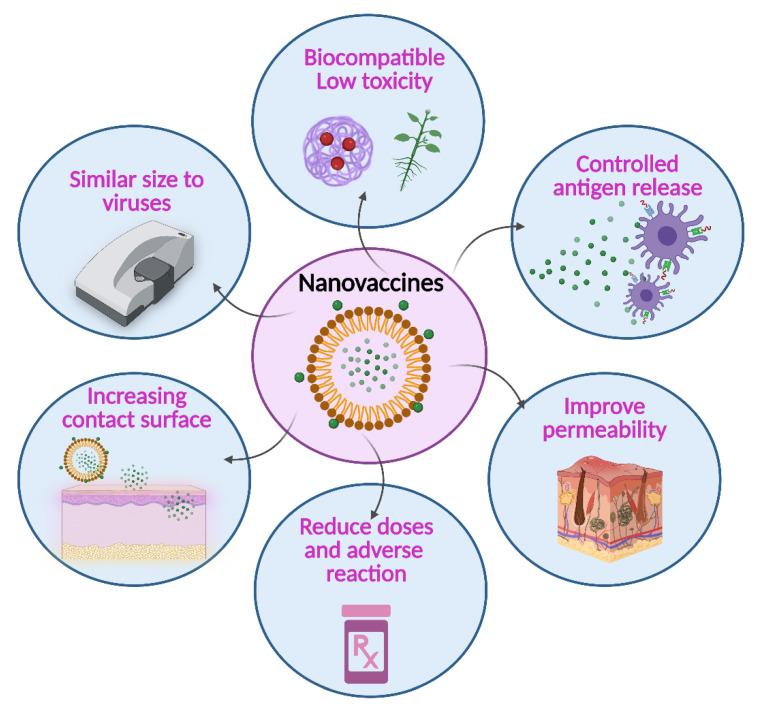
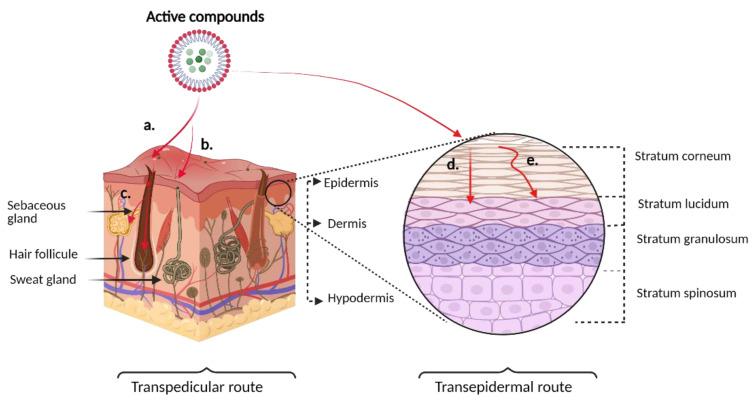
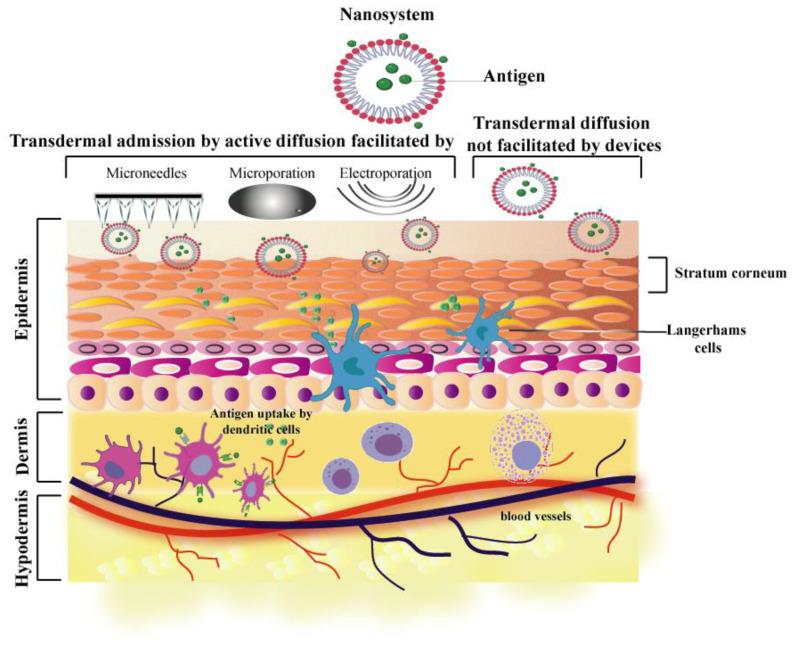
The World Health Organization estimates that the pandemic caused by the SARS-CoV-2 virus claimed more than 3 million lives in 2020 alone. This situation has highlighted the importance of vaccination programs and the urgency of working on new technologies that allow an efficient, safe, and effective immunization. From this perspective, nanomedicine has provided novel tools for the design of the new generation of vaccines. Among the challenges of the new vaccine generations is the search for alternative routes of antigen delivery due to costs, risks, need for trained personnel, and low acceptance in the population associated with the parenteral route. Along these lines, transdermal immunization has been raised as a promising alternative for antigen delivery and vaccination based on a large absorption surface and an abundance of immune system cells. These features contribute to a high barrier capacity and high immunological efficiency for transdermal immunization. However, the stratum corneum barrier constitutes a significant challenge for generating new pharmaceutical forms for transdermal antigen delivery. This review addresses the biological bases for transdermal immunomodulation and the technological advances in the field of nanomedicine, from the passage of antigens facilitated by devices to cross the stratum corneum, to the design of nanosystems, with an emphasis on the importance of design and composition towards the new generation of needle-free nanometric transdermal systems.
世界卫生组织估计,仅在2020年,由严重急性呼吸综合征冠状病毒2(SARS-CoV-2)病毒引发的大流行就夺去了超过300万人的生命。这种情况凸显了疫苗接种计划的重要性以及研发能够实现高效、安全且有效的免疫接种的新技术的紧迫性。从这一角度来看,纳米医学为新一代疫苗的设计提供了新颖的工具。新一代疫苗面临的挑战之一是,由于成本、风险、对专业人员的需求以及与肠胃外途径相关的人群接受度较低等因素,需要寻找抗原递送的替代途径。沿着这些思路,基于较大的吸收表面和丰富的免疫系统细胞,经皮免疫接种已被视为一种有前景的抗原递送和疫苗接种替代方法。这些特性有助于经皮免疫接种具备高屏障能力和高免疫效率。然而,角质层屏障对于开发用于经皮抗原递送的新剂型构成了重大挑战。本综述阐述了经皮免疫调节的生物学基础以及纳米医学领域的技术进展,从借助装置促进抗原穿过角质层,到纳米系统的设计,重点强调了设计和组成对于新一代无针纳米级经皮系统的重要性。

 Zotero 插件