
次氯酸对白细胞介素-6的修饰:对受体结合的影响。
Modifications of IL-6 by Hypochlorous Acids: Effects on Receptor Binding.
作者信息
Robins Lori I, Keim Erika K, Robins Deborah B, Edgar John S, Meschke John S, Gafken Philip R, Williams Jeffrey F
机构信息
Department of Physical Sciences, University of Washington Bothell, 18115 Campus Way NE, Bothell, Washington 98011, United States.
Department of Environmental and Occupational Health Sciences, University of Washington, 4225 Roosevelt Way NE, Suite 100, Seattle, Washington 98195, United States.
出版信息
ACS Omega. 2021 Dec 14;6(51):35593-35599. doi: 10.1021/acsomega.1c05297. eCollection 2021 Dec 28.
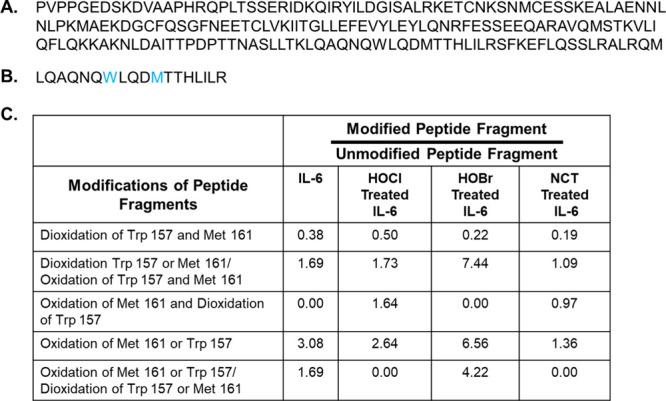
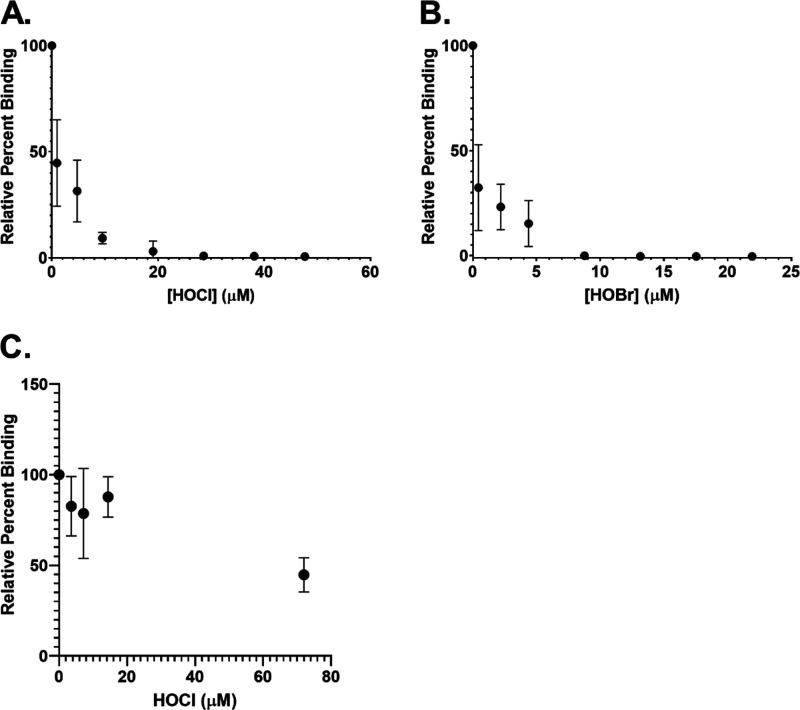
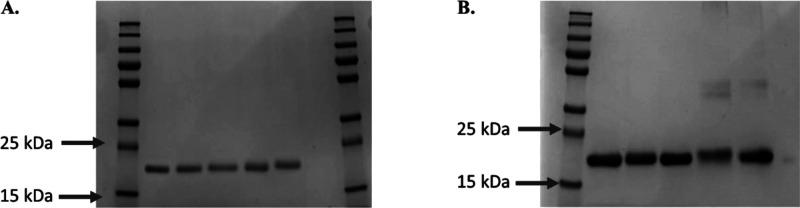
Interleukin-6 (IL-6) has been implicated in the pathogenesis of inflammatory events including those seen with COVID-19 patients. Positive clinical responses to monoclonal antibodies directed against IL-6 receptors (IL-6Rs) suggest that interference with IL-6-dependent activation of pro-inflammatory pathways offers a useful approach to therapy. We exposed IL-6 to hypochlorous acid (HOCl) at concentrations reported to develop . After HOCl treatment, binding of IL-6 to IL-6R was reduced in a dose-dependent manner using a bioassay with human cells engineered to provide a luminescence response to signal transduction upon receptor activation. Similar results followed the exposure of IL-6 to -chlorotaurine (NCT) and hypobromous acid (HOBr), two other reactive species produced . SDS-PAGE analysis of HOCl-treated IL-6 showed little to no fragmentation or aggregation up to 1.75 mM HOCl, suggesting that the modifications induced at concentrations below 1.75 mM took place on the intact protein. Mass spectrometry of trypsin-digested fragments identified oxidative changes to two amino acid residues, methionine 161 and tryptophan 157, both of which have been implicated in receptor binding of the cytokine. Our findings suggest that exogenous HOCl and NCT might bring about beneficial effects in the treatment of COVID-19. Further studies on how HOCl and HOBr and their halogenated amine derivatives interact with IL-6 and related cytokines may open up alternative therapeutic interventions with these compounds in COVID-19 and other hyperinflammatory diseases.
白细胞介素-6(IL-6)与包括COVID-19患者所出现炎症事件的发病机制有关。针对IL-6受体(IL-6R)的单克隆抗体产生的阳性临床反应表明,干扰IL-6依赖性促炎途径的激活提供了一种有用的治疗方法。我们将IL-6暴露于据报道会产生的次氯酸(HOCl)浓度下。在HOCl处理后,使用经过基因工程改造的人类细胞进行生物测定,该细胞在受体激活时对信号转导产生发光反应,结果显示IL-6与IL-6R的结合以剂量依赖性方式减少。将IL-6暴露于氯牛磺酸(NCT)和次溴酸(HOBr)(另外两种产生的活性物质)后也得到了类似结果。对HOCl处理的IL-6进行SDS-PAGE分析表明,在高达1.75 mM HOCl的浓度下几乎没有片段化或聚集现象,这表明在低于1.75 mM的浓度下诱导的修饰发生在完整蛋白质上。对胰蛋白酶消化片段进行质谱分析鉴定出两个氨基酸残基甲硫氨酸161和色氨酸157发生了氧化变化,这两个氨基酸都与细胞因子的受体结合有关。我们的研究结果表明,外源性HOCl和NCT可能在COVID-19治疗中产生有益效果。关于HOCl和HOBr及其卤化胺衍生物如何与IL-6和相关细胞因子相互作用的进一步研究,可能会为这些化合物在COVID-19和其他过度炎症性疾病中开辟替代治疗干预措施。

 Zotero 插件