
鉴定调控疟原虫和人类翻译效率的 5'UTR 顺式作用序列元件的功能。
Functional characterization of 5' UTR cis-acting sequence elements that modulate translational efficiency in Plasmodium falciparum and humans.
机构信息
Department of Biochemistry and Biophysics, Univeristy of California, San Francisco, 600 16th St, San Francisco, CA, 94158, USA.
Denali Therapeutics, Biotherapeutic Discovery, 161 Oyster Point Blvd, South San Francisco, CA, 94080, USA.
出版信息
Malar J. 2022 Jan 6;21(1):15. doi: 10.1186/s12936-021-04024-2.
BACKGROUND
The eukaryotic parasite Plasmodium falciparum causes millions of malarial infections annually while drug resistance to common anti-malarials is further confounding eradication efforts. Translation is an attractive therapeutic target that will benefit from a deeper mechanistic understanding. As the rate limiting step of translation, initiation is a primary driver of translational efficiency. It is a complex process regulated by both cis and trans acting factors, providing numerous potential targets. Relative to model organisms and humans, P. falciparum mRNAs feature unusual 5' untranslated regions suggesting cis-acting sequence complexity in this parasite may act to tune levels of protein synthesis through their effects on translational efficiency.
METHODS
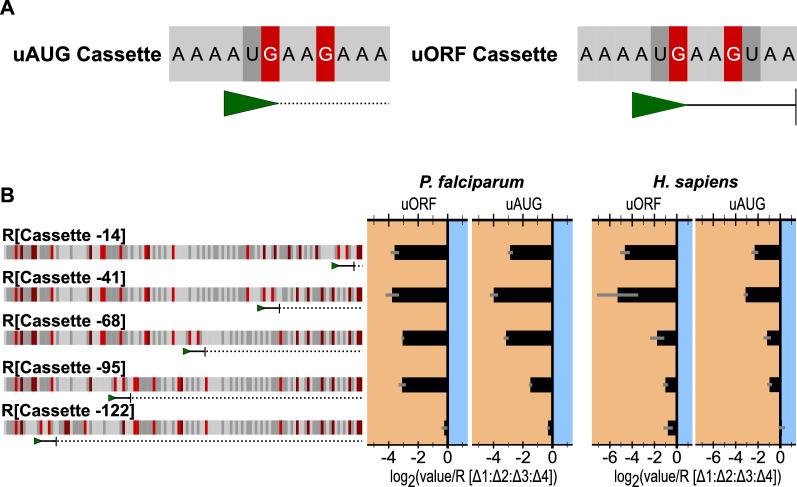
Here, in vitro translation is deployed to compare the role of cis-acting regulatory sequences in P. falciparum and humans. Using parasite mRNAs with high or low translational efficiency, the presence, position, and termination status of upstream "AUG"s, in addition to the base composition of the 5' untranslated regions, were characterized.
RESULTS
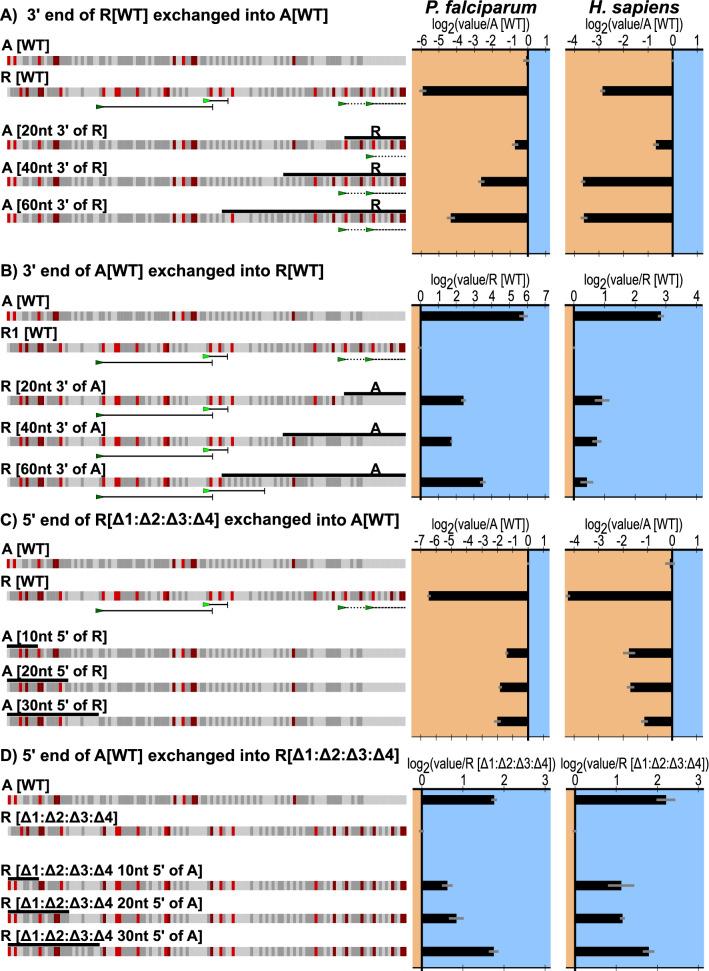
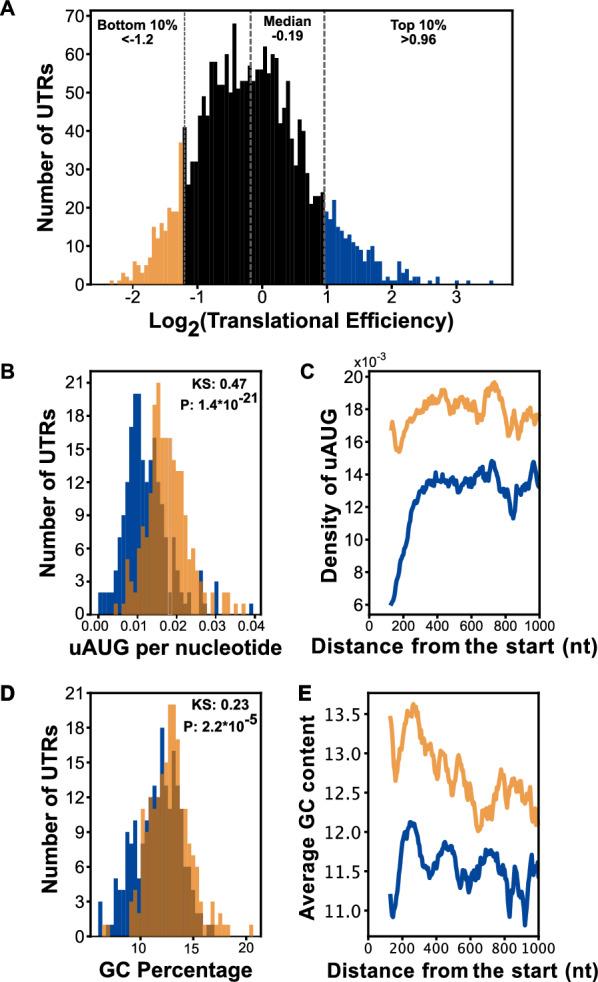
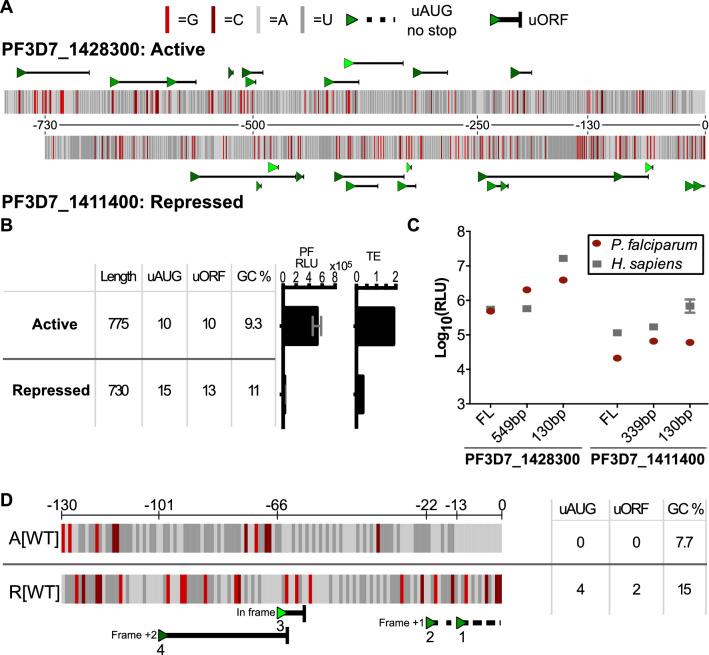
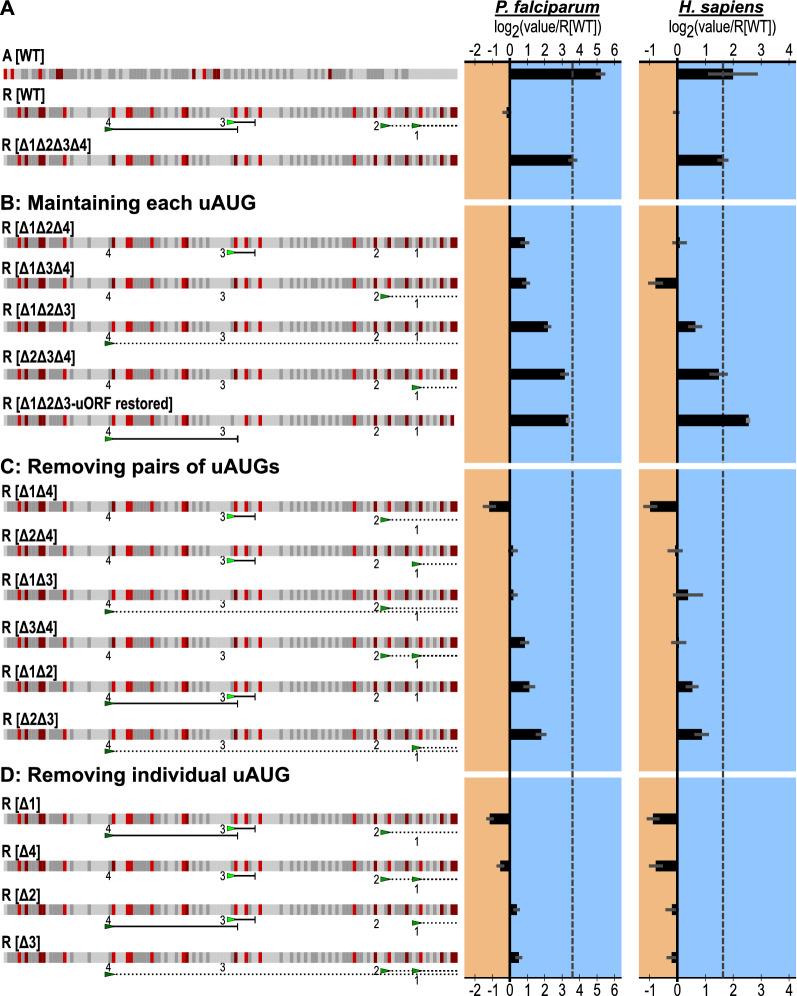
The density of upstream "AUG"s differed significantly among the most and least efficiently translated genes in P. falciparum, as did the average "GC" content of the 5' untranslated regions. Using exemplars from highly translated and poorly translated mRNAs, multiple putative upstream elements were interrogated for impact on translational efficiency. Upstream "AUG"s were found to repress translation to varying degrees, depending on their position and context, while combinations of upstream "AUG"s had non-additive effects. The base composition of the 5' untranslated regions also impacted translation, but to a lesser degree. Surprisingly, the effects of cis-acting sequences were remarkably conserved between P. falciparum and humans.
CONCLUSIONS
While translational regulation is inherently complex, this work contributes toward a more comprehensive understanding of parasite and human translational regulation by examining the impact of discrete cis-acting features, acting alone or in context.
背景
真核寄生虫疟原虫每年导致数百万例疟疾感染,而对常用抗疟药物的耐药性进一步使根除工作复杂化。翻译是一种有吸引力的治疗靶点,将受益于更深入的机制理解。作为翻译的限速步骤,起始是翻译效率的主要驱动因素。它是一个由顺式和反式作用因子调节的复杂过程,提供了许多潜在的靶点。与模式生物和人类相比,疟原虫的 mRNA 具有不寻常的 5'非翻译区,这表明该寄生虫中的顺式作用序列复杂性可能通过其对翻译效率的影响来调节蛋白质合成水平。
方法
在这里,体外翻译被用来比较疟原虫和人类中顺式作用调节序列的作用。使用翻译效率高或低的寄生虫 mRNA,除了 5'非翻译区的碱基组成外,还对上游“AUG”的存在、位置和终止状态进行了表征。
结果
疟原虫中最有效和最无效翻译基因之间的上游“AUG”密度差异显著,5'非翻译区的平均“GC”含量也存在差异。使用来自高度翻译和翻译效率低的 mRNA 的范例,对多个假定的上游元件进行了对翻译效率影响的检测。上游“AUG”的抑制作用因位置和上下文而异,程度不同,而上游“AUG”的组合则具有非加性效应。5'非翻译区的碱基组成也对翻译有影响,但程度较小。令人惊讶的是,顺式作用序列的影响在疟原虫和人类之间非常保守。
结论
虽然翻译调控本质上很复杂,但通过检查离散顺式作用特征的影响,无论是单独作用还是在上下文中作用,这项工作有助于更全面地了解寄生虫和人类的翻译调控。

 Zotero 插件