
用于再生医学和组织工程应用的基于活性氧的生物材料。
Reactive Oxygen Species-Based Biomaterials for Regenerative Medicine and Tissue Engineering Applications.
作者信息
Shafiq Muhammad, Chen Yujie, Hashim Rashida, He Chuanglong, Mo Xiumei, Zhou Xiaojun
机构信息
Shanghai Engineering Research Center of Nano-Biomaterials and Regenerative Medicine, College of Chemistry, Chemical Engineering and Biotechnology, Donghua University, Shanghai, China.
Department of Biotechnology, Faculty of Life Science, University of Central Punjab (UCP), Lahore, Pakistan.
出版信息
Front Bioeng Biotechnol. 2021 Dec 23;9:821288. doi: 10.3389/fbioe.2021.821288. eCollection 2021.
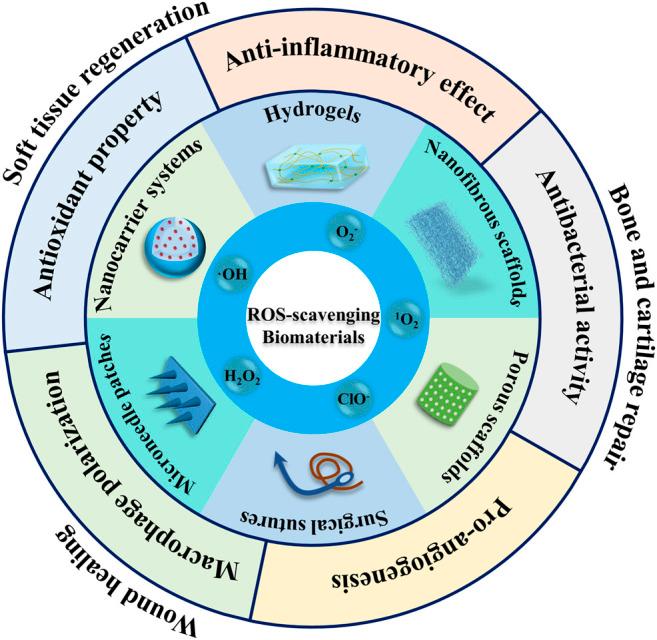
Reactive oxygen species (ROS), acting as essential mediators in biological system, play important roles in the physiologic and pathologic processes, including cellular signal transductions and cell homeostasis interference. Aberrant expression of ROS in tissue microenvironment can be caused by the internal/external stimuli and tissue injury, which may leads to an elevated level of oxidative stress, inflammatory response, and cellular damage as well as disruption in the tissue repair process. To prevent the formation of excess ROS around the injury site, advanced biomaterials can be remodeled or instructed to release their payloads in an injury microenvironment-responsive fashion to regulate the elevated levels of the ROS, which may also help downregulate the oxidative stress and promote tissue regeneration. A multitude of scaffolds and bioactive cues have been reported to promote the regeneration of damaged tissues based on the scavenging of free radicals and reactive species that confer high protection to the cellular activity and tissue function. In this review, we outline the underlying mechanism of ROS generation in the tissue microenvironment and present a comprehensive review of ROS-scavenging biomaterials for regenerative medicine and tissue engineering applications, including soft tissues regeneration, bone and cartilage repair as well as wound healing. Additionally, we highlight the strategies for the regulation of ROS by scaffold design and processing technology. Taken together, developing ROS-based biomaterials may not only help develop advanced platforms for improving injury microenvironment but also accelerate tissue regeneration.
活性氧(ROS)作为生物系统中的重要介质,在生理和病理过程中发挥着重要作用,包括细胞信号转导和细胞稳态干扰。组织微环境中ROS的异常表达可由内部/外部刺激和组织损伤引起,这可能导致氧化应激水平升高、炎症反应、细胞损伤以及组织修复过程的中断。为了防止损伤部位周围形成过量的ROS,可以对先进的生物材料进行重塑或设计,使其在损伤微环境响应的方式下释放其负载,以调节ROS的升高水平,这也可能有助于下调氧化应激并促进组织再生。据报道,许多支架和生物活性线索可基于清除自由基和反应性物种来促进受损组织的再生,这些自由基和反应性物种对细胞活性和组织功能具有高度保护作用。在本综述中,我们概述了组织微环境中ROS产生的潜在机制,并对用于再生医学和组织工程应用的ROS清除生物材料进行了全面综述,包括软组织再生、骨和软骨修复以及伤口愈合。此外,我们强调了通过支架设计和加工技术调节ROS的策略。综上所述,开发基于ROS的生物材料不仅有助于开发改善损伤微环境的先进平台,还能加速组织再生。
 Zotero 插件