
新型 1,3,5-三嗪基氨基苯磺酰胺类化合物,包含氨醇、氨查耳酮和氨二苯乙烯结构基序,作为有效的抗万古霉素肠球菌(VRE)药物,同时也是碳酸酐酶 I、II、VII、IX 和 XII 的抑制剂。
Novel 1,3,5-Triazinyl Aminobenzenesulfonamides Incorporating Aminoalcohol, Aminochalcone and Aminostilbene Structural Motifs as Potent Anti-VRE Agents, and Carbonic Anhydrases I, II, VII, IX, and XII Inhibitors.
机构信息
Department of Chemical Drugs, Faculty of Pharmacy, Masaryk University, Palackého 1-3, 612 42 Brno, Czech Republic.
Department of Pharmaceutical chemistry, Faculty of Pharmacy, Comenius University, Odbojarov 10, 832 32 Bratislava, Slovakia.
出版信息
Int J Mol Sci. 2021 Dec 26;23(1):231. doi: 10.3390/ijms23010231.
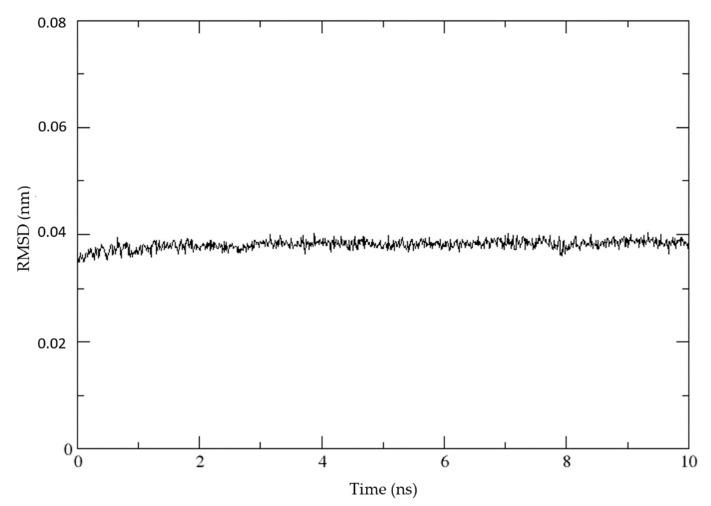
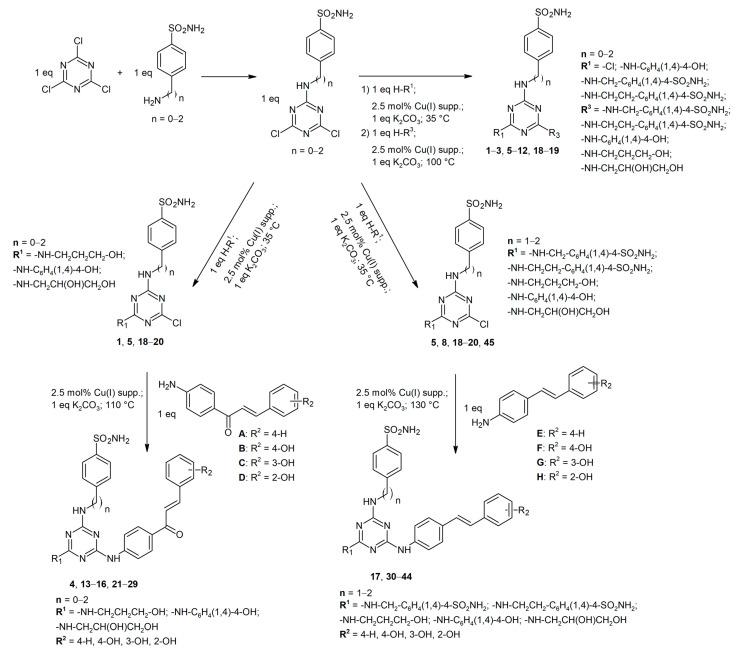
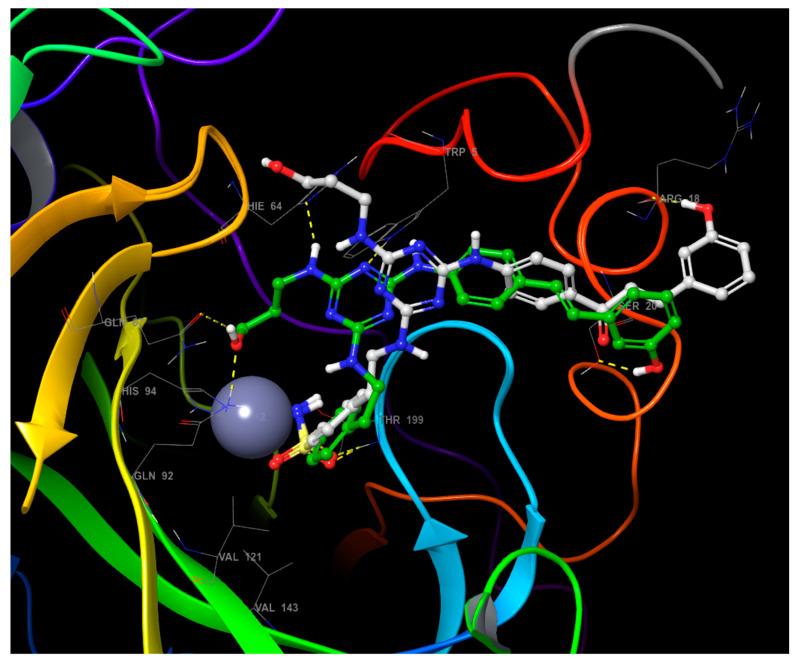
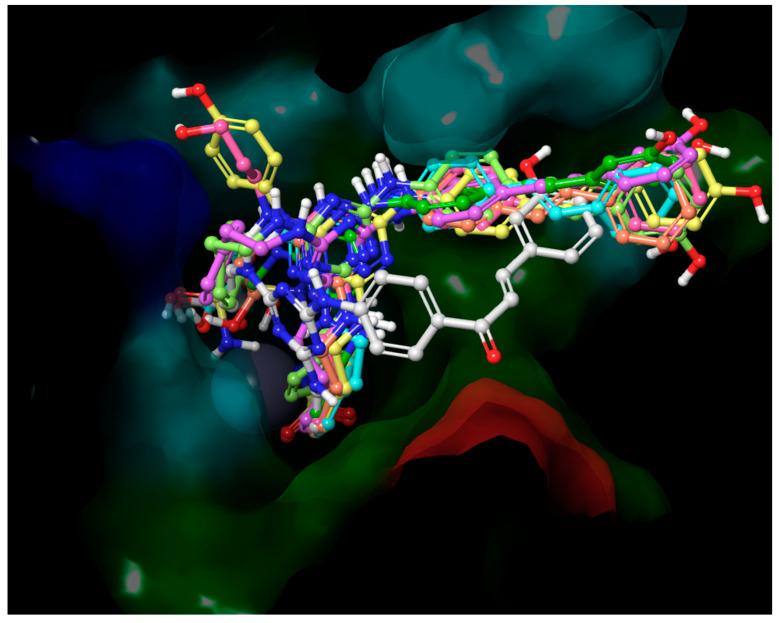
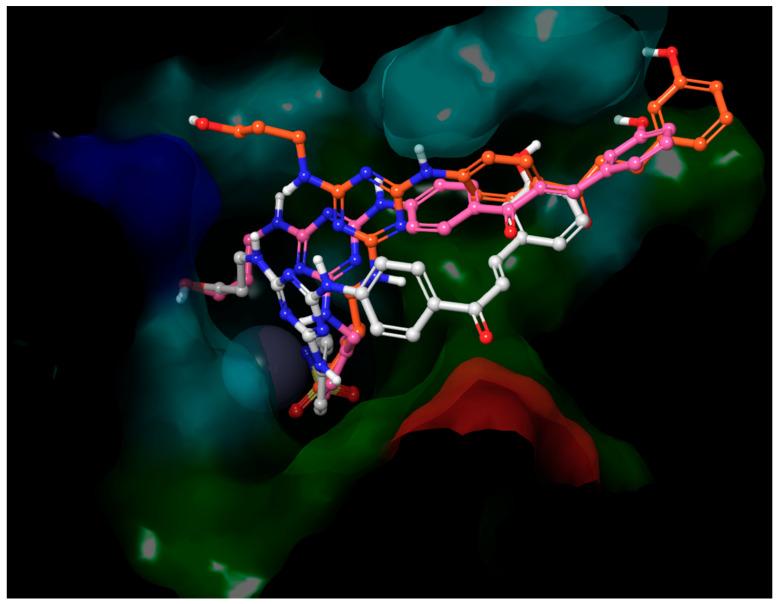
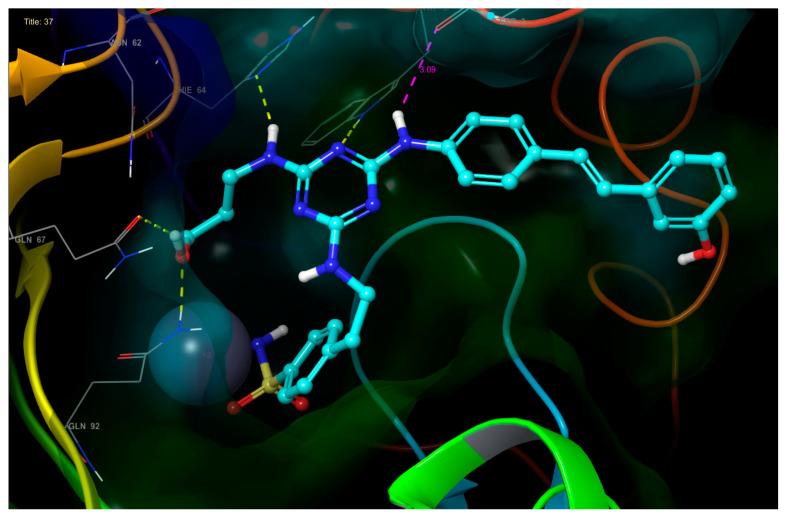
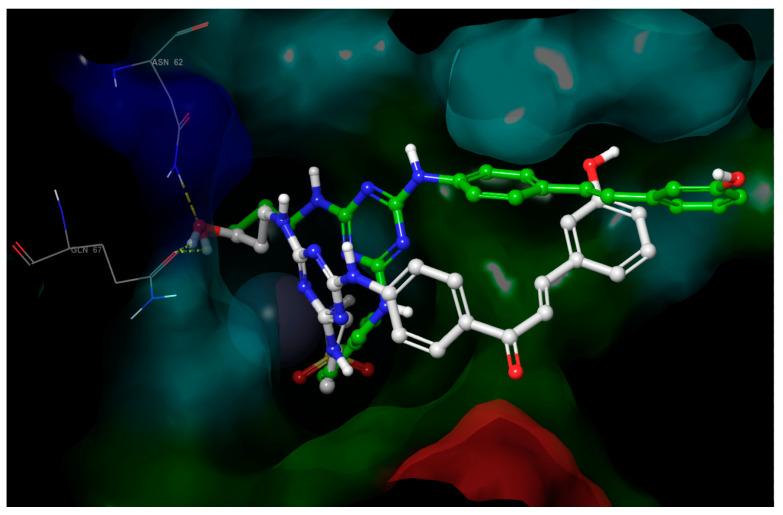
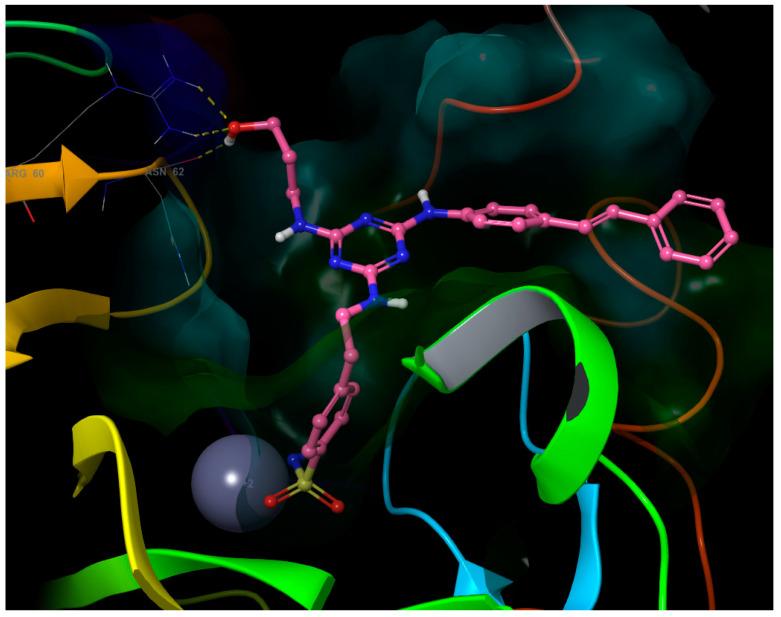
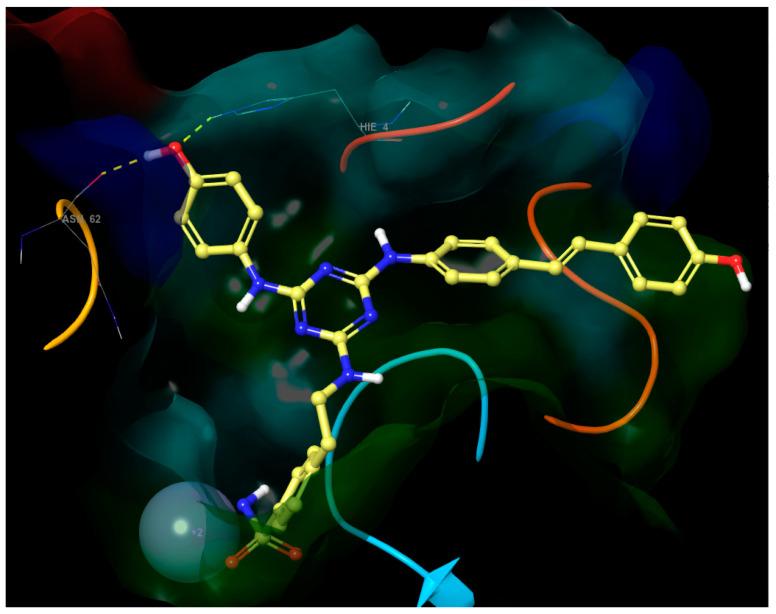
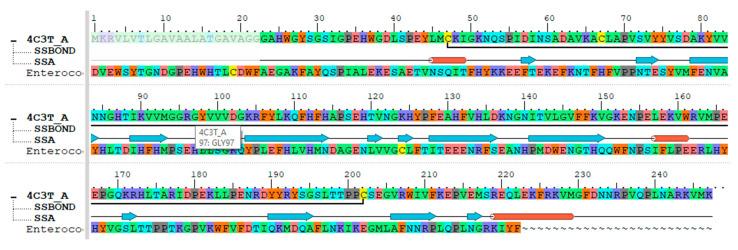
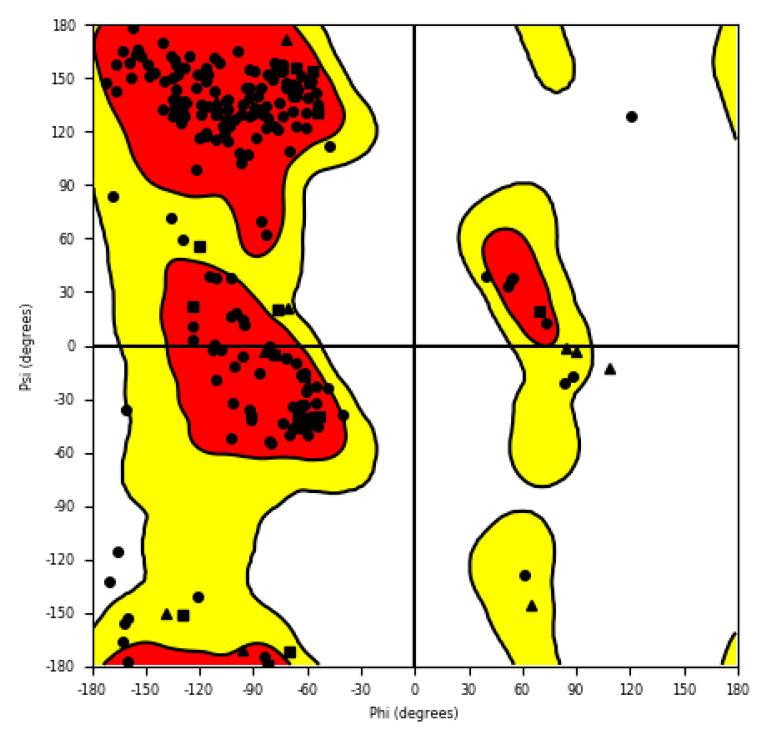
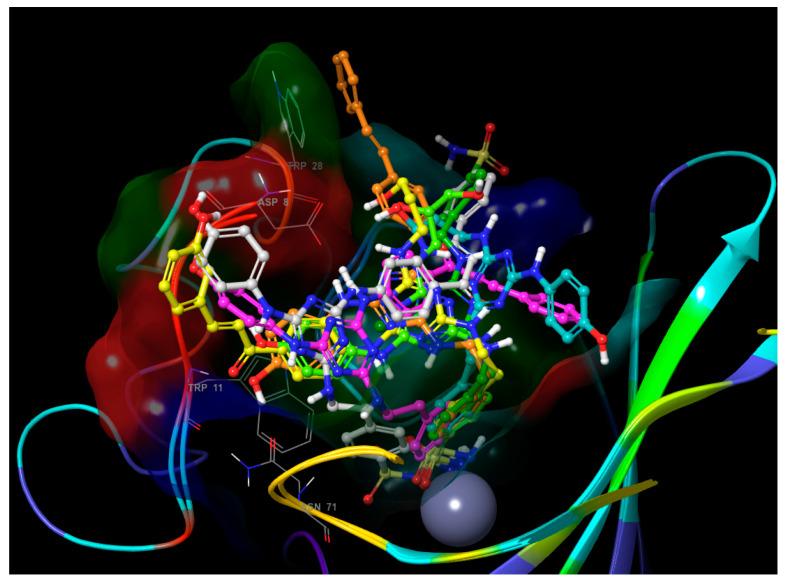
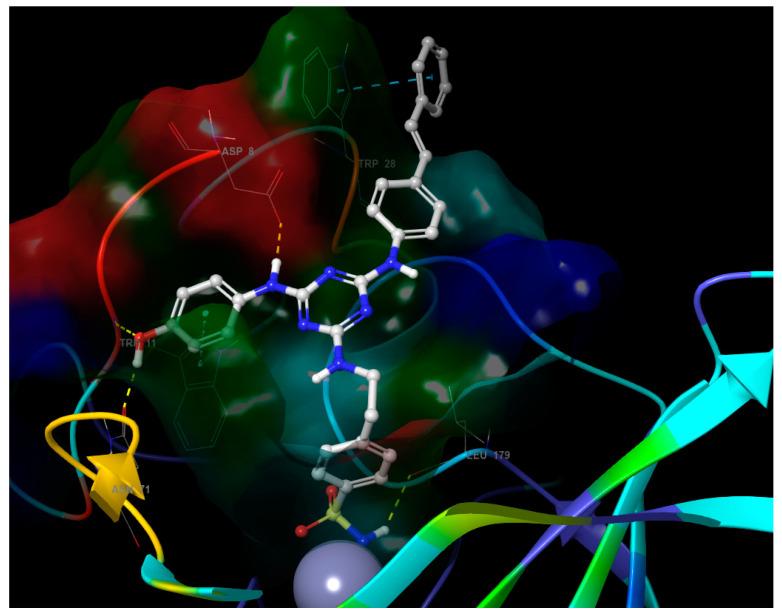
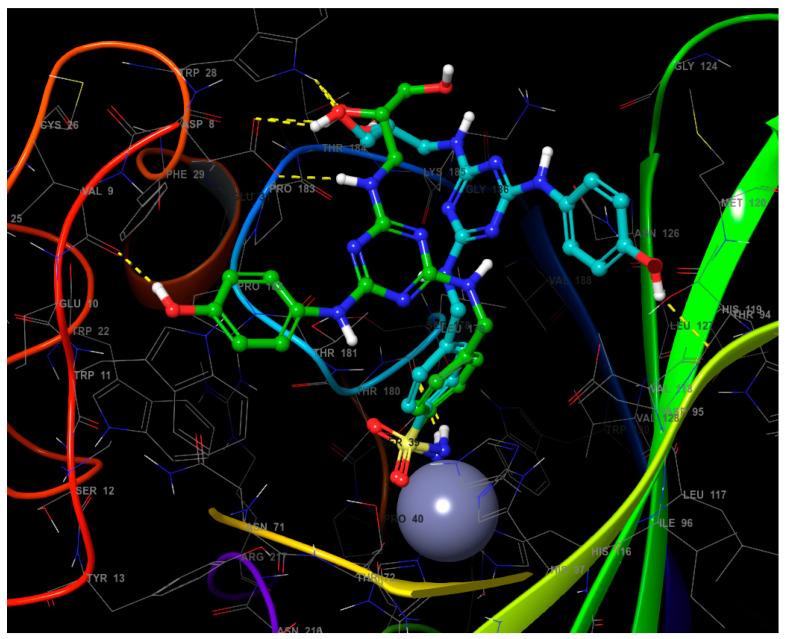
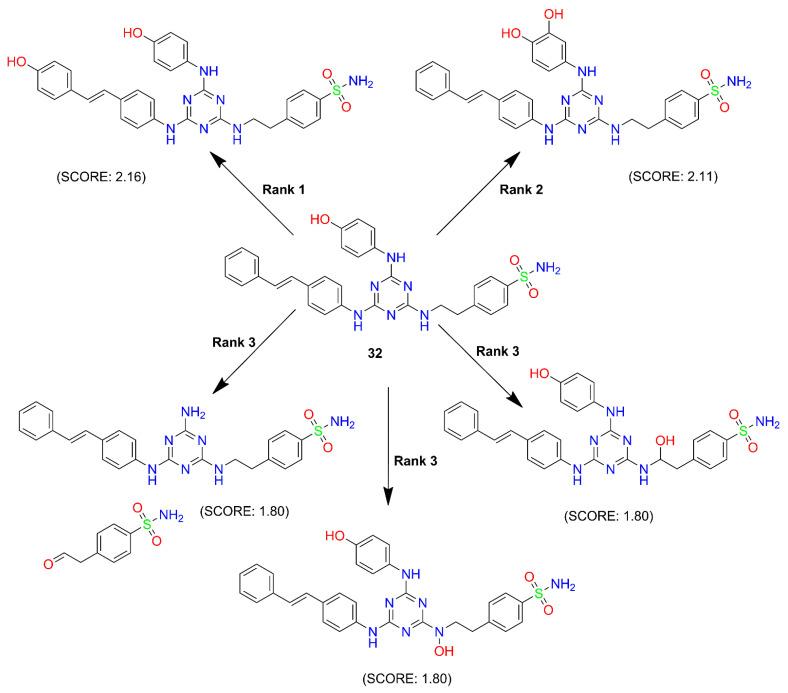
A series of 1,3,5-triazinyl aminobenzenesulfonamides substituted by aminoalcohol, aminostilbene, and aminochalcone structural motifs was synthesized as potential human carbonic anhydrase (hCA) inhibitors. The compounds were evaluated on their inhibition of tumor-associated hCA IX and hCA XII, hCA VII isoenzyme present in the brain, and physiologically important hCA I and hCA II. While the test compounds had only a negligible effect on physiologically important isoenzymes, many of the studied compounds significantly affected the hCA IX isoenzyme. Several compounds showed activity against hCA XII; ()-4-{2-[(4-[(2,3-dihydroxypropyl)amino]-6-[(4-styrylphenyl)amino]-1,3,5-triazin-2-yl)amino]ethyl}benzenesulfonamide () and ()-4-{2-[(4-[(4-hydroxyphenyl)amino]-6-[(4-styrylphenyl)amino]-1,3,5-triazin-2-yl)amino]ethyl}benzenesulfonamide () were the most effective inhibitors with Ks = 4.4 and 5.9 nM, respectively. In addition, the compounds were tested against vancomycin-resistant (VRE) isolates. ()-4-[2-({4-[(4-cinnamoylphenyl)amino]-6-[(4-hydroxyphenyl)amino]-1,3,5-triazin-2-yl}amino)ethyl]benzenesulfonamide () (MIC = 26.33 µM) and derivative (MIC range 13.80-55.20 µM) demonstrated the highest activity against all tested strains. The most active compounds were evaluated for their cytotoxicity against the Human Colorectal Tumor Cell Line (HCT116 p53 +/+). Only 4,4'-[(6-chloro-1,3,5-triazin-2,4-diyl)bis(iminomethylene)]dibenzenesulfonamide () and compound demonstrated an IC of ca. 6.5 μM; otherwise, the other selected derivatives did not show toxicity at concentrations up to 50 µM. The molecular modeling and docking of active compounds into various hCA isoenzymes, including bacterial carbonic anhydrase, specifically α-CA present in VRE, was performed to try to outline a possible mechanism of selective anti-VRE activity.
一系列的 1,3,5-三嗪基氨基苯磺酰胺被氨基醇、氨基二苯乙烯和氨基查耳酮结构基序取代,被合成作为潜在的人碳酸酐酶(hCA)抑制剂。这些化合物在抑制肿瘤相关的 hCAIX 和 hCAXII、存在于大脑中的 hCAVII 同工酶以及生理上重要的 hCAI 和 hCAII 方面进行了评估。虽然测试化合物对生理上重要的同工酶只有微不足道的影响,但许多研究化合物对 hCAIX 同工酶有显著影响。几种化合物对 hCAXII 表现出活性;()-4-{2-[(4-[(2,3-二羟丙基)氨基]-6-[(4- 苯乙烯基)氨基]-1,3,5-三嗪-2-基)氨基]乙基}苯磺酰胺()和()-4-{2-[(4-[(4- 羟基苯基)氨基]-6-[(4-苯乙烯基)氨基]-1,3,5-三嗪-2-基)氨基]乙基}苯磺酰胺()是最有效的抑制剂,Ks 分别为 4.4 和 5.9 nM。此外,这些化合物还针对万古霉素耐药的(VRE)分离株进行了测试。()-4-[2-({4-[(4-肉桂酰基苯基)氨基]-6-[(4- 羟基苯基)氨基]-1,3,5-三嗪-2-基}氨基)乙基]苯磺酰胺()(MIC = 26.33 μM)和衍生物(MIC 范围 13.80-55.20 μM)对所有测试菌株表现出最高的活性。对最活性的化合物进行了对人结直肠肿瘤细胞系(HCT116 p53 +/+)的细胞毒性评估。只有 4,4'-[(6-氯-1,3,5-三嗪-2,4-二基)双(亚氨基甲叉)]二苯磺酰胺()和化合物()显示出约 6.5 μM 的 IC;否则,其他选定的衍生物在高达 50 μM 的浓度下没有显示出毒性。对活性化合物进入各种 hCA 同工酶(包括细菌碳酸酐酶,特别是 VRE 中的α-CA)的分子建模和对接进行了,试图概述选择性抗 VRE 活性的可能机制。


 Zotero 插件