
神经节苷脂 GD2 通过与整合素协同作用增强黑色素瘤细胞的恶性表型。
Ganglioside GD2 Enhances the Malignant Phenotypes of Melanoma Cells by Cooperating with Integrins.
机构信息
Department of Biomedical Sciences, Chubu University College of Life and Health Sciences, Kasugai 487-8501, Japan.
Department of Molecular Biochemistry, Nagoya University Graduate School of Medicine, Nagoya 466-0065, Japan.
出版信息
Int J Mol Sci. 2021 Dec 31;23(1):423. doi: 10.3390/ijms23010423.
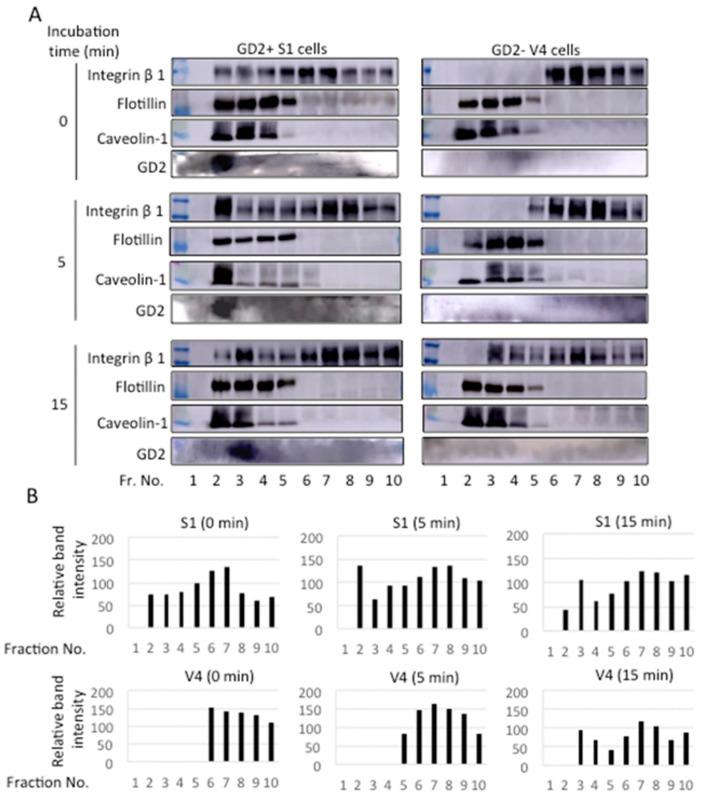
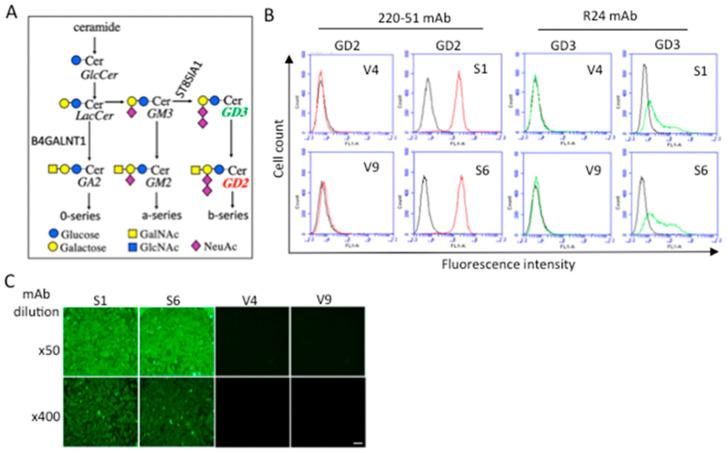
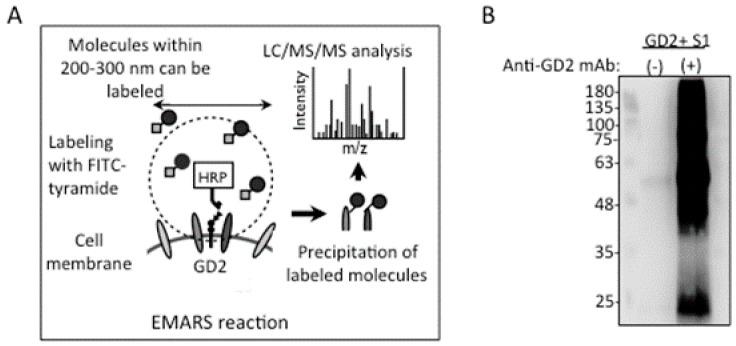
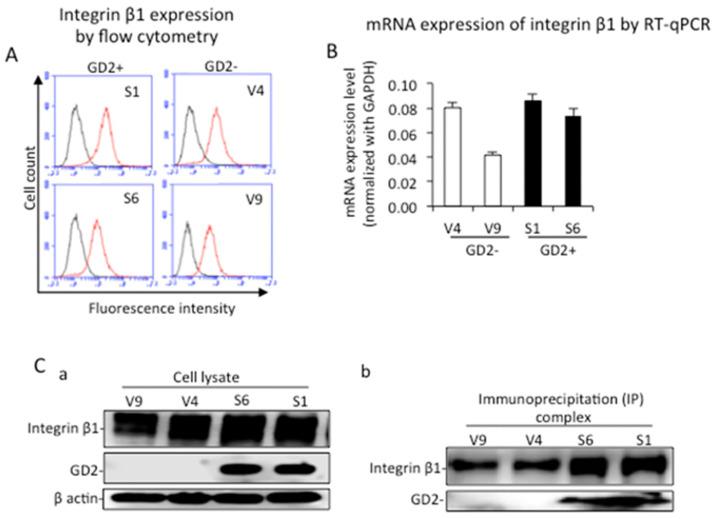
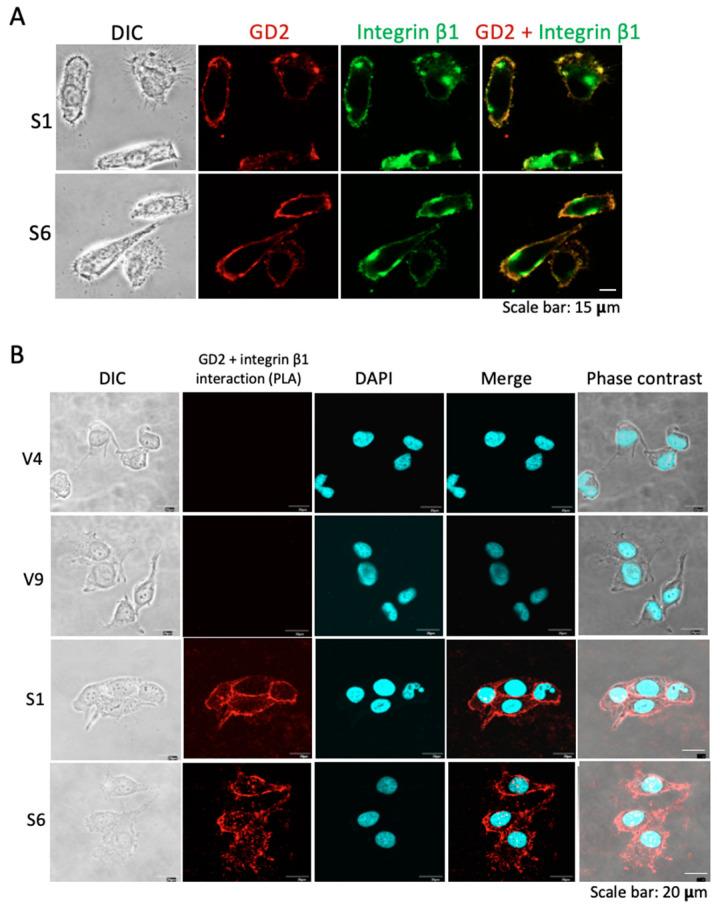
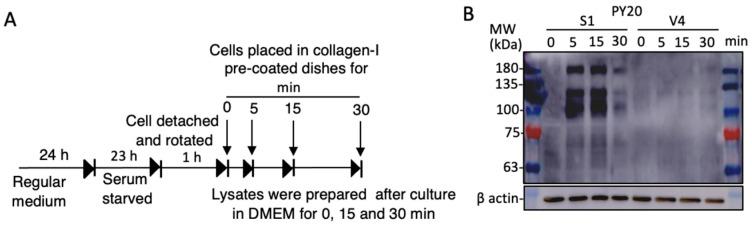
Gangliosides have been considered to modulate cell signals in the microdomain of the cell membrane, lipid/rafts, or glycolipid-enriched microdomain/rafts (GEM/rafts). In particular, cancer-associated gangliosides were reported to enhance the malignant properties of cancer cells. In fact, GD2-positive (GD2+) cells showed increased proliferation, invasion, and adhesion, compared with GD2-negative (GD2-) cells. However, the precise mechanisms by which gangliosides regulate cell signaling in GEM/rafts are not well understood. In order to analyze the roles of ganglioside GD2 in the malignant properties of melanoma cells, we searched for GD2-associating molecules on the cell membrane using the enzyme-mediated activation of radical sources combined with mass spectrometry, and integrin β1 was identified as a representative GD2-associating molecule. Then, we showed the physical association of GD2 and integrin β1 by immunoprecipitation/immunoblotting. Close localization was also shown by immuno-cytostaining and the proximity ligation assay. During cell adhesion, GD2+ cells showed multiple phospho-tyrosine bands, i.e., the epithelial growth factor receptor and focal adhesion kinase. The knockdown of integrin β1 revealed that the increased malignant phenotypes in GD2+ cells were clearly cancelled. Furthermore, the phosphor-tyrosine bands detected during the adhesion of GD2+ cells almost completely disappeared after the knockdown of integrin β1. Finally, immunoblotting to examine the intracellular distribution of integrins during cell adhesion revealed that large amounts of integrin β1 were localized in GEM/raft fractions in GD2+ cells before and just after cell adhesion, with the majority being localized in the non-raft fractions in GD2- cells. All these results suggest that GD2 and integrin β1 cooperate in GEM/rafts, leading to enhanced malignant phenotypes of melanomas.
神经节苷脂被认为可以调节细胞膜微域、脂质筏或糖脂富集的微域/筏(GEM/rafts)中的细胞信号。特别是,报道称与癌症相关的神经节苷脂增强了癌细胞的恶性特性。事实上,与 GD2 阴性(GD2-)细胞相比,GD2 阳性(GD2+)细胞表现出更高的增殖、侵袭和黏附能力。然而,神经节苷脂在 GEM/rafts 中调节细胞信号的精确机制尚不清楚。为了分析神经节苷脂 GD2 在黑色素瘤细胞恶性特性中的作用,我们使用酶介导的自由基源激活结合质谱法在细胞膜上搜索与 GD2 相关的分子,鉴定出整合素 β1 是代表性的 GD2 相关分子。然后,我们通过免疫沉淀/免疫印迹显示 GD2 和整合素 β1 的物理关联。免疫细胞化学和接近连接分析也显示了紧密的定位。在细胞黏附过程中,GD2+细胞显示出多个磷酸酪氨酸带,即表皮生长因子受体和黏着斑激酶。整合素 β1 的敲低表明,GD2+细胞中增加的恶性表型明显被取消。此外,在整合素 β1 敲低后,GD2+细胞黏附过程中检测到的磷酸酪氨酸带几乎完全消失。最后,通过免疫印迹检查细胞黏附过程中整合素的细胞内分布,发现大量整合素 β1 在 GD2+细胞黏附前后定位于 GEM/raft 部分,而大部分整合素 β1 定位于 GD2-细胞的非筏部分。所有这些结果表明,GD2 和整合素 β1 在 GEM/rafts 中合作,导致黑色素瘤恶性表型增强。




 Zotero 插件