
酚类化合物在人类疾病中的作用:当前知识和未来展望。
Role of Phenolic Compounds in Human Disease: Current Knowledge and Future Prospects.
机构信息
Department of Pharmacy, Faculty of Allied Health Sciences, Daffodil International University, Dhaka 1207, Bangladesh.
Department of Pharmacology, College of Pharmacy, King Khalid University, Abha 62529, Saudi Arabia.
出版信息
Molecules. 2021 Dec 30;27(1):233. doi: 10.3390/molecules27010233.
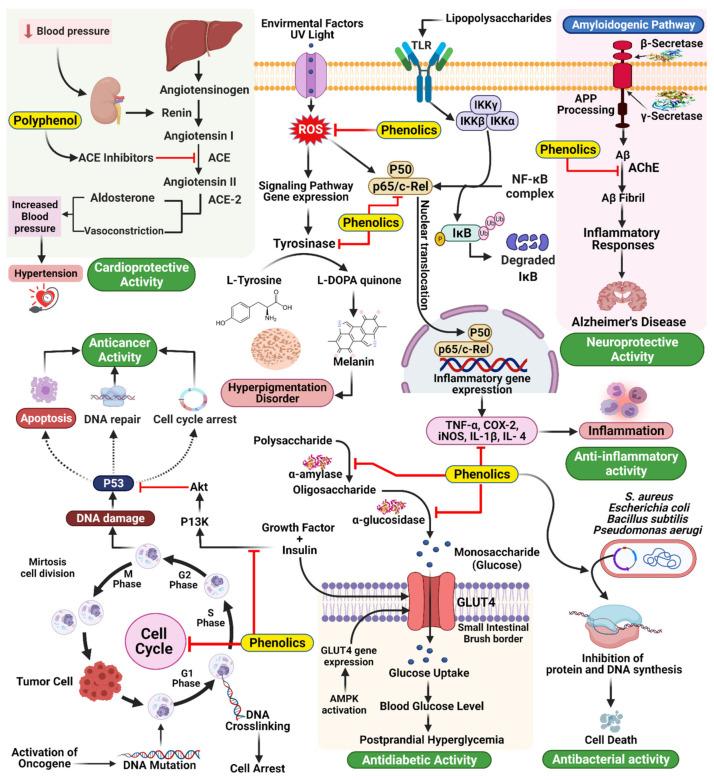
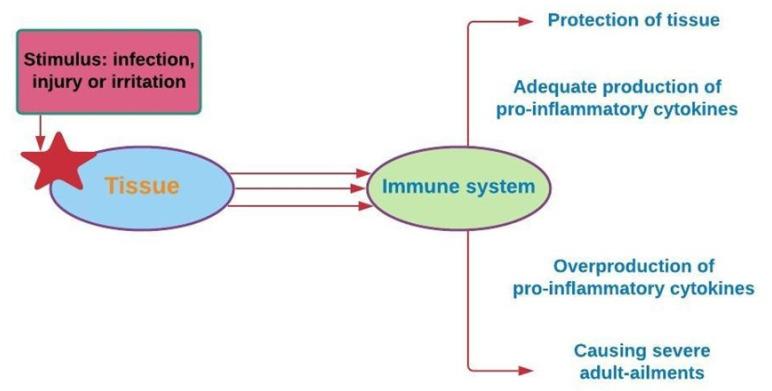
Inflammation is a natural protective mechanism that occurs when the body's tissue homeostatic mechanisms are disrupted by biotic, physical, or chemical agents. The immune response generates pro-inflammatory mediators, but excessive output, such as chronic inflammation, contributes to many persistent diseases. Some phenolic compounds work in tandem with nonsteroidal anti-inflammatory drugs (NSAIDs) to inhibit pro-inflammatory mediators' activity or gene expression, including cyclooxygenase (COX). Various phenolic compounds can also act on transcription factors, such as nuclear factor-κB (NF-κB) or nuclear factor-erythroid factor 2-related factor 2 (Nrf-2), to up-or downregulate elements within the antioxidant response pathways. Phenolic compounds can inhibit enzymes associated with the development of human diseases and have been used to treat various common human ailments, including hypertension, metabolic problems, incendiary infections, and neurodegenerative diseases. The inhibition of the angiotensin-converting enzyme (ACE) by phenolic compounds has been used to treat hypertension. The inhibition of carbohydrate hydrolyzing enzyme represents a type 2 diabetes mellitus therapy, and cholinesterase inhibition has been applied to treat Alzheimer's disease (AD). Phenolic compounds have also demonstrated anti-inflammatory properties to treat skin diseases, rheumatoid arthritis, and inflammatory bowel disease. Plant extracts and phenolic compounds exert protective effects against oxidative stress and inflammation caused by airborne particulate matter, in addition to a range of anti-inflammatory, anticancer, anti-aging, antibacterial, and antiviral activities. Dietary polyphenols have been used to prevent and treat allergy-related diseases. The chemical and biological contributions of phenolic compounds to cardiovascular disease have also been described. This review summarizes the recent progress delineating the multifunctional roles of phenolic compounds, including their anti-inflammatory properties and the molecular pathways through which they exert anti-inflammatory effects on metabolic disorders. This study also discusses current issues and potential prospects for the therapeutic application of phenolic compounds to various human diseases.
炎症是一种自然的保护机制,当身体的组织动态平衡机制被生物、物理或化学因素破坏时,就会发生炎症。免疫反应会产生促炎介质,但过度的产生,如慢性炎症,会导致许多持续性疾病。一些酚类化合物与非甾体抗炎药(NSAIDs)协同作用,抑制促炎介质的活性或基因表达,包括环氧化酶(COX)。各种酚类化合物也可以作用于转录因子,如核因子-κB(NF-κB)或核因子-红细胞 2 相关因子 2(Nrf-2),上调或下调抗氧化反应途径中的元素。酚类化合物可以抑制与人类疾病发展相关的酶,已被用于治疗各种常见的人类疾病,包括高血压、代谢问题、炎症感染和神经退行性疾病。酚类化合物抑制血管紧张素转化酶(ACE)的作用已被用于治疗高血压。抑制碳水化合物水解酶代表 2 型糖尿病的治疗方法,而胆碱酯酶抑制已被应用于治疗阿尔茨海默病(AD)。酚类化合物还具有抗炎特性,可用于治疗皮肤病、类风湿性关节炎和炎症性肠病。植物提取物和酚类化合物对空气中颗粒物引起的氧化应激和炎症具有保护作用,此外还具有一系列抗炎、抗癌、抗衰老、抗菌和抗病毒活性。膳食多酚已被用于预防和治疗与过敏相关的疾病。酚类化合物对心血管疾病的化学和生物学贡献也已被描述。本综述总结了阐明酚类化合物多功能作用的最新进展,包括其抗炎特性以及它们通过哪些分子途径对代谢紊乱发挥抗炎作用。本研究还讨论了酚类化合物在各种人类疾病中的治疗应用的当前问题和潜在前景。

 Zotero 插件