
比较利拉鲁肽联合胰岛素与单独胰岛素对住院 COVID-19 感染患者代谢控制和预后的影响。
Effect of linagliptin plus insulin in comparison to insulin alone on metabolic control and prognosis in hospitalized patients with SARS-CoV-2 infection.
机构信息
Research Department, Hospital Regional de Alta Especialidad del Bajío, and University of Guanajuato, Blvd.Milenio #130, Col. San Carlos la Roncha, CP 37660, León, Guanajuato, Mexico.
Internal Medicine Department, Hospital Regional de Alta Especialidad del Bajío, León, Guanajuato, Mexico.
出版信息
Sci Rep. 2022 Jan 11;12(1):536. doi: 10.1038/s41598-021-04511-1.
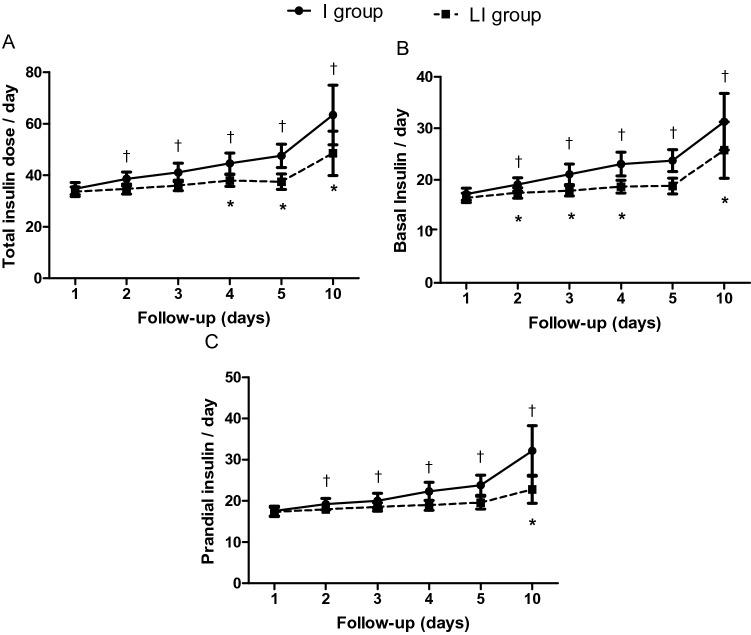
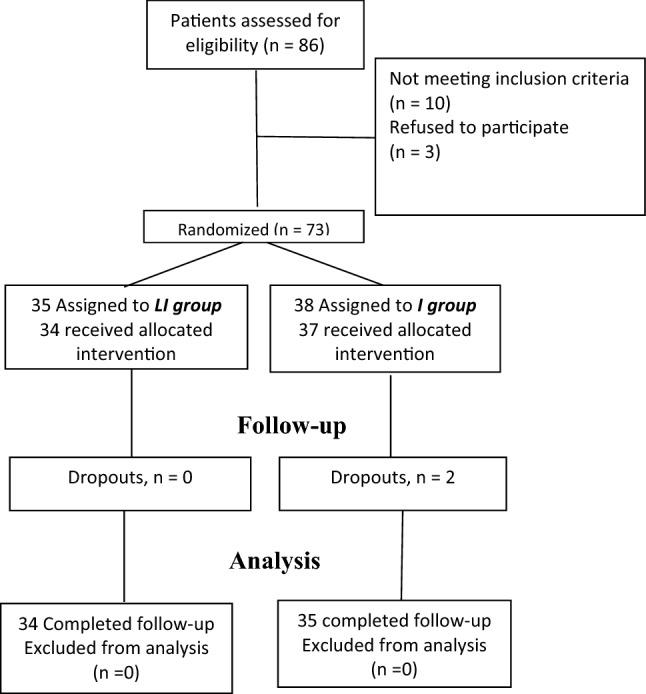
To evaluate the effect of the combination of linagliptin and insulin on metabolic control and prognosis in hospitalized patients with severe acute respiratory syndrome coronavirus 2 (SARS-CoV-2) infection and hyperglycemia. A parallel double-blind randomized clinical trial including hospitalized patients with SARS-CoV-2 infection and hyperglycemia, randomized to receive 5 mg linagliptin + insulin (LI group) or insulin alone (I group) was performed. The main outcomes were the need for assisted mechanical ventilation and glucose levels during hospitalization. Subjects were screened for eligibility at hospital admission if they were not with assisted mechanical ventilation and presented hyperglycemia, and a total of 73 patients with SARS-CoV-2 infection and hyperglycemia were randomized to the LI group (n = 35) or I group (n = 38). The average hospital stay was 12 ± 1 vs 10 ± 1 days for the I and LI groups, respectively (p = 0.343). There were no baseline clinical differences between the study groups, but the percentage of males was higher in the LI group (26 vs 18, p = 0.030). The improvements in fasting and postprandial glucose levels were better in the LI group that the I group (122 ± 7 vs 149 ± 10, p = 0.033; and 137 ± 7 vs 173 ± 12, p = 0.017, respectively), and insulin requirements tended to be lower in the LI group than the I group. Three patients in the LI group and 12 in the I group required assisted mechanical ventilation (HR 0.258, CI 95% 0.092-0.719, p = 0.009); 2 patients in the LI group and 6 in the I group died after a follow-up of 30 days (p = 0.139). No major side effects were observed. The combination of linagliptin and insulin in hospitalized patients with SARS-CoV-2 infection and hyperglycemia reduced the relative risk of assisted mechanical ventilation by 74% and improved better pre and postprandial glucose levels with lower insulin requirements, and no higher risk of hypoglycemia.This study is registered at clinicaltrials.gov, number NCT04542213 on 09/03/2020.
评价利拉利汀联合胰岛素对合并高血糖的重症急性呼吸综合征冠状病毒 2(SARS-CoV-2)感染住院患者代谢控制和预后的影响。进行了一项平行、双盲、随机临床试验,纳入合并 SARS-CoV-2 感染和高血糖的住院患者,随机分为接受 5mg 利拉利汀+胰岛素(LI 组)或单独胰岛素(I 组)治疗。主要结局是需要辅助机械通气和住院期间的血糖水平。如果患者未接受辅助机械通气且存在高血糖,在入院时即进行筛选以确定是否符合入组条件,共纳入 73 例合并 SARS-CoV-2 感染和高血糖的患者,随机分为 LI 组(n=35)或 I 组(n=38)。I 组和 LI 组的平均住院时间分别为 12±1 天和 10±1 天(p=0.343)。两组间无基线临床差异,但 LI 组男性比例更高(26% vs 18%,p=0.030)。LI 组空腹和餐后血糖水平改善优于 I 组(122±7 与 149±10,p=0.033;137±7 与 173±12,p=0.017),LI 组胰岛素需求也较 I 组低。LI 组 3 例和 I 组 12 例患者需要辅助机械通气(HR 0.258,95%CI 0.092-0.719,p=0.009);LI 组 2 例和 I 组 6 例患者在 30 天随访后死亡(p=0.139)。未观察到严重不良反应。与单独胰岛素相比,利拉利汀联合胰岛素治疗合并 SARS-CoV-2 感染和高血糖的住院患者,使辅助机械通气的相对风险降低了 74%,更好地改善了空腹和餐后血糖水平,且胰岛素需求更低,低血糖风险并未增加。该研究在 clinicaltrials.gov 注册,注册号为 NCT04542213,于 2020 年 9 月 3 日注册。


 Zotero 插件