
GWAS 分析多个性状发现,线粒体 aconitase3 对淹水胁迫的适应很重要。
GWAS on multiple traits identifies mitochondrial ACONITASE3 as important for acclimation to submergence stress.
机构信息
Key Laboratory of Biofuels, Shandong Provincial Key Laboratory of Energy Genetics, Qingdao Institute of Bioenergy and Bioprocess Technology, Chinese Academy of Sciences, Qingdao 266101, China.
Department of Animal, Plant and Soil Science, ARC Centre of Excellence in Plant Energy Biology, La Trobe University, Bundoora, Victoria 3086, Australia.
出版信息
Plant Physiol. 2022 Mar 28;188(4):2039-2058. doi: 10.1093/plphys/kiac011.
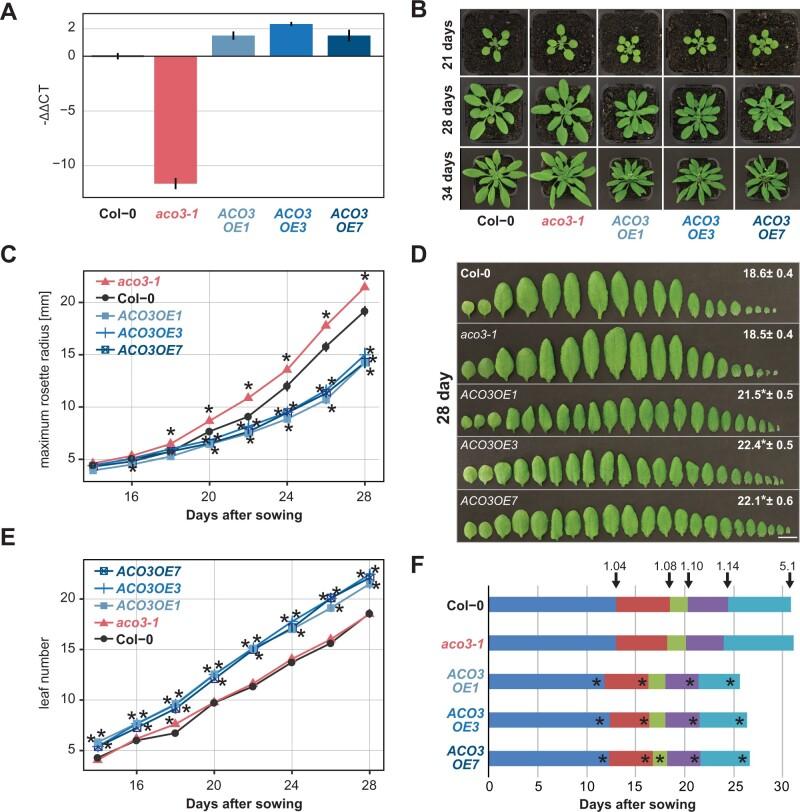
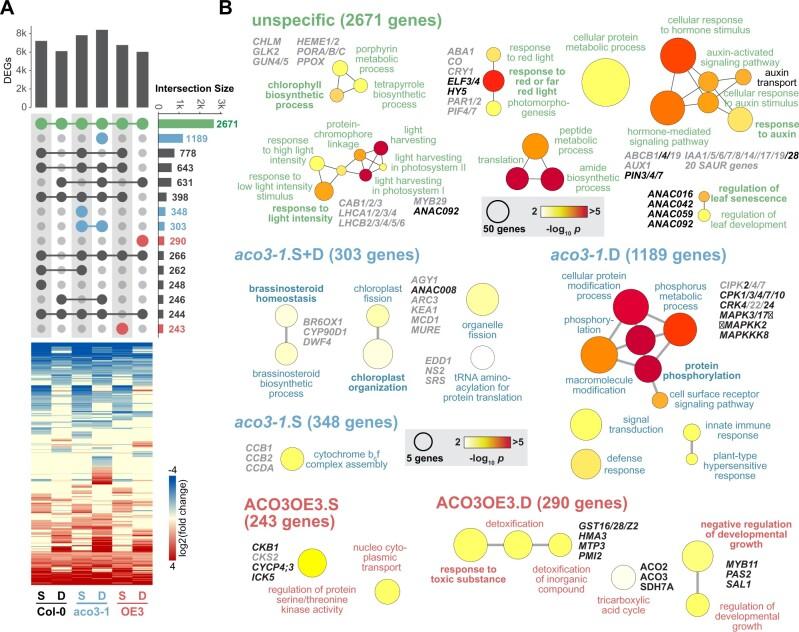
Flooding causes severe crop losses in many parts of the world. Genetic variation in flooding tolerance exists in many species; however, there are few examples for the identification of tolerance genes and their underlying function. We conducted a genome-wide association study (GWAS) in 387 Arabidopsis (Arabidopsis thaliana) accessions. Plants were subjected to prolonged submergence followed by desubmergence, and seven traits (score, water content, Fv/Fm, and concentrations of nitrate, chlorophyll, protein, and starch) were quantified to characterize their acclimation responses. These traits showed substantial variation across the range of accessions. A total of 35 highly significant single-nucleotide polymorphisms (SNPs) were identified across the 20 GWA datasets, pointing to 22 candidate genes, with functions in TCA cycle, DNA modification, and cell division. Detailed functional characterization of one candidate gene, ACONITASE3 (ACO3), was performed. Chromatin immunoprecipitation followed by sequencing showed that a single nucleotide polymorphism in the ACO3 promoter co-located with the binding site of the master regulator of retrograde signaling ANAC017, while subcellular localization of an ACO3-YFP fusion protein confirmed a mitochondrial localization during submergence. Analysis of mutant and overexpression lines determined changes in trait parameters that correlated with altered submergence tolerance and were consistent with the GWAS results. Subsequent RNA-seq experiments suggested that impairing ACO3 function increases the sensitivity to submergence by altering ethylene signaling, whereas ACO3 overexpression leads to tolerance by metabolic priming. These results indicate that ACO3 impacts submergence tolerance through integration of carbon and nitrogen metabolism via the mitochondrial TCA cycle and impacts stress signaling during acclimation to stress.
洪水在世界许多地区造成严重的作物损失。许多物种都存在耐淹水的遗传变异;然而,仅有少数例子可以鉴定出耐淹水基因及其潜在功能。我们对 387 个拟南芥(Arabidopsis thaliana)品系进行了全基因组关联研究(GWAS)。植物经历了长时间的淹没,然后再进行去淹没处理,对七个性状(分数、含水量、Fv/Fm 以及硝酸盐、叶绿素、蛋白质和淀粉的浓度)进行了量化,以描述它们的适应反应。这些性状在整个品系范围内表现出很大的差异。在 20 个 GWAS 数据集中共鉴定出 35 个高度显著的单核苷酸多态性(SNP),指向 22 个候选基因,这些基因的功能涉及三羧酸循环、DNA 修饰和细胞分裂。对一个候选基因 ACONITASE3(ACO3)进行了详细的功能表征。染色质免疫沉淀测序表明,ACO3 启动子中的一个单核苷酸多态性与逆行信号的主调控因子 ANAC017 的结合位点共定位,而 ACO3-YFP 融合蛋白的亚细胞定位在淹没时证实了其在线粒体中的定位。对突变体和过表达系的分析确定了与改变的耐淹水能力相关的性状参数的变化,这与 GWAS 结果一致。随后的 RNA-seq 实验表明,通过改变乙烯信号,损害 ACO3 功能会增加对淹没的敏感性,而 ACO3 过表达通过代谢启动导致对压力的耐受性。这些结果表明,ACO3 通过整合线粒体三羧酸循环中的碳和氮代谢来影响淹没耐受性,并在适应胁迫的过程中影响应激信号。




 Zotero 插件