
理解低价值医疗保健及相关的去执行过程:加拿大医院选择明智干预措施的定性研究。
Understanding low-value care and associated de-implementation processes: a qualitative study of Choosing Wisely Interventions across Canadian hospitals.
机构信息
Institute of Health Policy, Management and Evaluation, University of Toronto, 155 College Street, 4th Floor, Toronto, ON, M5T 3M6, Canada.
North York General Hospital, Centre for Research and Innovation, 4001, Leslie Street, Toronto, ON, M2K 1E1, Canada.
出版信息
BMC Health Serv Res. 2022 Jan 21;22(1):92. doi: 10.1186/s12913-022-07485-6.
BACKGROUND
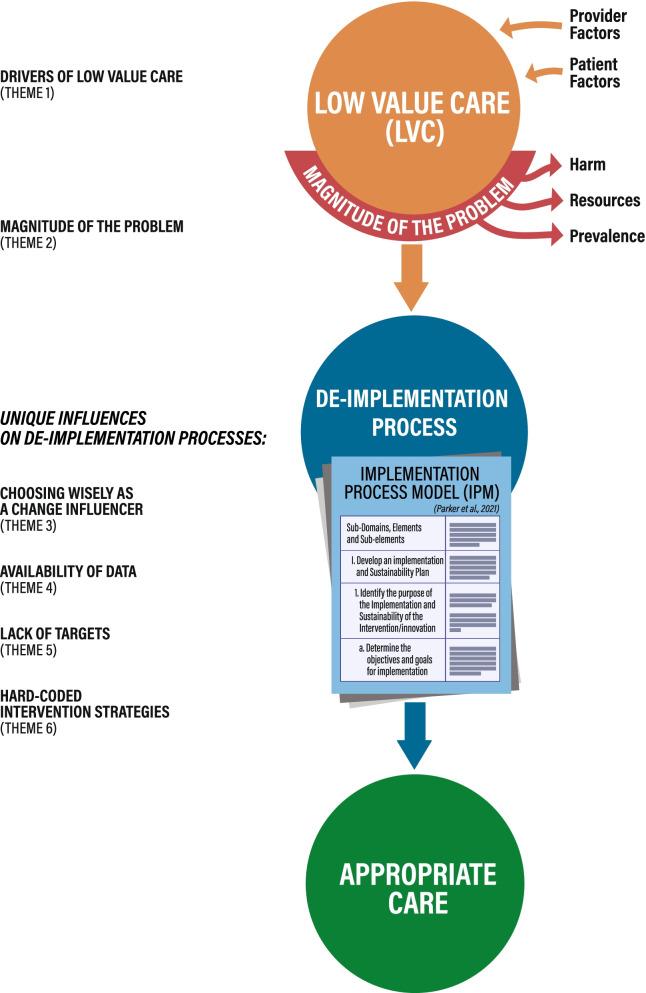
Choosing Wisely (CW) is an international movement comprised of campaigns in more than 20 countries to reduce low-value care (LVC). De-implementation, the reduction or removal of a healthcare practice that offers little to no benefit or causes harm, is an emerging field of research. Little is known about the factors which (i) sustain LVC; and (ii) the magnitude of the problem of LVC. In addition, little is known about the processes of de-implementation, and if and how these processes differ from implementation endeavours. The objective of this study was to explicate the myriad factors which impact the processes and outcomes of de-implementation initiatives that are designed to address national Choosing Wisely campaign recommendations.
METHODS
Semi-structured interviews were conducted with individuals implementing Choosing Wisely Canada recommendations in healthcare settings in four provinces. The interview guide was developed using concepts from the literature and the Implementation Process Model (IPM) as a framework. All interviews were conducted virtually, recorded, and transcribed verbatim. Data were analysed using thematic analysis.
FINDINGS
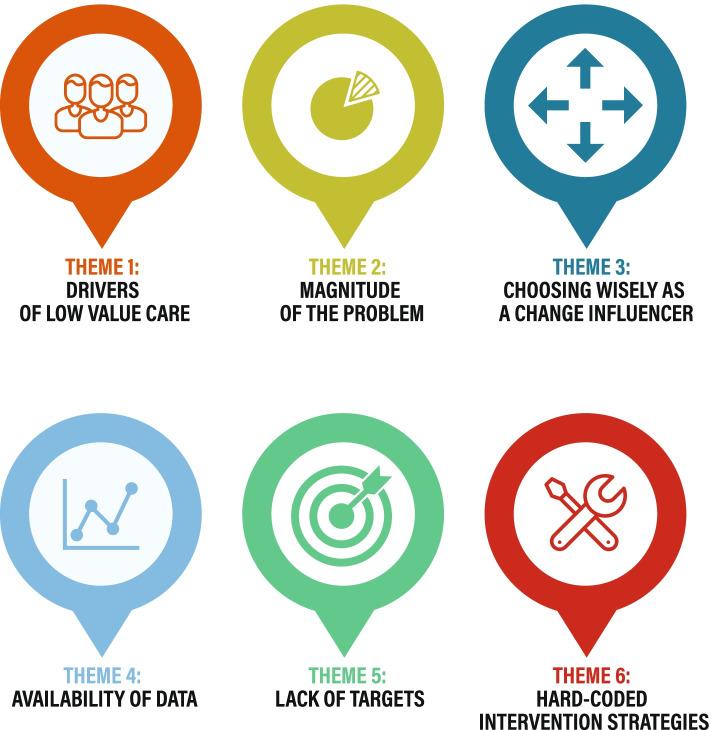
Seventeen Choosing Wisely team members were interviewed. Participants identified numerous provider factors, most notably habit, which sustain LVC. Contrary to reporting in recent studies, the majority of LVC in the sample was not 'patient facing'; therefore, patients were not a significant driver for the LVC, nor a barrier to reducing it. Participants detailed aspects of the magnitude of the problems of LVC, providing insight into the complexities and nuances of harm, resources and prevalence. Harm from potential or common infections, reactions, or overtreatment was viewed as the most significant types of harm. Unique factors influencing the processes of de-implementation reported were: influence of Choosing Wisely campaigns, availability of data, lack of targets and hard-coded interventions.
CONCLUSIONS
This study explicates factors ranging from those which impact the maintenance of LVC to factors that impact the success of de-implementation interventions intended to reduce them. The findings draw attention to the significance of unintentional factors, highlight the importance of understanding the impact of harm and resources to reduce LVC and illuminate the overstated impact of patients in de-implementation literature. These findings illustrate the complexities of de-implementation.
背景
选择明智(Choosing Wisely,CW)是一个由 20 多个国家开展的运动,旨在减少低价值医疗(low-value care,LVC)。去执行(de-implementation),即减少或去除几乎没有益处或可能造成伤害的医疗实践,是一个新兴的研究领域。人们对维持 LVC 的因素(i)以及 LVC 问题的严重程度(ii)知之甚少。此外,人们对去执行的过程知之甚少,也不知道这些过程是否与实施努力不同,以及如何不同。本研究的目的是阐明影响旨在解决国家选择明智运动建议的去执行倡议的过程和结果的众多因素。
方法
对在四个省的医疗环境中实施加拿大选择明智建议的人员进行了半结构式访谈。访谈指南是使用文献和实施过程模型(Implementation Process Model,IPM)中的概念制定的。所有访谈均通过虚拟方式进行,录制并逐字转录。使用主题分析进行数据分析。
结果
对 17 名选择明智团队成员进行了访谈。参与者确定了许多维持 LVC 的提供者因素,其中最显著的是习惯。与最近研究中的报告相反,样本中大多数 LVC 并非“面向患者”;因此,患者并不是 LVC 的主要驱动因素,也不是减少 LVC 的障碍。参与者详细描述了 LVC 问题的严重程度的各个方面,深入了解了伤害、资源和流行的复杂性和细微差别。潜在或常见感染、反应或过度治疗引起的伤害被视为最严重的伤害类型。报告的影响去执行过程的独特因素有:选择明智运动的影响、数据的可用性、缺乏目标和硬性干预。
结论
本研究阐明了从影响 LVC 维持的因素到影响旨在减少 LVC 的去执行干预成功的因素等各种因素。研究结果提请注意非故意因素的重要性,强调了解伤害和资源对减少 LVC 的影响的重要性,并阐明了患者在去执行文献中的影响被夸大。这些发现说明了去执行的复杂性。
 Zotero 插件