
股直肌的超声弹性成像:一种预测慢性阻塞性肺疾病患者肌肉减少症的潜在工具
Ultrasonic Elastography of the Rectus Femoris, a Potential Tool to Predict Sarcopenia in Patients With Chronic Obstructive Pulmonary Disease.
作者信息
Deng Mingming, Zhou Xiaoming, Li Yanxia, Yin Yan, Liang Chaonan, Zhang Qin, Lu Jingwen, Wang Mengchan, Wang Yu, Sun Yue, Li Ruixia, Yan Liming, Wang Qiuyue, Hou Gang
机构信息
Department of Pulmonary and Critical Care Medicine, Center of Respiratory Medicine, China-Japan Friendship Hospital, Beijing, China.
Graduate School of Peking Union Medical College, Chinese Academy of Medical Sciences, Peking Union Medical College, Beijing, China.
出版信息
Front Physiol. 2022 Jan 5;12:783421. doi: 10.3389/fphys.2021.783421. eCollection 2021.
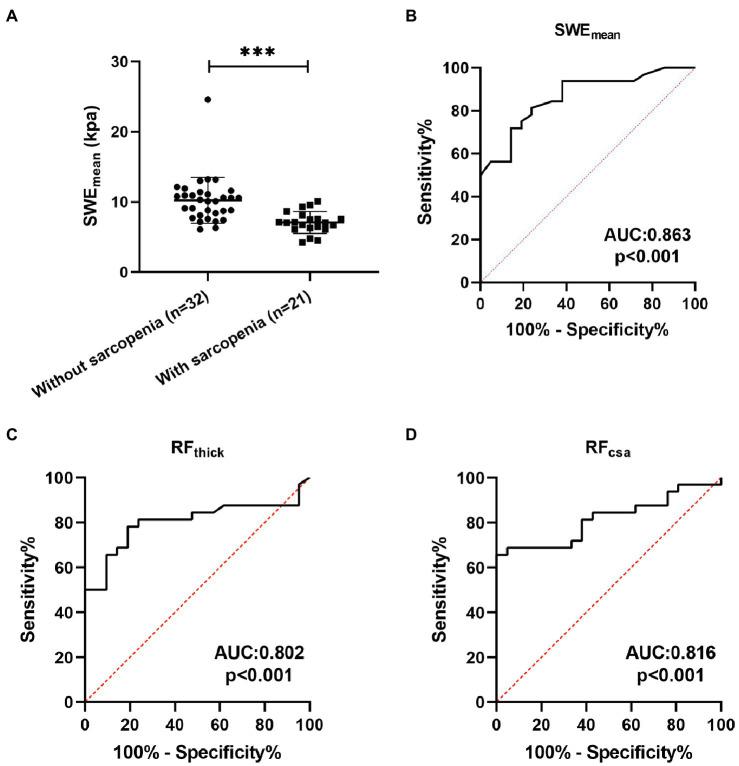
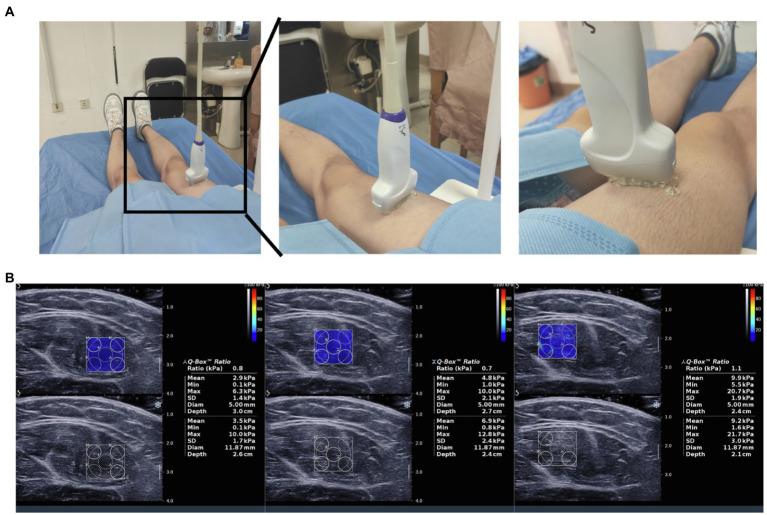
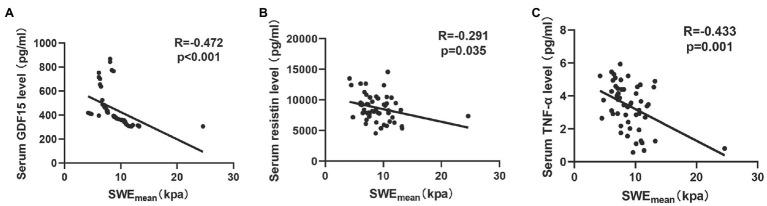
Skeletal muscle dysfunction is common in patients with chronic obstructive pulmonary disease (COPD) and is associated with a poor prognosis. Abnormal muscle quantity of the lower limbs is a manifestation of skeletal muscle dysfunction in patients with COPD. Shear wave ultrasound elastography (SWE) is a novel and possible tool to evaluate qualitative muscle parameters. This study explores the feasibility of SWE to measure the stiffness of the rectus femoris and evaluates its value in predicting sarcopenia in patients with COPD. Ultrasound examination of the rectus femoris was performed to determine the mean elasticity index (SWE), cross-sectional area (RF), and thickness (RF) using grayscale ultrasonography (US) and SWE in 53 patients with COPD and 23 age-matched non-COPD healthy controls. The serum levels of circulating biomarkers (GDF15, resistin, and TNF-α) were measured using ELISA. The definition of sarcopenia followed the guidelines from the Asian Working Group for Sarcopenia. Receiver operating characteristic (ROC) curve analysis of the SWE, RF, and RF was used to evaluate their predictive ability for sarcopenia. The intraobserver and interobserver repeatability of SWE performance was excellent (all correlation coefficients > 0.95; < 0.05). The SWE of the rectus femoris in patients with COPD (8.98 ± 3.12 kPa) was decreased compared with that in healthy controls (17.00 ± 5.14 kPa) and decreased with advanced global initiative for chronic obstructive lung disease (GOLD) stage. Furthermore, SWE was found to be independent of sex, height, and body mass, and a lower SWE in patients with COPD was positively associated with reduced pulmonary function, worse physical function, poor exercise tolerance, decreased muscle strength, and worse dyspnea index score. The correlation between physical function [five-repetition sit-to-stand test (5STST)], muscle function, and SWE was higher than those of RF and RF. In addition, SWE was negatively correlated with serum GDF15 levels ( = -0.472, < 0.001), serum resistin levels ( = -0.291, = 0.035), and serum TNF-α levels ( = -0.433, = 0.001). Finally, the predictive power of SWE [area under the curve (AUC): 0.863] in the diagnosis of sarcopenia was higher than that of RF (AUC: 0.802) and RF (AUC: 0.816). Compared with grayscale US, SWE was not affected by the patient's height, weight, or BMI and better represented skeletal muscle function and physical function. Furthermore, SWE is a promising potential tool to predict sarcopenia in patients with COPD.
骨骼肌功能障碍在慢性阻塞性肺疾病(COPD)患者中很常见,且与预后不良相关。下肢肌肉量异常是COPD患者骨骼肌功能障碍的一种表现。剪切波超声弹性成像(SWE)是一种评估肌肉定性参数的新型且可行的工具。本研究探讨SWE测量股直肌硬度的可行性,并评估其在预测COPD患者肌肉减少症中的价值。对53例COPD患者和23例年龄匹配的非COPD健康对照者进行股直肌超声检查,使用灰阶超声(US)和SWE测定平均弹性指数(SWE)、横截面积(RF)和厚度(RF)。采用酶联免疫吸附测定法(ELISA)检测循环生物标志物(生长分化因子15、抵抗素和肿瘤坏死因子-α)的血清水平。肌肉减少症的定义遵循亚洲肌肉减少症工作组的指南。对SWE、RF和RF进行受试者操作特征(ROC)曲线分析,以评估它们对肌肉减少症的预测能力。SWE操作的观察者内和观察者间重复性极佳(所有相关系数均>0.95;<0.05)。COPD患者股直肌的SWE(8.98±3.12kPa)低于健康对照者(17.00±5.14kPa),并随慢性阻塞性肺疾病全球倡议(GOLD)分期的进展而降低。此外,发现SWE与性别、身高和体重无关,COPD患者较低的SWE与肺功能降低、身体功能较差、运动耐力差、肌肉力量下降和呼吸困难指数评分较差呈正相关。身体功能[五次坐立试验(5STST)]、肌肉功能与SWE之间的相关性高于RF和RF。此外,SWE与血清GDF15水平(=-0.472,<0.001)、血清抵抗素水平(=-0.291,=0.035)和血清TNF-α水平(=-0.433,=0.001)呈负相关。最后,SWE在诊断肌肉减少症中的预测能力[曲线下面积(AUC):0.863]高于RF(AUC:0.802)和RF(AUC:0.816)。与灰阶US相比,SWE不受患者身高、体重或体重指数的影响,能更好地反映骨骼肌功能和身体功能。此外,SWE是预测COPD患者肌肉减少症的一种有前景的潜在工具。

 Zotero 插件