
口腔物种及其与胃肠道和呼吸道临床相关事件的联系。
Oral Species and Their Connection to Events of Clinical Relevance in Gastrointestinal and Respiratory Tracts.
作者信息
Könönen Eija, Gursoy Ulvi K
机构信息
Institute of Dentistry, University of Turku, Turku, Finland.
出版信息
Front Microbiol. 2022 Jan 6;12:798763. doi: 10.3389/fmicb.2021.798763. eCollection 2021.
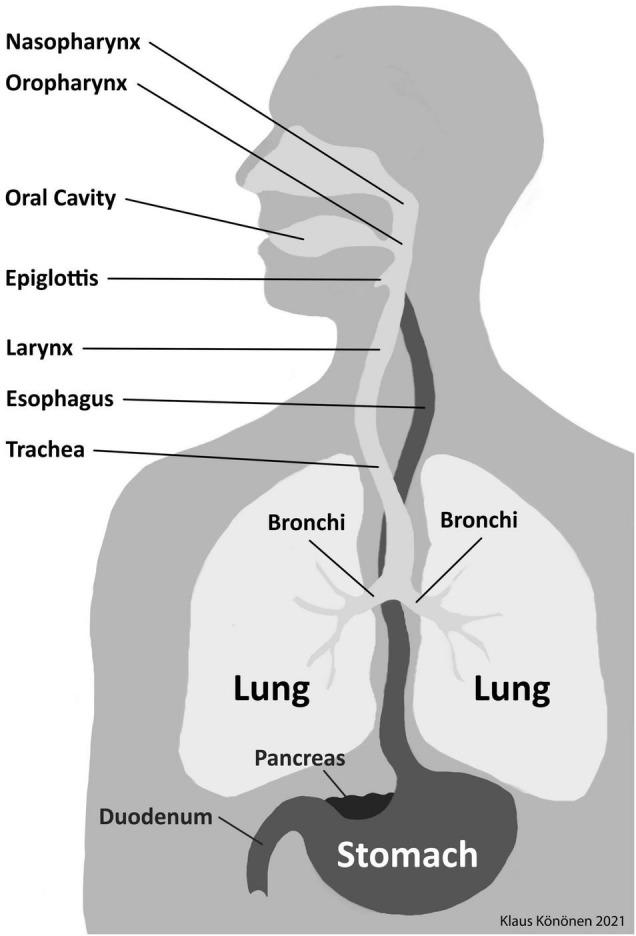
is recognized as one of the core anaerobic genera in the oral microbiome. In addition, members of this genus belong to microbial communities of the gastrointestinal and respiratory tracts. Several novel species, most of them of oral origin, have been described, but limited knowledge is still available of their clinical relevance. is among the anaerobic commensals on oral mucosae from early months of life onward, and other early colonizing species in the oral cavity include and . Oral species get constant access to the gastrointestinal tract via saliva swallowing and to lower airways via microaspiration. At these extra-oral sites, they play a role as commensals but also as potentially harmful agents on mucosal surfaces. The aim of this narrative review is to give an updated overview on the involvement of oral species in gastrointestinal and respiratory health and disease.
被认为是口腔微生物群中核心的厌氧属之一。此外,该属的成员属于胃肠道和呼吸道的微生物群落。已经描述了几个新物种,其中大多数来自口腔,但关于它们的临床相关性的知识仍然有限。从生命早期的几个月起,就是口腔黏膜上的厌氧共生菌之一,口腔中其他早期定植的物种包括和。口腔物种通过吞咽唾液不断进入胃肠道,并通过微吸入进入下呼吸道。在这些口腔外部位,它们作为共生菌发挥作用,但也可能是黏膜表面的有害因子。本叙述性综述的目的是提供关于口腔物种在胃肠道和呼吸道健康与疾病中的作用的最新概述。
 Zotero 插件