
基于标记辅助的家系选育,改良印度巨型水稻品种 MTU1010,以提高其对细菌性条斑病和稻瘟病的抗性,以及对低土壤磷的耐受性。
Marker assisted pedigree breeding based improvement of the Indian mega variety of rice MTU1010 for resistance against bacterial blight and blast and tolerance to low soil phosphorus.
机构信息
Regional Agricultural Research Station, PJTSAU, Jagtial, India.
Professor Jayashankar Telangana State Agricultural University, Hyderabad, India.
出版信息
PLoS One. 2022 Jan 31;17(1):e0260535. doi: 10.1371/journal.pone.0260535. eCollection 2022.
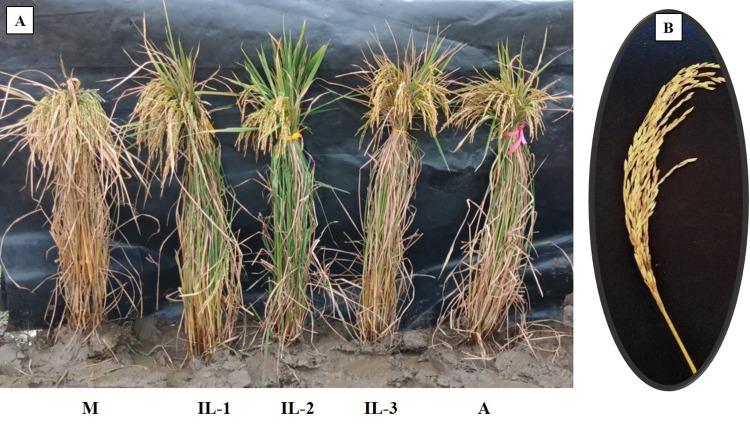
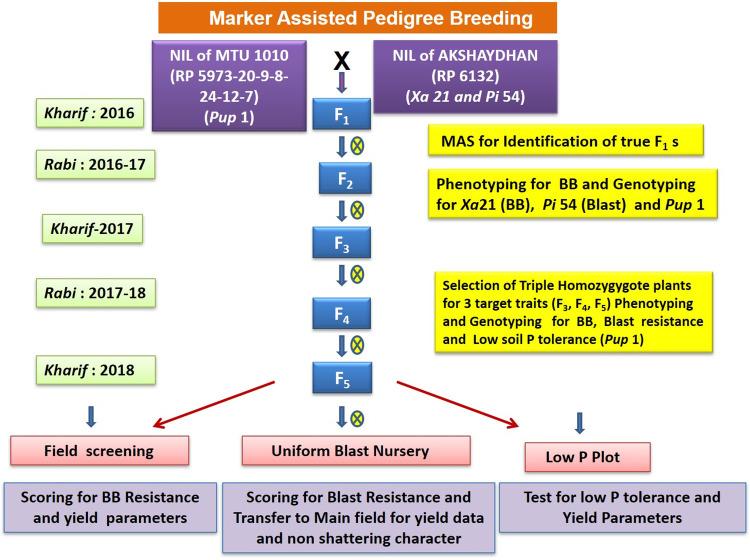
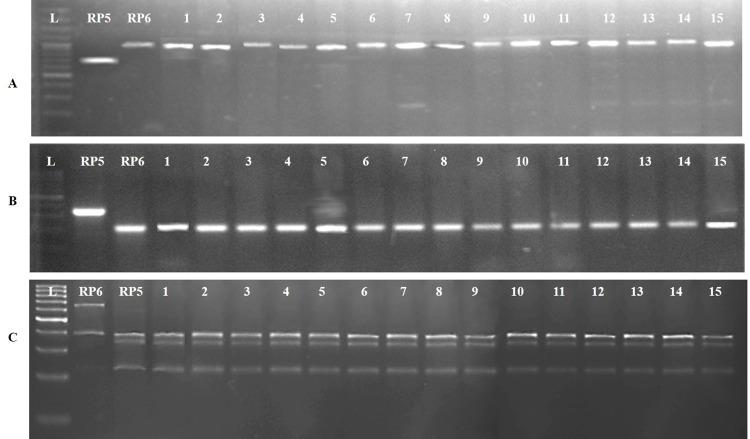
Rice production is affected by many biotic and abiotic stresses; among them, bacterial blight (BB) and blast diseases and low soil phosphorous stress cause significant yield losses. The present study was carried out with the objective of combining the BB resistance gene, Xa21, the blast resistance gene, Pi54, and the low soil phosphorous tolerance QTL/gene, Pup1, into the genetic background of the Indian mega-rice variety, MTU1010 (Cottondora Sannalu), through marker-assisted pedigree breeding. RP5973-20-9-8-24-12-7 [a near isogenic line (NIL) of MTU1010 possessing Pup1] and RP6132 [a NIL of Akshayadhan possessing Xa21 + Pi54] were crossed and 'true' F1s were identified, using the target gene-specific markers and selfed. F2 plants, which are homozygous for all the three target genes/QTLs, were identified using PCR based markers and were advanced further through the pedigree method of breeding, with selection based on phenotypic traits specific for MTU1010. At the F5 generation, a set of 15 promising triple positive homozygous lines were identified and screened for their resistance against BB and blast diseases and tolerance to low soil P. Among them, two lines (LPK 30-18-16 and LPK 49-15-22) showed higher yields as compared to MTU1010, along with the desirable long slender grain type in both low soil P and normal soil P plots, and also exhibited high levels of resistance against BB and blast diseases, with lesser grain shattering as compared to MTU1010. These lines are being advanced for multi-location trials for validating their performance.
水稻生产受到许多生物和非生物胁迫的影响;其中,细菌性条斑病(BB)和稻瘟病以及土壤低磷胁迫导致显著的产量损失。本研究旨在将 BB 抗性基因 Xa21、稻瘟病抗性基因 Pi54 和土壤低磷耐受 QTL/基因 Pup1 结合到印度巨型水稻品种 MTU1010(Cottondora Sannalu)的遗传背景中,通过标记辅助系谱育种。RP5973-20-9-8-24-12-7[携带 Pup1 的 MTU1010 的近等基因系(NIL)]和 RP6132[携带 Xa21+Pi54 的 Akshayadhan 的 NIL]杂交,并使用目标基因特异性标记物和自交鉴定“真正”的 F1 代。使用基于 PCR 的标记物鉴定 F2 代植株,这些植株对所有三个目标基因/QTL 均为纯合子,并通过系谱法进一步选育,根据 MTU1010 的特异性表型性状进行选择。在 F5 代,鉴定出一组 15 个有前途的三重阳性纯合系,并对它们进行抗 BB 和稻瘟病以及对低土壤 P 的耐受性筛选。其中,两个系(LPK 30-18-16 和 LPK 49-15-22)与 MTU1010 相比表现出更高的产量,同时在低土壤 P 和正常土壤 P 田间具有理想的长而细的粒型,并且还表现出对 BB 和稻瘟病的高抗性,与 MTU1010 相比,谷粒破碎率较低。这些系正在进行多点试验,以验证其性能。


 Zotero 插件