
一项关于全球范围内家畜和家禽弓形虫病患病率的荟萃分析。
A Meta-Analysis of the Prevalence of Toxoplasmosis in Livestock and Poultry Worldwide.
机构信息
Research Center for Food Hygiene and Safety, Shahid Sadoughi University of Medical Sciences, Shohadaye Gomnam Blvd., Yazd, 8916188638, Islamic Republic of Iran.
Department of Food Hygiene and Safety, School of Public Health, Shahid Sadoughi University of Medical Sciences, Yazd, Iran.
出版信息
Ecohealth. 2022 Mar;19(1):55-74. doi: 10.1007/s10393-022-01575-x. Epub 2022 Feb 8.
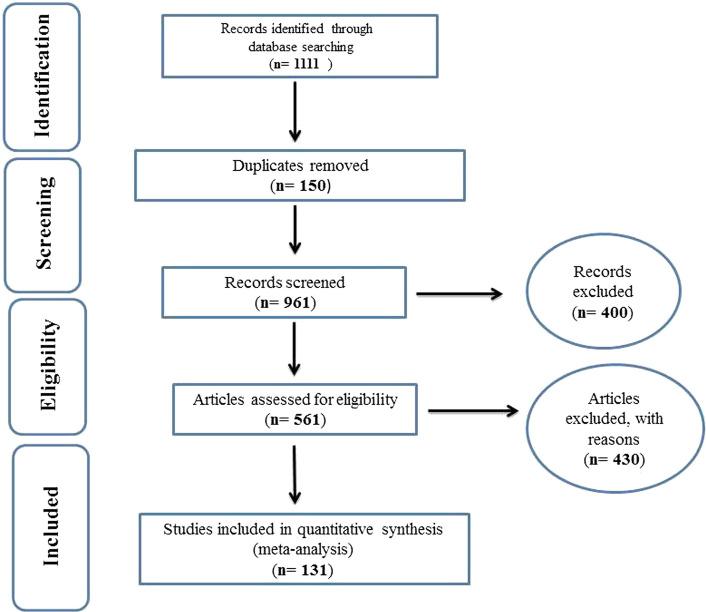
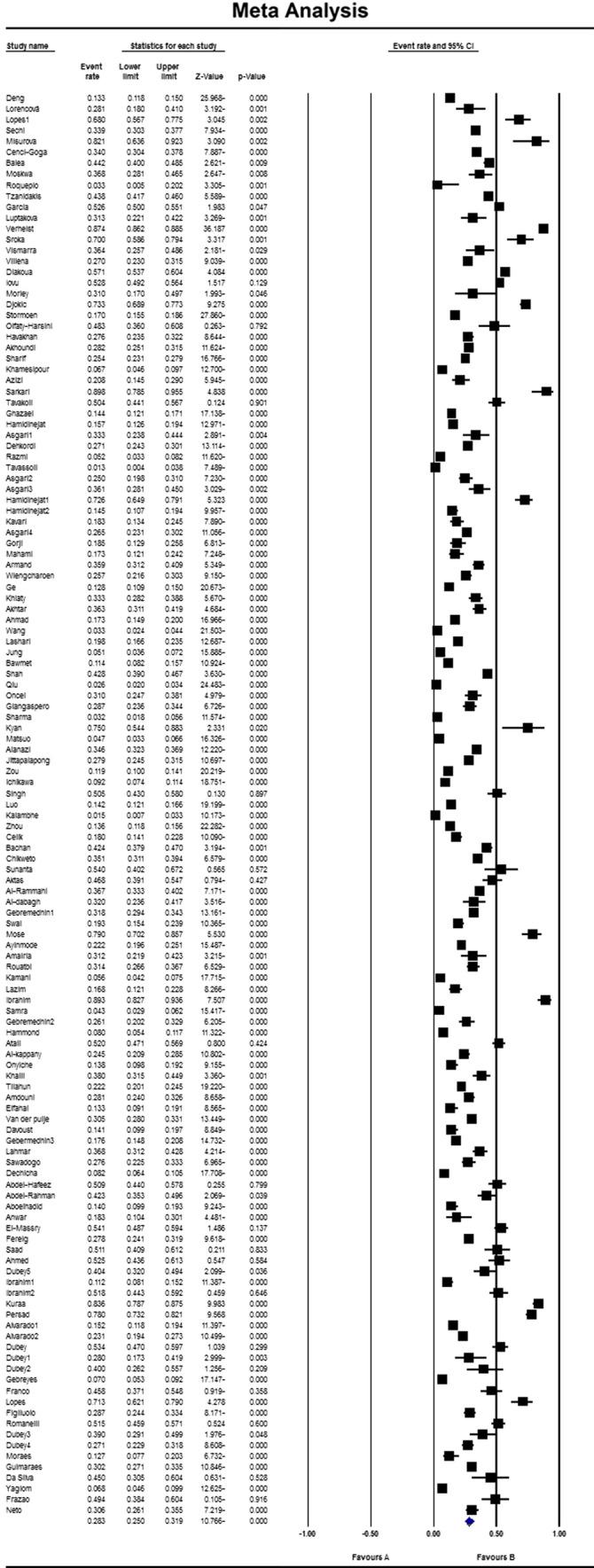
Toxoplasma gondii causes toxoplasmosis with a global prevalence in the world. A large proportion of human illness is most frequently associated with consuming raw and undercooked meat or other animal products containing infective parasitic stages of T. gondii. This systematic review and meta-analysis study evaluated the prevalence of toxoplasmosis in cattle, sheep, camels, goats, and poultry worldwide. The search was performed in databases including PubMed, WoS, Scopus, Science Direct, Google Scholar, and ISC from 2000 to 2019 in Persian and English. The main inclusion criteria were the prevalence of toxoplasmosis among livestock and poultry and the prevalence indices by sample size. During these 20 years, the overall prevalence of toxoplasmosis in livestock and poultry was 28.3% (95% confidence interval (CI) 25-31.9%) using the random-effects meta-analysis model. The highest prevalence of T. gondii in livestock and poultry animals was found in Asia in 2014 with 89.8% (95% CI 78.5-95.5%). The lowest prevalence was found in Asia in 2013 with 1.26% (95% CI 0.4-3.8%). A quarter of livestock and poultry were infected with T. gondii. Since livestock products are globally important sources of people's diet, our findings are useful for policymakers to control T. gondii infection in livestock.
刚地弓形虫在全球范围内引起弓形体病,其患病率很高。大多数人类疾病主要与食用生的和未煮熟的肉或其他含有刚地弓形虫感染性阶段的动物产品有关。本系统评价和荟萃分析研究评估了全球牛、羊、骆驼、山羊和家禽中的弓形体病患病率。检索了 2000 年至 2019 年期间在波斯语和英语的 PubMed、WoS、Scopus、Science Direct、Google Scholar 和 ISC 数据库。主要纳入标准是家畜和家禽的弓形体病患病率以及按样本量计算的患病率指数。在这 20 年中,采用随机效应荟萃分析模型,家畜和家禽的弓形体病总患病率为 28.3%(95%置信区间为 25-31.9%)。2014 年亚洲家畜和家禽中 T. gondii 的患病率最高,为 89.8%(95%置信区间为 78.5-95.5%)。2013 年亚洲的患病率最低,为 1.26%(95%置信区间为 0.4-3.8%)。四分之一的家畜和家禽感染了 T. gondii。由于畜产品是全球人民饮食的重要来源,我们的研究结果对决策者控制家畜弓形体病感染具有重要意义。




 Zotero 插件